





Cleaning decorative stainless steel may seem simple, but if done incorrectly, the surface can quickly develop scratches, water marks, or lose its original shine. In particular, hairline, mirror, PVD, or sandblasted stainless steel cannot all be cleaned using the same method.
So how do you clean each type of surface to remove stains while maintaining its pristine appearance? Let’s find out with Hoa Giang in the article below.
Nội dung chính
- 1 What is cleaning decorative stainless steel?
- 2 How to properly cleaning decorative stainless steel
- 3 How to clean different types of decorative stainless steel
- 4 Common mistakes when cleaning decorative stainless steel.
- 5 How often should decorative stainless steel be cleaned?
- 6 FAQ about cleaning decorative stainless steel
- 7 Anti-Fingerprint Nano AFP Coating Technology for Stainless Steel at Hoa Giang
- 8 Hoa Giang – Decorative stainless steel solutions for high-end projects
- 9 Conclude
What is cleaning decorative stainless steel?
Cleaning decorative stainless steel involves removing dirt, fingerprints, grease, water stains, and other impurities from the stainless steel surface without affecting the finish.
Compared to regular industrial stainless steel, decorative stainless steel usually has higher aesthetic requirements. Surfaces such as Hairline, Mirror, PVD, or Sandblasted because they have different finishes, they need to be cleaned using appropriate methods.
Regular cleaning helps:
- Maintain the brightness and color of the surface.
- Minimize the accumulation of dirt over time.
- Reduces the risk of stains and discoloration.
- Maintain the uniformity of the surface finish.
- Extend the aesthetic lifespan of stainless steel items.
How to properly cleaning decorative stainless steel
The process of cleaning decorative stainless steel is not complicated, but it needs to be done correctly, step by step.
Step 1: Remove dirt and dust from the surface.
Use a soft, clean cloth to wipe away dust before applying the cleaning solution. This step helps to minimize direct contact between hard dust particles and the surface during cleaning.
Step 2: Use the appropriate solution.
You can use clean water or a specialized cleaning solution, depending on the surface condition and type of stainless steel.
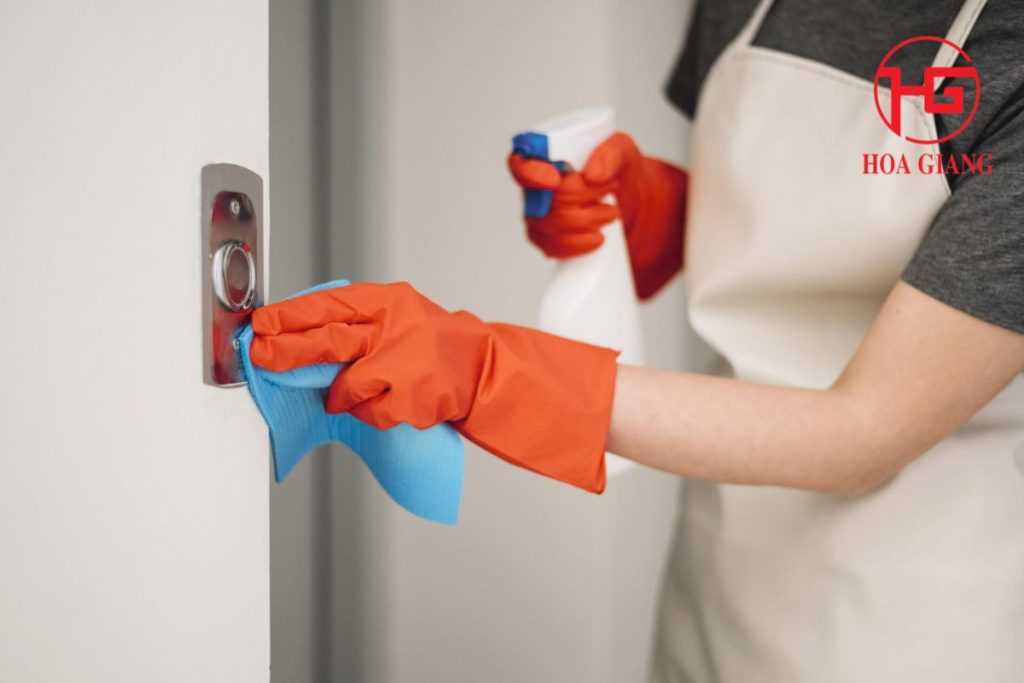
Cleaning stainless steel surfaces
Avoid using strong cleaning chemicals without first determining their compatibility with the stainless steel surface, especially PVD-coated stainless steel.
Step 3: Wipe in the correct direction of the surface.
With Hairline stainless steel, it should be wiped clean along the direction of the surface scratches instead of wiping in a circular motion or wiping horizontally and vertically at will.
Cleaning clothes should be soft, clean, and free of hard particles that could cause scratches.
Step 4: Wipe again with clean water.
After removing the stain, use a clean, damp cloth to wipe away any remaining solution from the surface.
Step 5: Dry the surface
Use a soft, dry cloth to wipe the entire surface. Do not allow water or cleaning solution to dry naturally, especially on highly polished surfaces, as this may leave water streaks.
How to clean different types of decorative stainless steel
Hairline stainless steel cleaning
Hairline stainless steel has fine, uniformly spaced scratches on its surface. When cleaning, wipe in the direction of the scratches to minimize altering the surface effect.
Do not use steel wool, sandpaper, or coarse cloths to treat stains.
Cleaning decorative stainless steel mirrors
Mirror-finish stainless steel has a mirror-like surface, making fingerprints, dust, and water marks easily visible.
When cleaning, use a soft, clean cloth and avoid excessive friction. For common stains, clean water or a suitable cleaning solution may be preferable before resorting to stronger cleaning methods.
Cleaning PVD-coated stainless steel
PVD stainless steel has a colored coating on its surface, such as gold, champagne, black, or other metallic colors. Therefore, cleaning requires special attention to the compatibility of chemicals with the finish.
It’s best to use soft clothes and appropriate cleaning solutions. Avoid using corrosive chemicals or harsh scrubbing materials as these can damage the paint layer.
Sandblasting stainless steel cleaning
Sandblasted stainless steel surfaces have a characteristic roughness, so dirt can trap more easily compared to polished surfaces.
First, remove dust, then use a soft cloth or appropriate cleaning method to remove stains. Avoid scrubbing vigorously in one direction if this will alter the surface’s uniformity.
Common mistakes when cleaning decorative stainless steel.
Use a hard material to scrub the stain.
The stain may disappear, but new scratches may appear on the surface. This is often an unsuitable treatment for decorative stainless steel.
Using chemicals that are too strong.
Using unsuitable chemicals can damage the surface of stainless steel or its color finish, especially PVD stainless steel.
Do not dry after cleaning.
Water remaining on the surface may leave streaks or water marks when dry.
Only clean when the surface is excessively dirty.
Regular cleaning is usually simpler than dealing with stains that have been there for a long time.
How often should decorative stainless steel be cleaned?
There is no fixed frequency for all buildings. The cleaning cycle depends on the installation location, usage level, and surrounding environment.
Low-contact areas: can be cleaned periodically when dust or stains appear.
Lobbies and elevators should be cleaned more frequently due to high contact and the tendency for fingerprints to accumulate.
Shopping malls and hotels need to establish regular cleaning schedules to maintain the aesthetic appeal of high-traffic areas.
Outdoor areas: require extra attention to dust, rainwater, and other environmental factors.
FAQ about cleaning decorative stainless steel
Is it okay to clean stainless steel with vinegar?
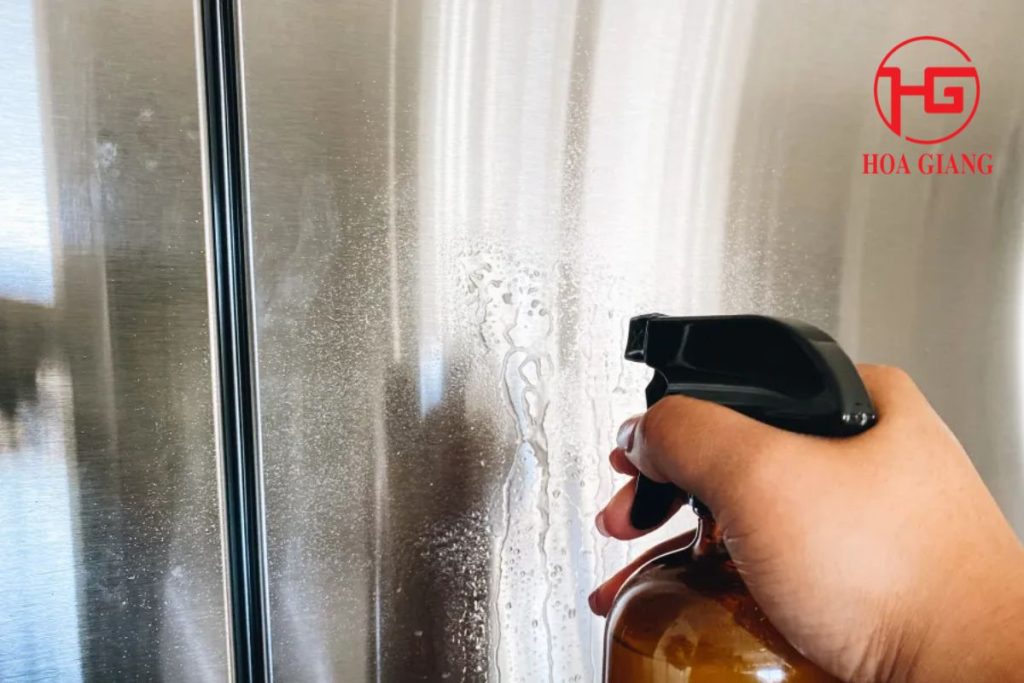
Use a specialized stainless steel cleaning solution.
Vinegar is acidic, so it shouldn’t be used on all types of decorative stainless steel. Especially with surfaces that have a PVD finish, compatibility should be checked before use.
Is it okay to use glass cleaner to clean stainless steel?
Glass cleaner should not be considered a suitable option for all types of stainless steel. It’s necessary to check the ingredients and compatibility with the surface before use, especially PVD-coated stainless steel.
How do I clean fingerprints off stainless steel?
Use a clean, soft cloth and a suitable cleaning solution, then dry the surface. For mirror and PVD stainless steel, avoid scrubbing vigorously.
Do decorative stainless steel items need regular cleaning?
Yes. Regular cleaning helps remove dirt, grease, and fingerprints before they accumulate over time, while also maintaining the surface’s appearance.
Can regular detergents be used on PVD stainless steel?
It should not be used indiscriminately. PVD stainless steel has a colored surface finish, so it is necessary to choose appropriate cleaning products and test it before applying it on a large scale.
Anti-Fingerprint Nano AFP Coating Technology for Stainless Steel at Hoa Giang
Anti-Fingerprint Nano AFP coating technology at Hoa Giang not only elevates aesthetic appeal but also provides a comprehensive technical protective layer for PVD-coated stainless steel surfaces, as proven through rigorous testing by the international certification body SGS:
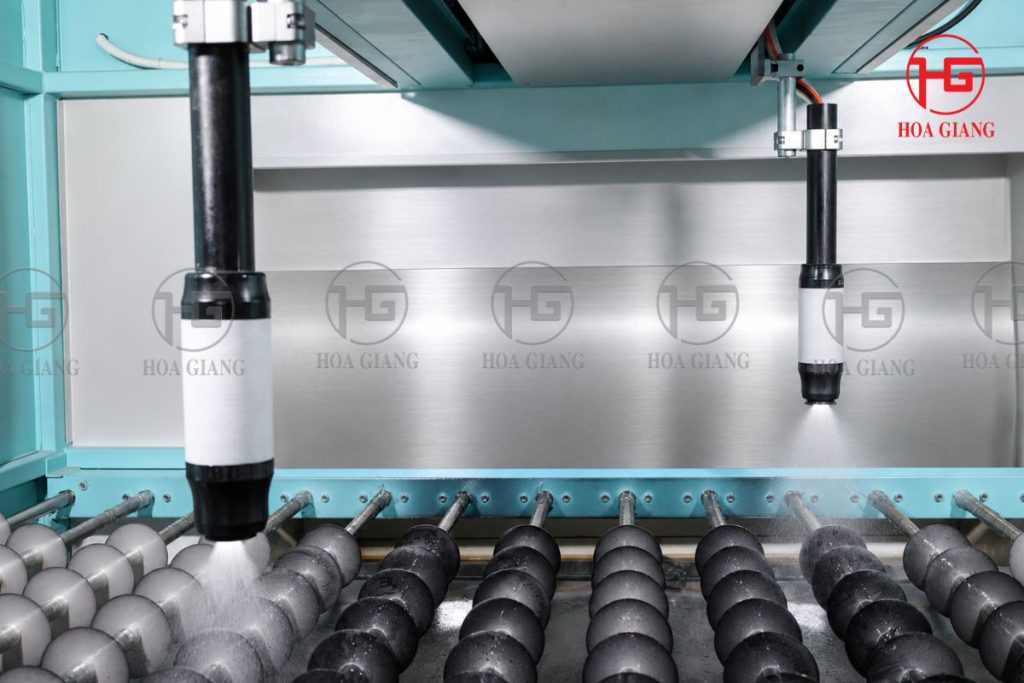
Anti-fingerprint Nano AFP coating technology at Hoa Giang factory
- Anti-Fingerprint & Easy Maintenance: The coating significantly minimizes the adhesion of oil, sweat, and dirt, keeping surfaces clean and effortlessly washable with a soft cloth without requiring chemical cleaners.
- Enhanced Depth & Color Durability: The protective film blocks UV rays to maintain vibrant metal tones outdoors while adding richness, elegance, and visual depth to PVD finishes.
- Surface Hardness Increased to 8H: Elevates hardness from the conventional 2H–3H to 8H (tested via pencil hardness scale), effectively minimizing the risk of scratches during installation and daily use.
- Superior Salt Spray Corrosion Resistance: Achieves up to 3 times the salt spray resistance of standard 304 stainless steel (400 hours), extending structure lifespan even in harsh coastal environments.
- Resistance to Chemicals & Construction Agents: Forms a protective barrier that prevents corrosive reactions and staining caused by acids, alkalis, salts, or cement during construction.
Hoa Giang – Decorative stainless steel solutions for high-end projects
With nearly 20 years of experience in the decorative stainless steel industry, Hoa Giang provides comprehensive fabrication and installation solutions for projects requiring high technical and aesthetic standards.
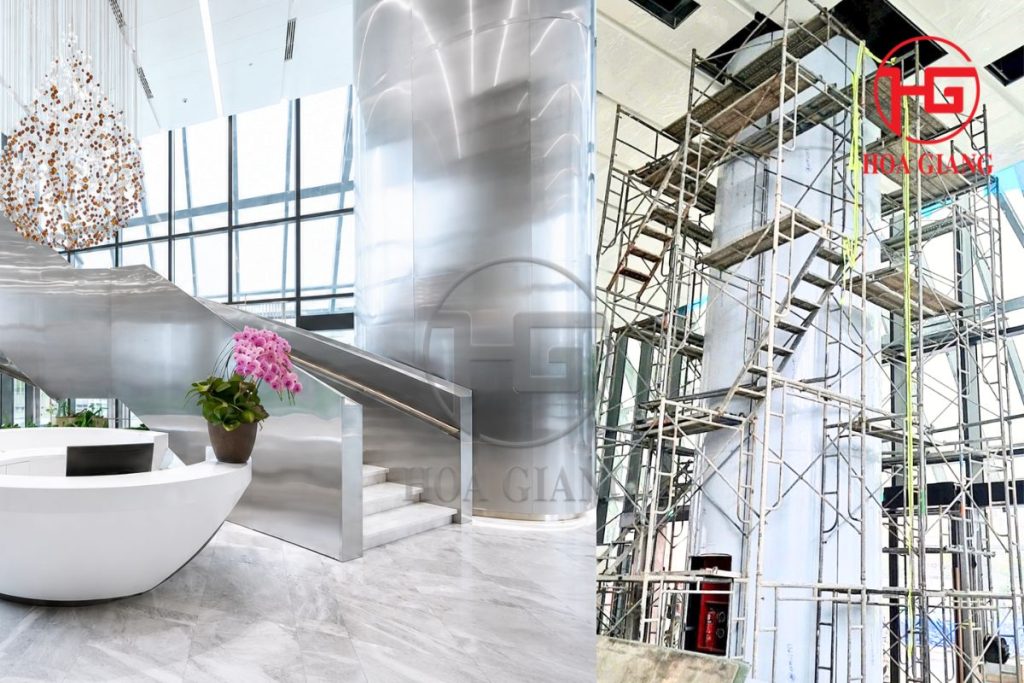
Hoa Giang is installing decorative stainless steel at Saigon Marina IFC.
From materials and surface treatments to detailed finishing, every aspect is executed based on practical experience gained from thousands of projects.
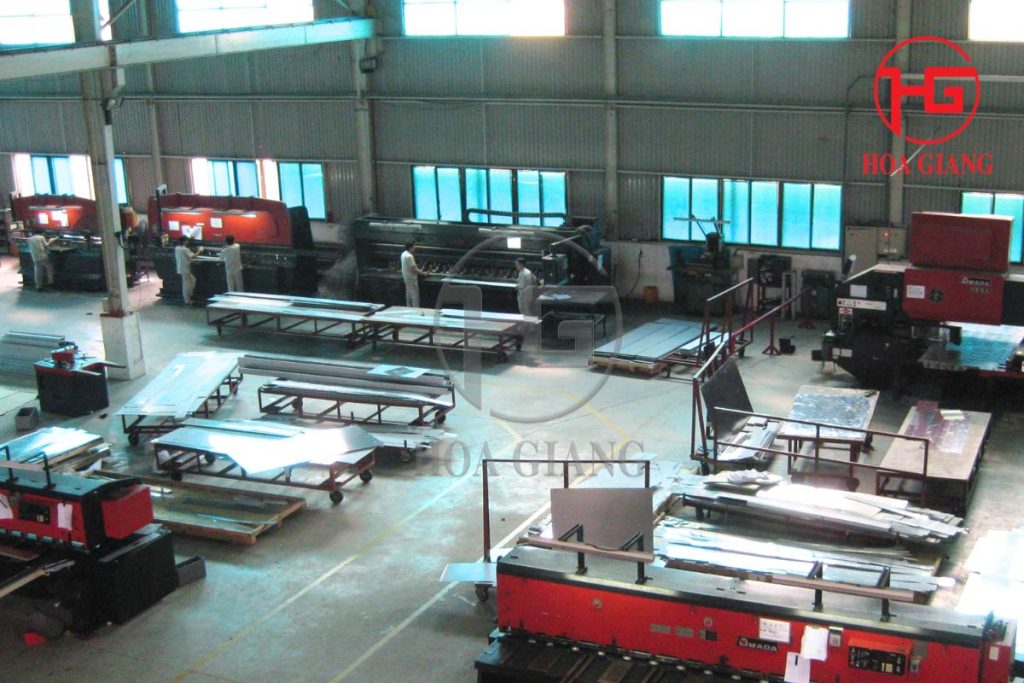
Hoa Giang factory is equipped with modern machinery.
With its large-scale factory and modern machinery system, Hoa Giang strictly controls the production process to ensure accuracy in every detail, meeting the requirements of high-end projects.
Conclude
Cleaning decorative stainless steel is not simply about removing dust and dirt, but a meticulous care process that helps preserve the aesthetic value and durability characteristic of each surface. Maintaining a regular cleaning routine is the most cost-effective solution to extend the lifespan of all stainless steel items.
If you are looking for installation services for premium decorative stainless steel products for your project, Hoa Giang is ready to assist you. Contact us today for a detailed consultation and a quote.
HOA GIANG STAINLESS STEEL
Fanpage: Hoa Giang Stainless Steel Group
Hotline: 0918311491 – 0949805203


