


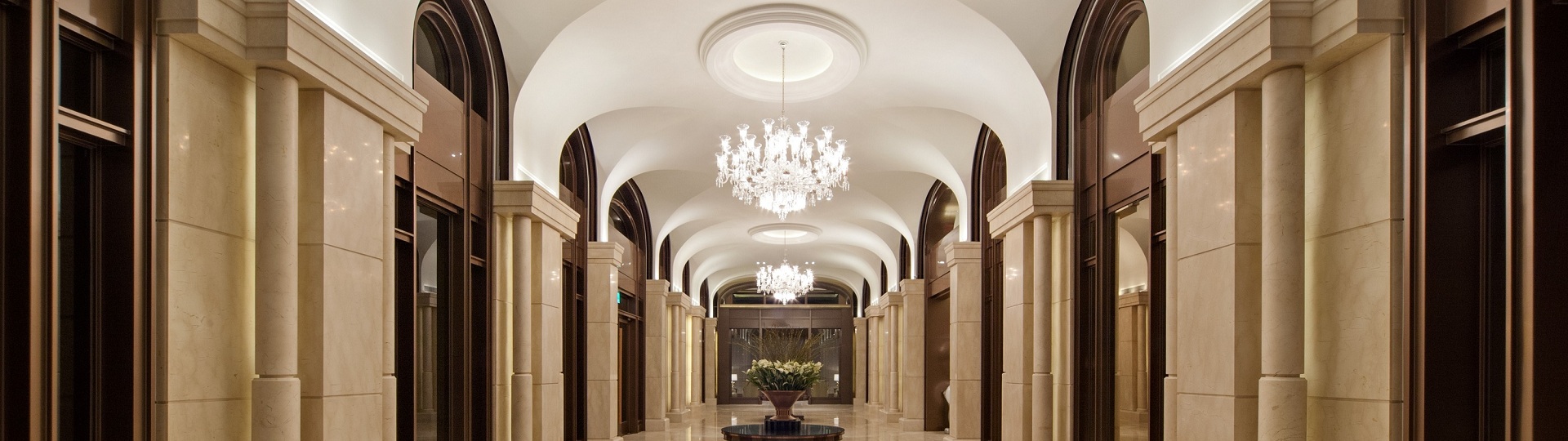
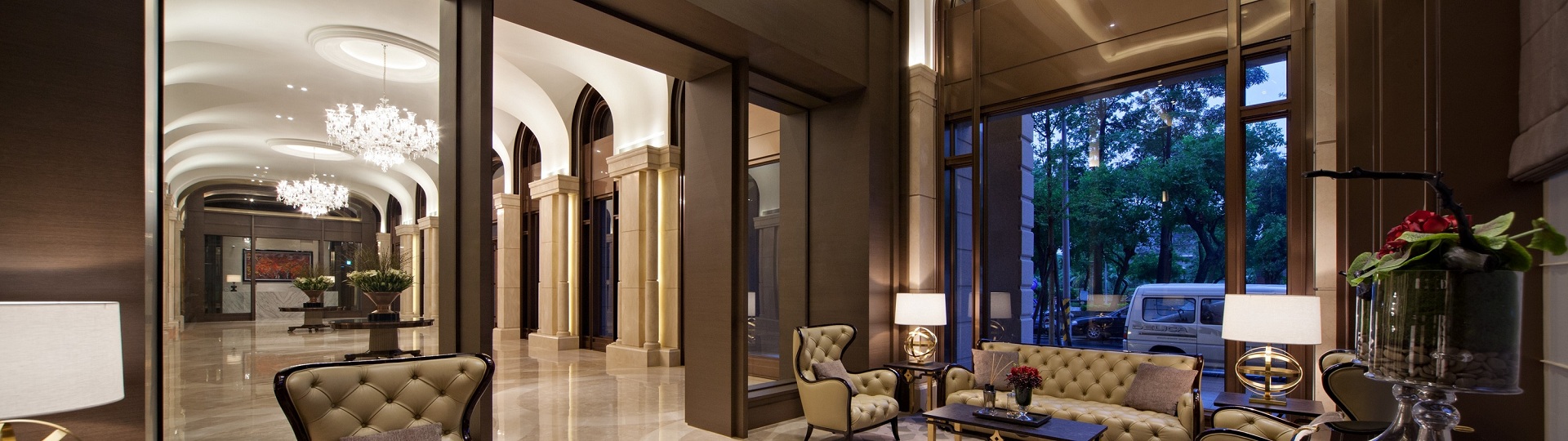
One thing that’s easily noticeable when observing housing projects in recent years is that houses are no longer designed to “look good in photos,” but rather to be lived in interior design trends Therefore, the trend is also shifting in a slower, more personal, and less ostentatious direction compared to the era when social media dominated aesthetic tastes.
This article Hoa Giang Instead of listing trends that will disappear after a few months, the focus is on analyzing which styles are truly shaping how people choose materials, colors, and layouts for their living spaces, based on observations from design projects, opinions from architects, and developments in the finishing materials market.
Nội dung chính
- 1 Why are interior design trends constantly changing?
- 2 The latest interior design trends
- 2.1 1. Curated minimalism
- 2.2 2. Cocooning Bedroom
- 2.3 3. Organic Curve Design
- 2.4 4. Raw & Authentic Materials
- 2.5 5. Furniture that evokes personal nostalgia
- 2.6 6. Biophilic Design
- 2.7 7. Advanced Ergonomics
- 2.8 8. Invisible Smart Home Technology
- 2.9 9. Multifunctional Furniture
- 2.10 10. The ceiling acts as a “fifth wall”.
- 2.11 11. Mirrors and asymmetrical reflective surfaces
- 2.12 12. “Quiet Luxury” in Surface Materials
- 3 Outstanding interior design material trends
- 4 Interior design color trends
- 5 Popular interior design styles today
- 6 How can you adopt trends without them quickly becoming outdated?
- 7 The role of finishing materials in shaping space
- 8 Hoa Giang – Stainless steel solutions for modern architecture and interior design.
- 9 Conclude
Why are interior design trends constantly changing?
Interior design trends don’t change randomly; they reflect changes in usage needs, lifestyles, and aesthetic tastes of each era.
Lifestyle changes This is a fundamental factor. Smaller families, faster urbanization, and shrinking living spaces have led to a significant increase in the demand for versatile and flexible furniture.
Flexible working from home has changed the structure of apartments. After a period when open-plan layouts were popular, many families began to desire private, quiet spaces, leading to the return of partitions, sliding doors, and louvers to divide space without sacrificing ventilation.
Technology development Smart homes have transformed from a luxury concept into a recognized standard. The key difference in this phase is the need for technology that is “hidden,” such as lighting, curtains, and air conditioning that automatically operate according to the human circadian rhythm, rather than being displayed through complex control panels.
New materials are constantly emerging thanks to advances in manufacturing and surface treatment: large-format sintered stone, engineered wood with realistic wood grain patterns, durable PVD-coated stainless steel These materials expand the creative possibilities for architects that were previously limited by traditional materials.
Sustainability It’s no longer a secondary option but has become a mandatory criterion in many projects, from wood and stainless steel to the recyclability of materials and actual lifespan, rather than just being aesthetically pleasing in the short term.
>> Click to view Is stainless steel considered a sustainable material?
Changing aesthetic needs reflect the general sentiment of society, many people are seeking design styles that have greater emotional depth and a more distinct personal touch.
The latest interior design trends
1. Curated minimalism
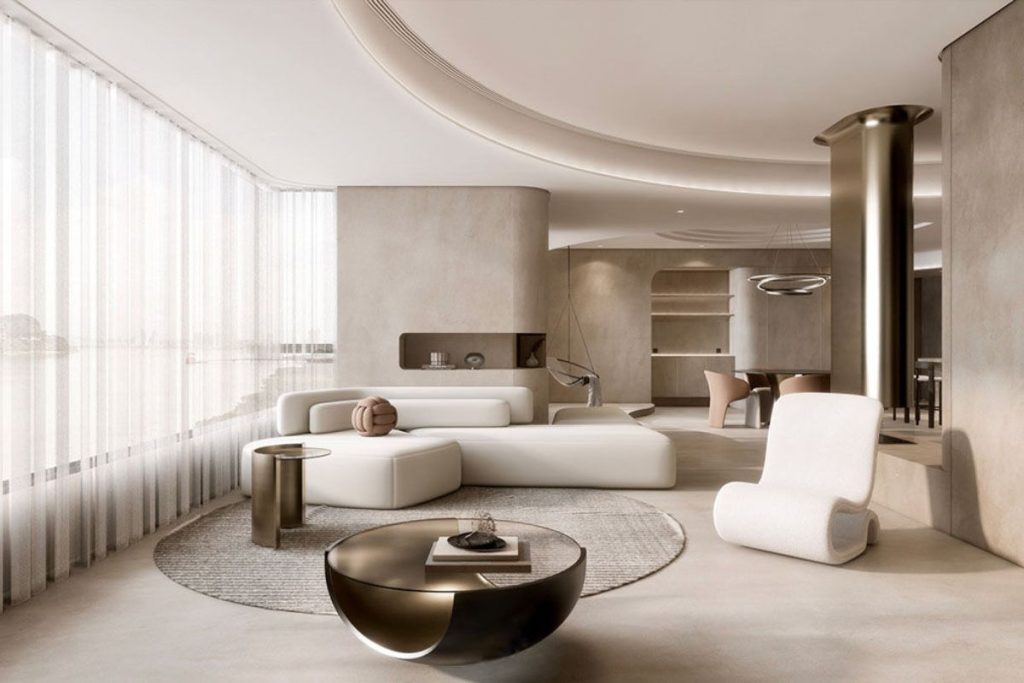
Illustration of the interior design trend: Curated minimalism
After years of minimalism dominating, the current trend leans in the opposite direction, but in a controlled manner: multiple layers of color, patterns, sculptural furniture, and collectibles coexist in a space while maintaining overall harmony.
- Characteristic: Combine layers of fabric, patterns, antiques, and personal artwork.
- Advantage: It creates a distinct personality, a sense of depth in the space, and is less likely to become “outdated” or stereotypical.
- Suitable space: Living room, reading room, medium to large-sized apartment.
- Suitable for: People with their own sense of style don’t mind investing time in coordinating details.
- Commonly used materials: Handcrafted textiles, natural wood, ceramics, and stainless steel with intricate decorative details.
- Sustainable or just a trend? This trend is highly sustainable because it is based on user personality rather than fleeting visual formulas.
2. Cocooning Bedroom
The sleeping space is designed to maximize privacy and relaxation: upholstered furniture, thick fabric coverings, layered curtains, and rugs.
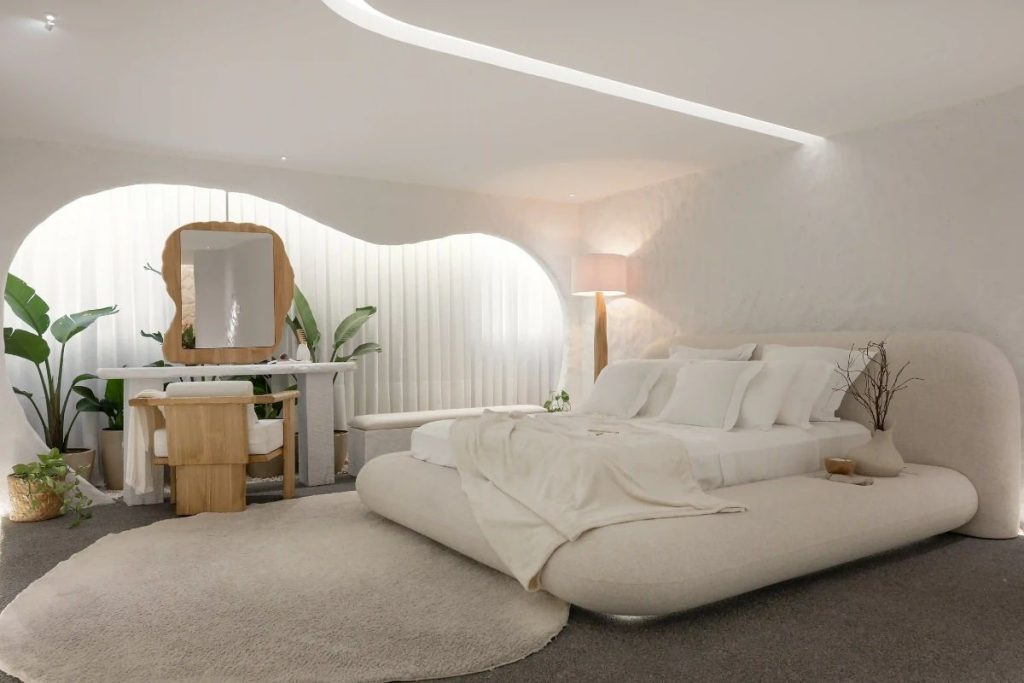
Illustration of the Cocooning Bedroom interior design trend.
- Characteristic: Shapes with soft, comfortable materials.
- Advantage: Improves sleep quality and reduces visual stress.
- Suitable space: Master bedroom, studio apartment bedroom.
- Suitable for: People who work under stress need a space to “disconnect”.
- Commonly used materials: Velvet, wool, warm-toned wood.
- Sustainability or trends? This trend reflects a growing need for long-term mental health care, which is more likely to be sustained over time.
3. Organic Curve Design
Sharp angles and rigid straight lines are gradually being replaced by rounded shapes, from arched doorways and corner cabinets to sculpted tea tables.
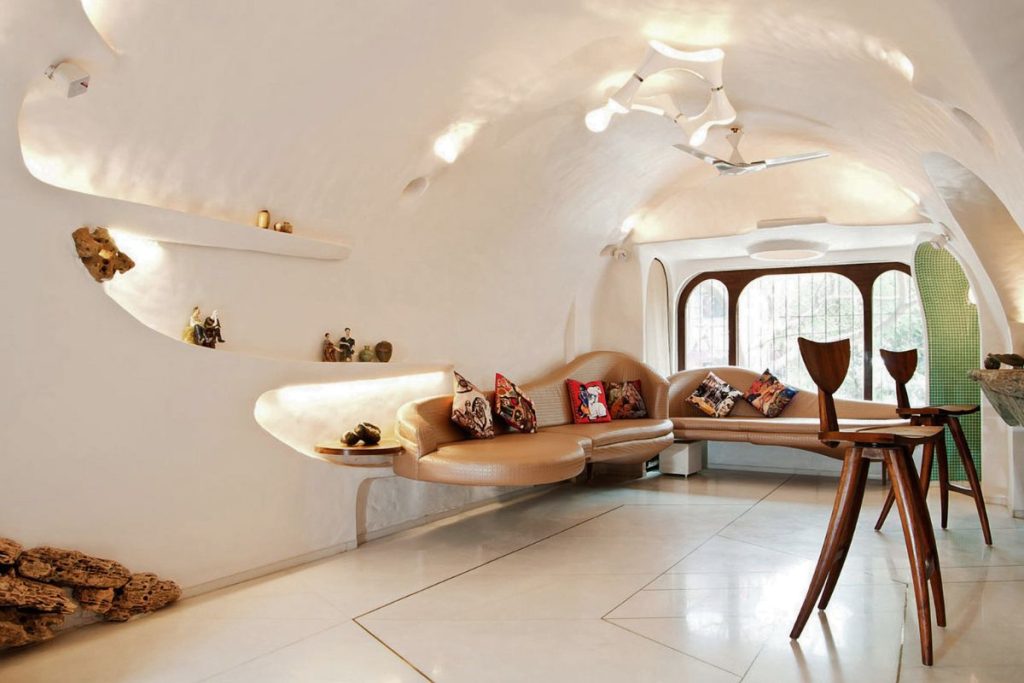
Illustration of the Organic Curves interior design trend.
- Characteristic: The form is inspired by nature and is not perfectly asymmetrical.
- Advantage: It creates a pleasant feeling, reducing the heavy feel of concrete and sharp edges.
- Suitable space: Living room, entrance, reception area.
- Suitable for: Families with young children (safer option), and those who prefer an Organic Modern style.
- Commonly used materials: Wood, bent stainless steel, polished solid stone, sculpted plaster.
- Sustainability or trends? It has lasting value because it is linked to the language of architectural design rather than surface decoration.
4. Raw & Authentic Materials
Raw wood, rough stone, handcrafted pottery, and linen fabrics retain their natural textures, leaving no trace of time behind.
- Characteristic: A rough, unpolished surface with intentional “imperfections”.
- Advantage: It creates a feeling of authenticity and intimacy, avoiding any artificial sensation.
- Suitable space: Dining room, open-plan kitchen, indoor garden.
- Suitable for: Those who follow the philosophy of slow living prefer Wabi-sabi.
- Commonly used materials: Unprocessed wood, natural stone, handcrafted fired pottery.
- Sustainability or trends? This is a shift in values, not a short-term trend.
5. Furniture that evokes personal nostalgia
Instead of filling homes with new items, the current trend favors vintage pieces, heirlooms, and travel mementos arranged thoughtfully.
- Characteristic: Combining old and new items, not following a single, unified collection.
- Advantage: Each space has its own story, making it difficult to replicate.
- Suitable space: Living room, decorative shelves, reading nook.
- Suitable for: Antique lovers, a multi-generational family.
- Commonly used materials: Mid-century wood, patina metal, restored vintage fabrics.
- Sustainability or trends? It is quite sustainable because it is linked to personal memories and is not dependent on the market.
6. Biophilic Design
Bring nature indoors through greenery, skylights, organic materials, and natural light.
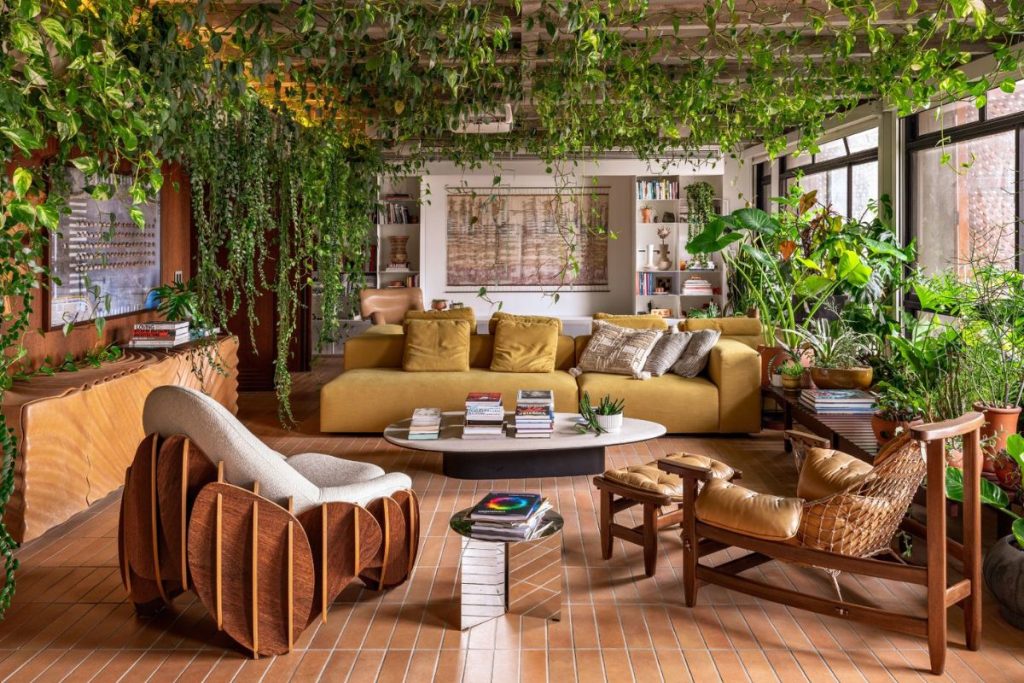
Illustration of the Biophilic Design interior design trend.
- Characteristic: A direct connection between living spaces and nature.
- Advantage: Improve air quality, reduce stress, and increase work productivity.
- Suitable space: Balcony, skylight, home office.
- Suitable for: People who live in urban areas have little contact with nature.
- Commonly used materials: Wood, stone, water, greenery, large windows for natural light.
- Sustainability or trends? It has been proven by scientific research on health and has high sustainability.
7. Advanced Ergonomics
The chair and seating surface are designed based on data regarding posture, pressure points, and body movements to provide better spinal support.
- Characteristic: The optimal shape is determined by biometric data rather than purely aesthetic considerations.
- Advantage: Reduces stress from prolonged sitting, suitable for people working from home.
- Suitable space: Office, dining room.
- Suitable for: Office workers, people who work on computers for long hours.
- Commonly used materials: Lightweight metal frame, molded foam padding, stretch fabric.
- Sustainability or trends? his is a long-term trend because it’s linked to physical health, not just temporary aesthetics.
8. Invisible Smart Home Technology
AI and IoT operate smart homes silently: lighting automatically changes tone according to circadian rhythms, and curtains and air conditioning adjust automatically to user habits.
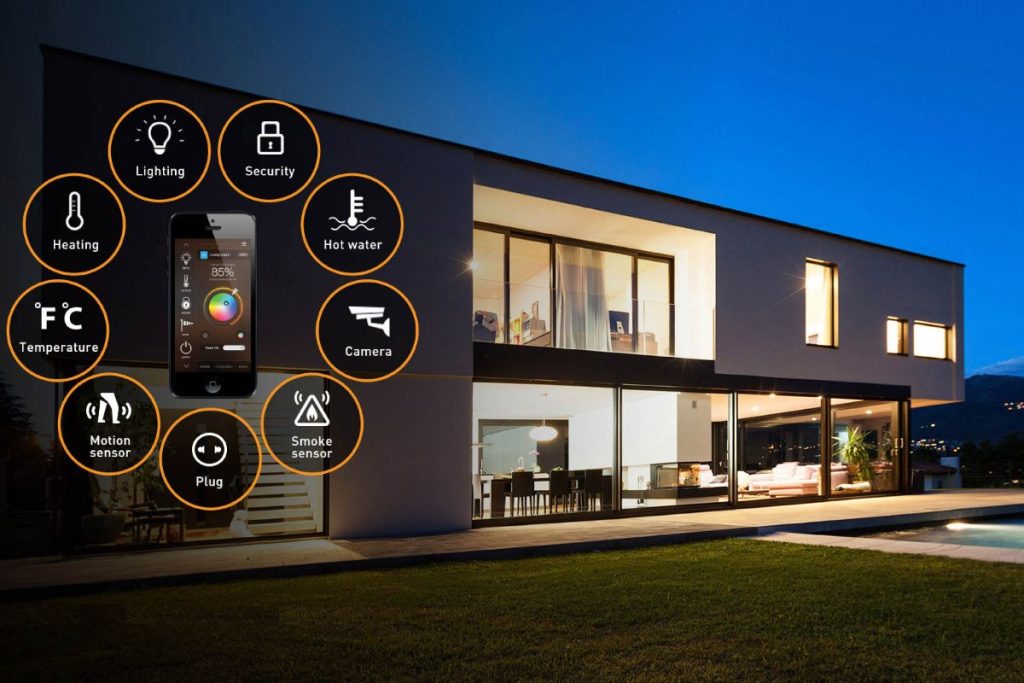
Illustration of smart home interior design trends.
- Characteristic: Seamless, integrated technology that is not visible through the control panel.
- Advantage: Enhance comfort, save energy, and protect sleep health.
- Suitable space: The entire apartment, especially the bedroom.
- Suitable for: Young families who prioritize technological conveniences.
- Commonly used materials: While not directly applicable, it often comes in conjunction with materials capable of integrating sensors and hidden LEDs.
- Sustainability or trends? While energy efficiency is a long-term concern, specific equipment will constantly evolve with technology.
9. Multifunctional Furniture
Folding tables, beds with built-in wardrobes, and sofas that convert into beds are meeting the needs of urbanization and shrinking living spaces.
- Characteristic: An item that serves multiple functions.
- Advantage: Optimizing space and saving on interior design investment costs.
- Suitable space: Studio apartments, small townhouses.
- Suitable for: Single people, young families in urban areas.
- Commonly used materials: Engineered wood, metal folding frame, multi-layered foam.
- Sustainability or trends? Long-term practical needs, especially in large cities.
10. The ceiling acts as a “fifth wall”.
The ceiling is treated with patterned wallpaper, contrasting paint colors, or corrugated stainless steel Instead of just painting the walls plain white, use wall cladding.
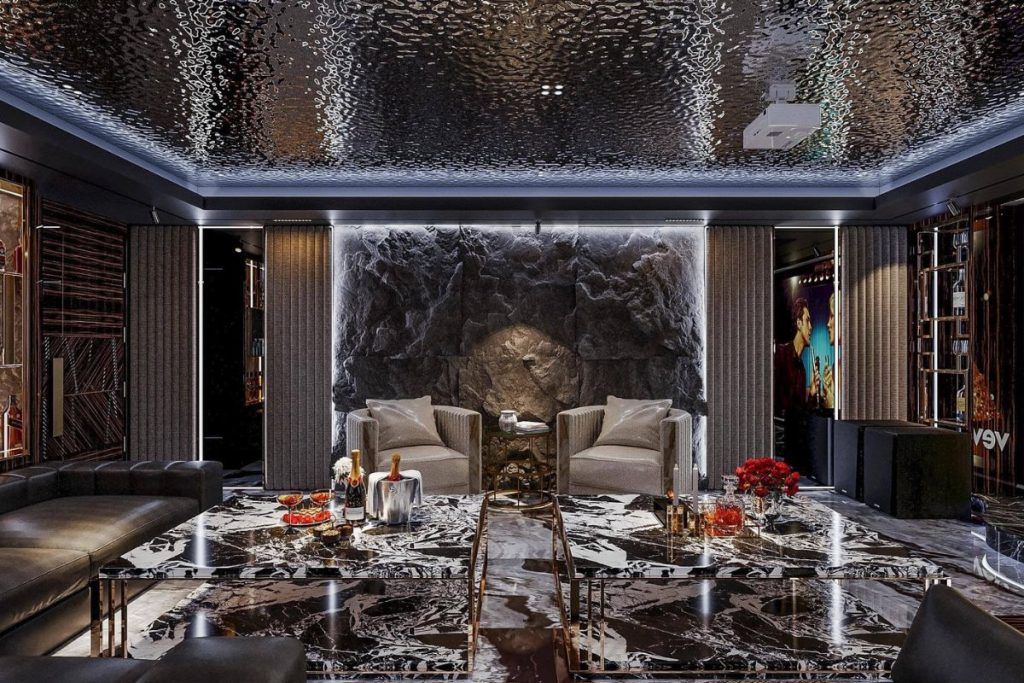
The illustration shows a ceiling clad with corrugated stainless steel.
- Characteristic: The ceiling becomes a visual focal point instead of a neutral surface.
- Advantage: It creates spatial depth and produces visual surprises.
- Suitable space: Bedroom, small dining room, hallway.
- Suitable for: People who like to create unique focal points in familiar spaces.
- Commonly used materials: Wallpaper, decorative paint, wood paneling for ceilings.
- Sustainability or trends? It depends on personal taste, which can change over time if you choose a pattern that is too striking.
11. Mirrors and asymmetrical reflective surfaces
Large mirrors, freeform shapes, or frames assembled from ceramic pieces, along with twisted metal wires, become the main decorative focal points, sometimes incorporating hidden LED lights.
- Characteristic: Asymmetrical shape, combined with light.
- Advantage: It doubles the natural light, creating a feeling of a larger space.
- Suitable space: Living room, entrance, dressing room.
- Suitable for: Apartments with limited space need the “illusion” of having more space.
- Commonly used materials: Glasses, gold-plated stainless steel for the frame.
- Sustainability or trends? The reflective element is an enduring detail in design; specific shapes may follow short-term trends.
12. “Quiet Luxury” in Surface Materials
Matte, fingerprint-resistant surfaces are gradually replacing the previously popular glossy surfaces, moving towards a more understated, less ostentatious sense of luxury.
- Characteristic: Matte finish, solid color, minimalist decorative details.
- Advantage: Easy to clean, less prone to fingerprints and minor scratches, and feels premium and durable.
- Suitable space: Kitchen cabinets, doors, living room furniture.
- Suitable for: Families with young children, people who prioritize practicality.
- Commonly used materials: Matte laminate, solid color melamine, brushed stainless steel with hairline finish, black titanium-plated stainless steel…
- Sustainability or trends? It is long-lasting, reflecting a shift from ostentation to functional simplicity.
Outstanding interior design material trends
There is no single “right choice” material — each plays a role depending on the context of use, climate, budget, and aesthetic goals.
| Material | Outstanding advantages | Limitations to consider |
| Natural wood | Warm, unique texture, easy to match with various styles. | High cost, requires maintenance, and is sensitive to humidity. |
| Natural stone | Luxurious, highly durable, each piece is unique. | Heavy, difficult to install, and easily stained if the surface is not properly treated. |
| Sintered rock | Scratch-resistant, heat-resistant, large size, seamless design. | High cost, requires experienced contractors. |
| Glasses | Good lighting creates a sense of spaciousness. | Easily shows stains, poor sound insulation if left untreated. |
| Metals (copper, aluminum) | Creates a focal point, offers diverse processing capabilities. | Copper oxidizes easily if left untreated, and aluminum scratches easily. |
| Stainless steel | High durability, corrosion resistance, diverse surface finishes, and design flexibility. | It can create a feeling of coldness if used in the wrong context. |
In many current projects, the trend isn’t to choose one “winning” material, but rather to combine several types. This combination creates material depth instead of monotony.
Interior design color trends
After a long period dominated by cool neutral tones (gray, pure white, pale beige), the current color palette has shifted noticeably towards warmer and deeper tones:
- Earthtone: Caramel brown, terracotta, and amber evoke a feeling of intimacy and warmth.
- Moss green, olive green: It evokes associations with nature, fitting in with bio-design.
- Monochromatic paint scheme: A single color tone extends from the walls to the trim and ceiling, creating a seamless, purposeful feel.
- Wine red, dark moss green: They appear in spaces where a sense of depth and understated luxury is desired.
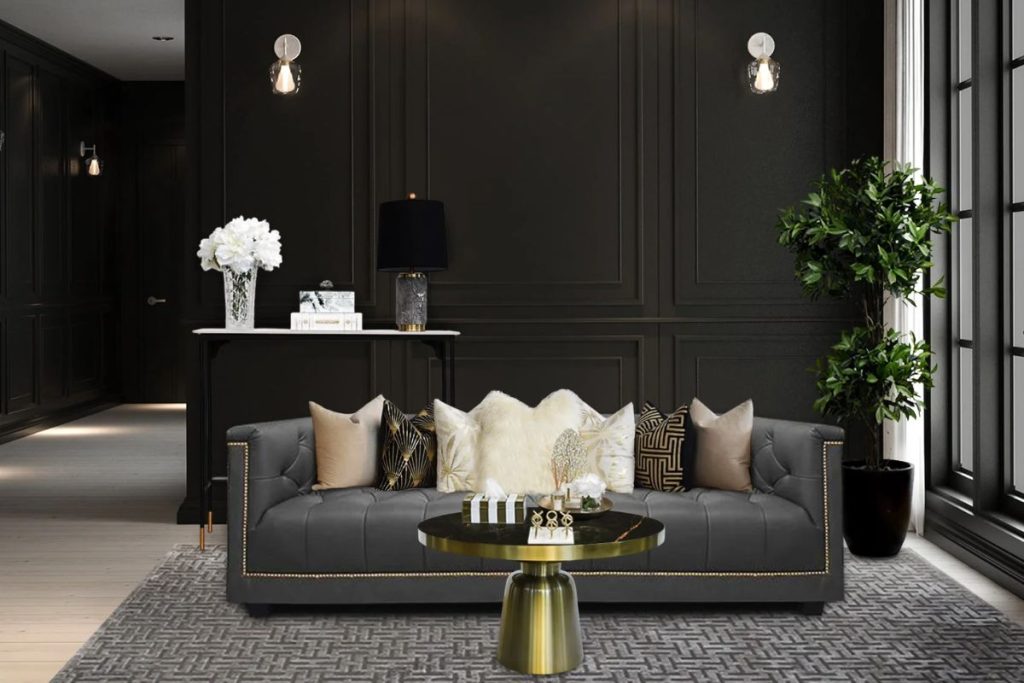
Illustration of a monochromatic color scheme in interior design.
The reason warm color palettes have become a trend is quite clear: after a long period where living spaces were “cooled” by industrial minimalist style, the psychological need for warmth and a sense of security has led to a resurgence in popularity of muted colors, close to natural earth tones.
Popular interior design styles today
- Japandi: Combining the deliberate minimalism of Japan with the warmth of Scandinavian style, clean lines, neutral colors, and multifunctional furniture.
- Organic Modern: Modern yet softened by curves and natural materials.
- Minimalism: They still hold their positions, but their policies have become more “flexible,” no longer as harsh as before.
- Contemporary: Flexible and adaptable to many smaller trends.
- Quiet Luxury: Luxury is expressed through the materials and finish, not through ostentatious details.
- Scandinavian: Natural light, light-colored wood, optimal functionality.
- Industrial: It still has a place, but it’s often “softened” with warm materials to avoid feeling cold.
- Wabi-sabi: Celebrating imperfect beauty and raw, natural materials.
- Indochina: It retains its appeal thanks to its ability to combine nostalgia and modernity.
- Minimalist Neoclassical style: Reduce the number of ornate details while retaining the elegant feel.
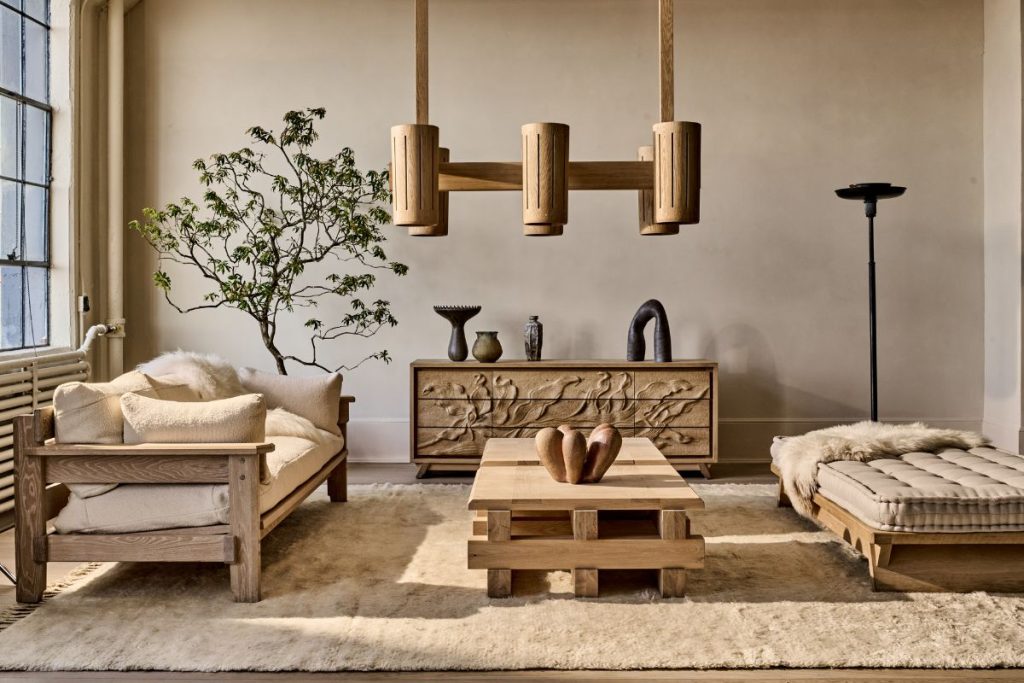
Illustration of Wabi-sabi interior design style.
How can you adopt trends without them quickly becoming outdated?
Trends are the catalyst for modern and contemporary living spaces, but chasing every new fad is the quickest way to make your home look outdated in just a few years. Here are some practical principles:
- Prioritize fixed structures for long-term elements Meanwhile, trendy colors and patterns should be placed on items that can be easily changed, such as curtains, pillows, rugs, and decorative paintings.
- Choose materials that will last over time (Real wood, stone, and high-quality stainless steel) for the architectural frame, flooring, and kitchen, as these are quite expensive items to change.
- Maintain a consistent stylistic “thread” throughout Instead of mixing too many trends at once, avoid making the space feel disjointed.
- Invest in lighting and spatial proportions These two factors rarely go out of style and have a greater influence than paint color or decorative items.
- I wonder if I like this detail because I personally like it, or because I’m seeing it everywhere. This is the simplest way to distinguish personal taste from fleeting trends.
The role of finishing materials in shaping space
While design trends may change, one thing remains constant: finishing materials are always the deciding factor in the durability and actual feel of a space, more so than what drawings or images depict.
Alongside wood, stone, and glass, stainless steel has gradually established itself as a practical solution in many modern interior design styles, thanks to its high mechanical strength, good corrosion resistance, and virtually no need for complex maintenance over time—a significant advantage over some other materials.
Notably, decorative stainless steel today is no longer limited to familiar shapes. Surfaces such as mirror-finish stainless steel, brushed stainless steel, or PVD-coated stainless steel are used flexibly from mirror frames and kitchen countertops to trim details and decorative ceiling and wall panels.
Thanks to this diversity, stainless steel can naturally appear in many different design styles – from Contemporary and Luxury to Industrial, softened with warm materials – as a subtle accent rather than a material that imposes an industrial feel on the entire space.
Hoa Giang – Stainless steel solutions for modern architecture and interior design.
A beautiful space is not only determined by the design concept but also by the selection and finishing of materials. Whether pursuing minimalist, modern, luxury, or Indochine styles, each project requires appropriate solutions to ensure aesthetics, durability, and long-term usability.
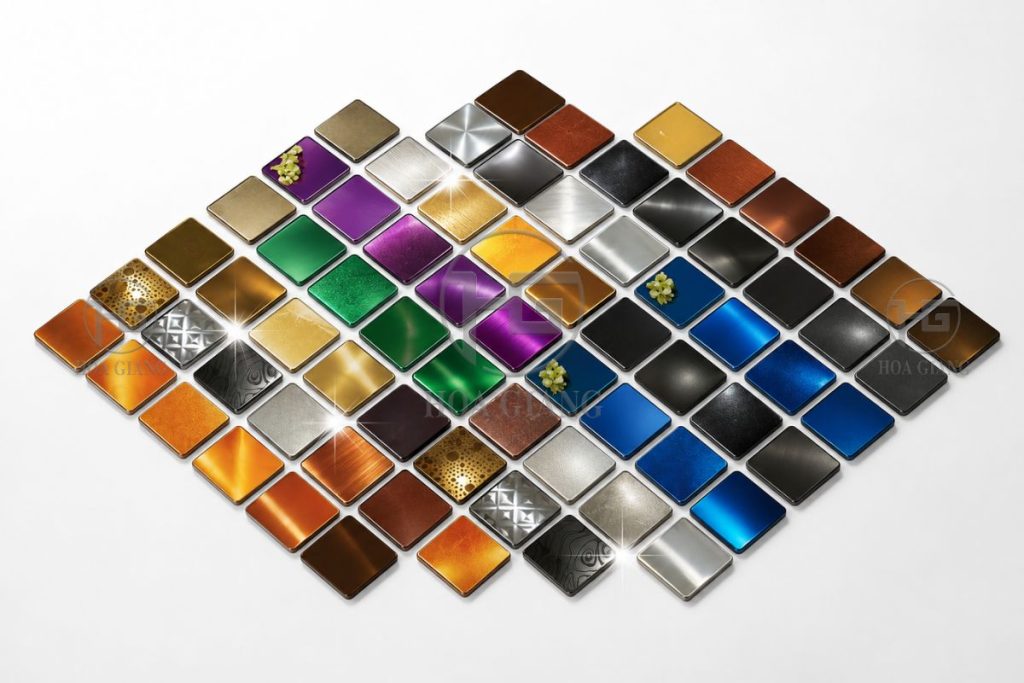
Hoa Giang offers a diverse collection of materials.
With nearly 20 years of experience in the decorative stainless steel industry, Hoa Giang has partnered with hundreds of projects ranging from residential homes, hotels, shopping malls, and offices to high-end constructions throughout Vietnam.
Owning a large-scale processing factory and a team knowledgeable about material properties and the requirements of each architectural style, Hoa Giang not only provides decorative stainless steel solutions but also offers consulting services to help select the appropriate surface finish, color, and finishing options for each specific space.
Conclude
Interior design trends are constantly changing with the development of lifestyles, technology, and people’s aesthetic needs. However, behind each trend, core values remain consistent: spaces should reflect the homeowner’s personality, fulfill functional requirements, and provide a lasting living experience rather than just creating a fleeting impression.
Instead of chasing every new trend, understanding the essence of each style, choosing appropriate materials, and investing in quality finishes will help the project maintain its lasting value in the future.
If you are looking for stainless steel interior decoration solutions, contact Hoa Giang today for consultation and a quote.
HOA GIANG STAINLESS STEEL
Fanpage:Hoa Giang Stainless Steel Group
Hotline: Ms. Diem 0918311491 – Mr. Khang 0949805203


