


Wabi Sabi Style is gradually becoming one of the design trends favored by many homeowners, architects, and interior designers in Vietnam in recent years.
So what is the Wabi Sabi style, what are its characteristics, and how is it applied in modern interior design? Let’s explore the details in the article below.
Nội dung chính
- 1 What is Wabi Sabi style?
- 2 Characteristics of the Wabi Sabi style
- 3 Materials commonly used in the Wabi Sabi style
- 4 Suitable Applications of Stainless Steel in Wabi Sabi style Spaces
- 5 Distinguishing Wabi Sabi style from other interior design
- 6 Current Wabi Sabi design trends
- 7 FAQ – Frequently Asked Questions about Wabi Sabi Style
- 8 Discover material solutions for Wabi Sabi style from Hoa Giang
What is Wabi Sabi style?
The origins of Wabi Sabi philosophy
Wabi Sabi is an aesthetic concept and philosophy of life originating from Japan, deeply influenced by Zen Buddhism. In terms of meaning, “Wabi” is often understood as the beauty of simplicity, naturalness, and sometimes a touch of solitude; while “Sabi” is associated with the beauty of time, of wear and tear, and the marks that years leave on objects.
When combined, Wabi Sabi becomes a philosophy that emphasizes the acceptance of impermanence, imperfection, and the natural cycle of all things—birth, transformation, decay, and return to nature. This perspective is in stark contrast to traditional Western aesthetic standards that value symmetry, perfection, and sleekness.
Wabi Sabi in interior design
When applied to architecture and interior design, Wabi Sabi doesn’t aim for ostentation or extravagance, but rather focuses on creating authentic, tranquil, and emotionally rich living spaces. The core objective is to bring a sense of peace and relaxation to users through raw materials, natural light, and deliberate minimalism.
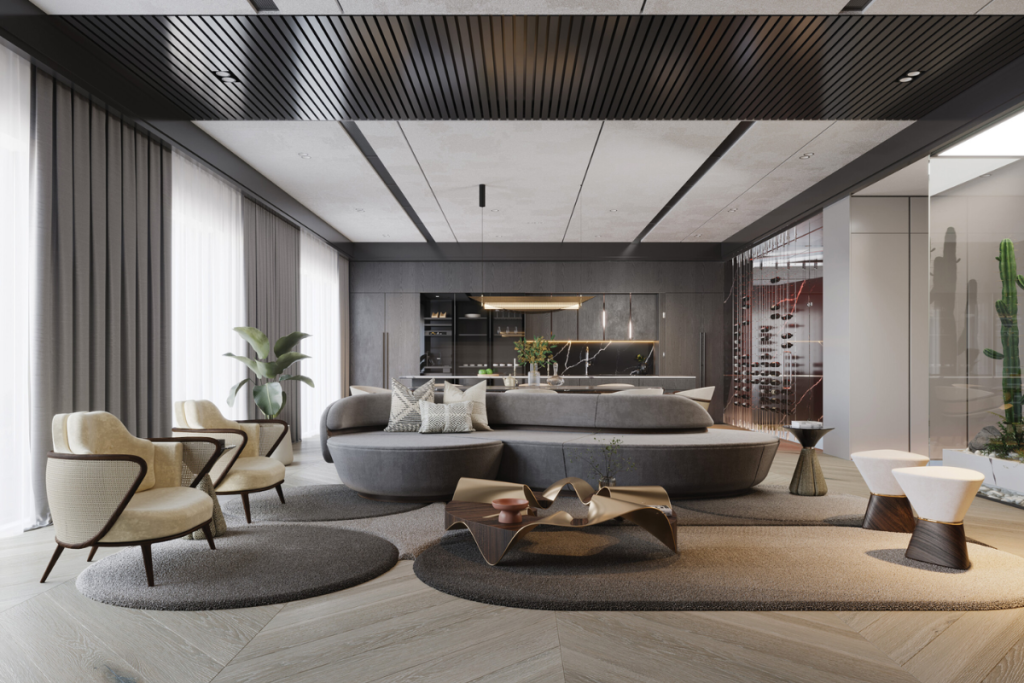
Wabi Sabi in interior design
The aesthetic value of Wabi Sabi is therefore very different: a beautiful space doesn’t need to be “new” or “perfect,” but rather authentic, profound, and bearing the mark of time.
Characteristics of the Wabi Sabi style
Emphasizing minimalism while being rich in emotion.
Wabi Sabi eliminates superfluous details and elaborate decorations, but this doesn’t make it cold like some other minimalist styles. Each item retained in the space carries its own story, texture, or historical imprint, creating emotional depth for the overall effect.
Prioritize natural materials.
Wood, stone, ceramics, linen, concrete, and metal are the primary materials, retaining their natural grain, surface, and color instead of being covered with a glossy paint or industrial finish.
Celebrating the beauty of imperfection
Cracks, stains, rough surfaces, or asymmetry are not considered flaws but rather aesthetic highlights, showcasing the authenticity and “soul” of the material.
A neutral color palette that is close to nature.
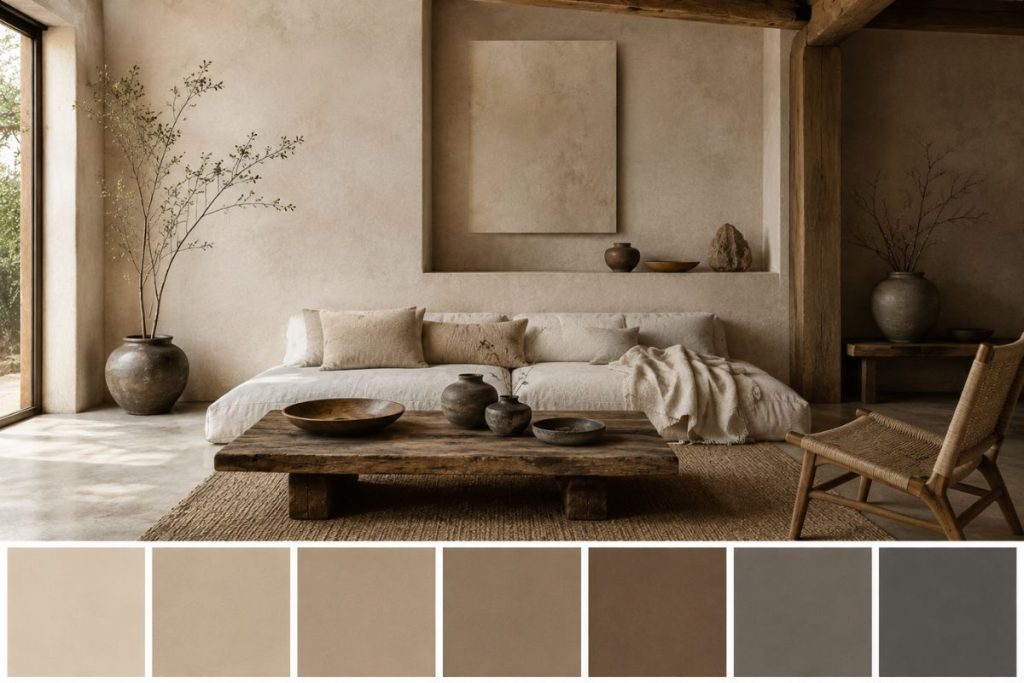
The neutral color palette of the Wabi Sabi style.
Wabi Sabi spaces typically utilize muted, warm, and neutral tones such as beige, earthy browns, grays, and ivory—creating a soothing and harmonious feel with the surrounding environment.
Take advantage of natural light.
Sunlight is considered a crucial element in highlighting the texture of materials and creating a changing rhythm in the space throughout the day.
Spacious, with minimal furniture.
The number of furnishings is kept to a minimum, retaining only those that are truly necessary and have practical or emotional value, allowing the space to “breathe” and creating a feeling of spaciousness and airiness.
Materials commonly used in the Wabi Sabi style
Natural wood
Wood that retains its natural grain, can be treated with natural oils instead of varnish, and is commonly found in flooring, furniture, and architectural details.
Natural stone
Rough or lightly polished stone is used for countertops, wall cladding, or garden paving, providing a solid and earthy feel.
Handcrafted pottery
Pottery with crackle glaze and asymmetrical shapes is a common decorative feature, clearly reflecting the Wabi Sabi spirit of “accepting imperfection.”
Concrete and mortar effects
Polished concrete or rough-effect plaster creates a rustic surface, suitable for walls, floors, or large architectural structures.
Matte metal finish
For metal details such as door handles, door frames, or interior fittings, the current trend is to favor matte or textured finishes over high-gloss ones.
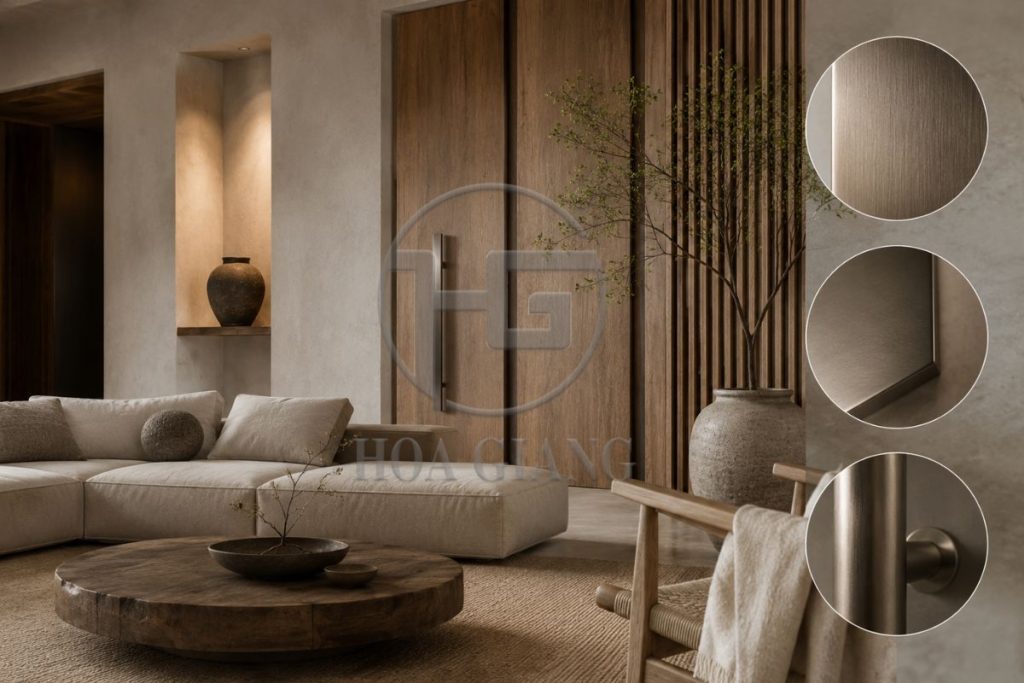
Stainless steel applied in the Wabi Sabi style.
The brushed (Hairline) or matte-finish stainless steel options are modern choices that still maintain the tranquil, authentic spirit that Wabi Sabi aims for — ensuring durability, ease of cleaning, and preserving the overall rustic feel of the space.
Suitable Applications of Stainless Steel in Wabi Sabi style Spaces
In Wabi-Sabi interiors, stainless steel should be used selectively as an accent material, harmonizing with wood, stone, and other materials that showcase natural beauty.
- Kitchen Area: Stainless steel can be used for kitchen cabinet fronts, sinks, and faucets. Brushed finishes help reduce the glossy appearance of metal and pair well with natural wood and stone.
- Furniture and Accessories: Stainless steel is suitable for table and chair legs, cabinet handles, mirror frames, and decorative trim. Gray tones and brushed finishes help maintain the understated, rustic character of the space.
- Lighting and Decorative Objects: Stainless steel can be incorporated into ceiling lights, trays, and small decorative accessories. Simple designs, matte finishes, and muted colors are ideal for complementing the Wabi-Sabi aesthetic.
- Feature Walls and Decorative Panels: Stainless steel panels with a subtle water-ripple texture or brushed finish can create focal points on selected wall sections. They can be paired with concrete-effect walls, wood, or natural stone to create a balanced, organic look.
Resort, villa, and homestay owners want to create a unique and distinctive interior design style that stands out from mainstream trends.
Distinguishing Wabi Sabi style from other interior design
Below is a detailed comparison table between Wabi Sabi and other popular interior design styles, helping you easily identify the core similarities and differences:
| Style | core spirit | Material | color tone |
| Good morning. | Celebrating imperfect beauty, rawness, and the marks of time. | Raw wood, natural stone, unglazed pottery, clay, jute, linen | Earthy, muted tones (brown, gray, earthy); soft, contemplative lighting. |
| Minimalism | “Less is more” – Minimalism, eliminating unnecessary details to achieve order. | Metal, glass, smooth concrete, high-grade plastic, composite. | Neutral color tones (white, black, gray); abundant natural light. |
| Japandi | Combining the minimalist, cozy atmosphere of Nordic design with the tranquility of Japanese culture. | Light/dark wood, rattan and bamboo weaving, natural textiles, greenery. | Warm, bright color tones (cream, beige, natural wood, green) |
| Scandinavian | Aiming for a comfortable, cozy, and energetic living space cosy) | Light-colored wood (oak, pine), fur, wool, felt, leather | The dominant light color scheme (white, light gray) optimizes natural light. |
Current Wabi Sabi design trends
Wabi Sabi is increasingly being applied in various types of construction projects in Vietnam, from townhouses, apartments, and villas to resorts, offices, and cafes. Its flexibility in combining materials and colors allows it to easily adapt to different scales and budgets, while still maintaining its unique character.
FAQ – Frequently Asked Questions about Wabi Sabi Style
Is the Wabi Sabi style suitable for small apartments?
Yes. Thanks to its minimalist style and minimal furniture, Wabi Sabi is very suitable for small apartments, making the space look more open and spacious.
Is Wabi Sabi similar to the Japandi style?
Not entirely. Japandi is a blend of Wabi Sabi spirit and Scandinavian style, often featuring brighter and more modern colors compared to traditional Wabi Sabi.
What materials are used in Wabi Sabi style?
The main materials include natural wood, stone, handcrafted ceramics, concrete, linen, and matte-finished metals such as hairline stainless steel or brushed stainless steel.
Is the cost of Wabi Sabi style interior design high?
Costs depend on the type of materials and the level of craftsmanship used. Natural materials and handcrafted items are generally more expensive than industrially produced ones, but homeowners can reduce the number of furniture pieces to balance the budget.
Discover material solutions for Wabi Sabi style from Hoa Giang
With nearly 20 years of experience in the production and installation of high-end decorative stainless steel, Hoa Giang offers material solutions that help realize the Wabi Sabi style in a sophisticated and sustainable way.
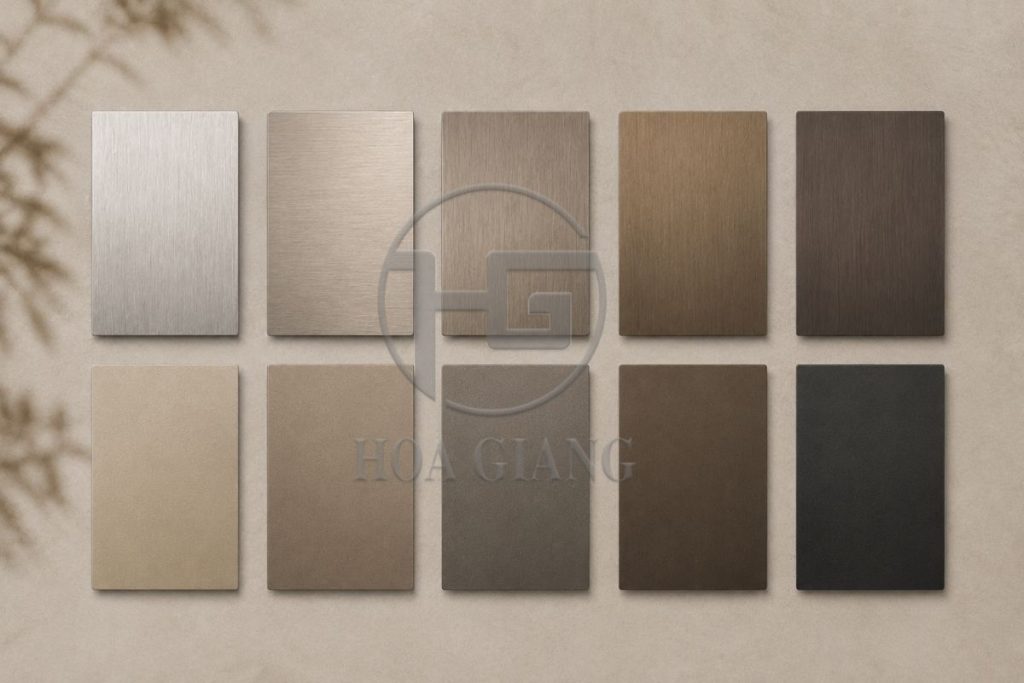
Wabi Sabi style stainless steel color palette provided by Hoa Giang.
With its large-scale production capacity, modern machinery system, and experienced technical team, Hoa Giang has been and continues to be a partner in numerous hotel, resort, villa, luxury apartment, shopping mall, and service space projects nationwide.
If you are looking for material solutions for your Wabi Sabi space, contact Hoa Giang for advice and to choose the right solution for your project.
HOA GIANG STAINLESS STEEL
Fanpage: Hoa Giang Stainless Steel Group
Hotline: 0918311491 – 0949805203


