


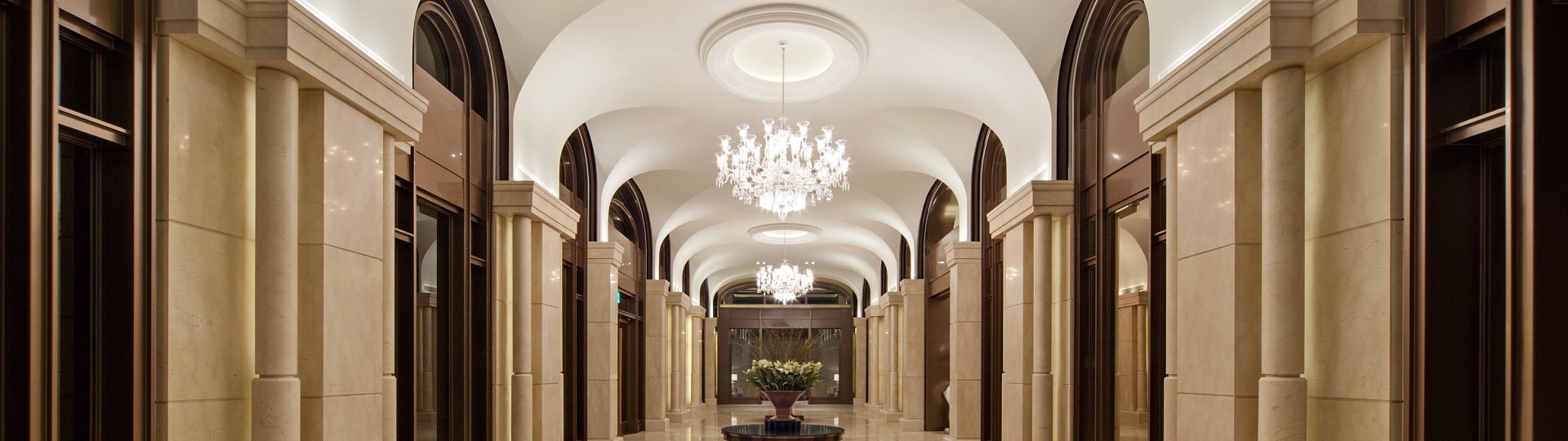
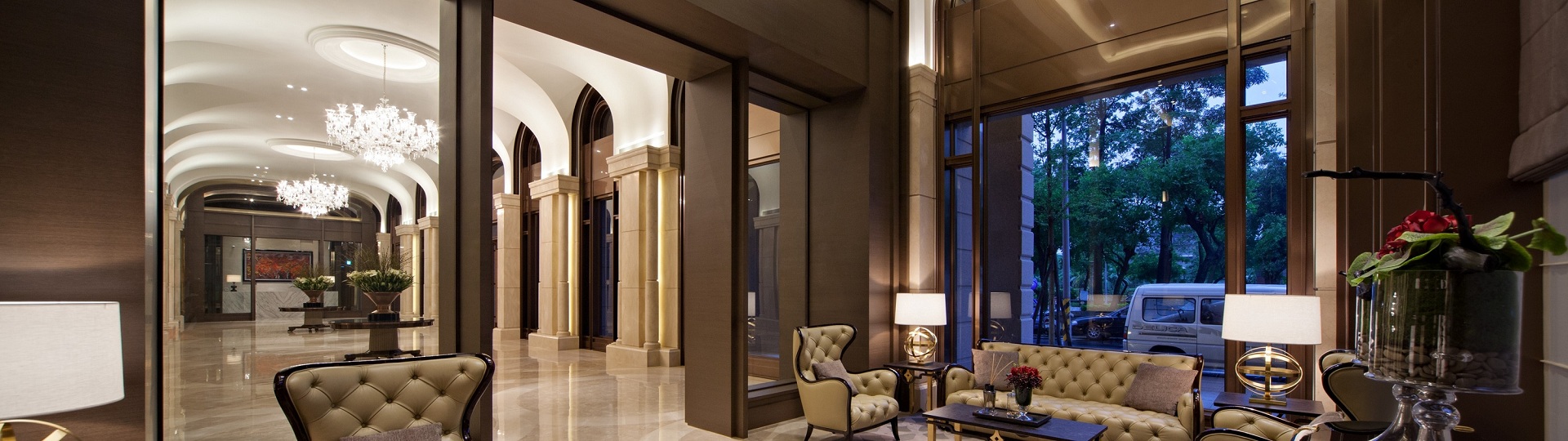
Stainless steel elevator cladding is one of the preferred finishing solutions in modern constructions due to its ability to combine durability, aesthetics, and design flexibility. From elevator cabins and doors to decorative details, stainless steel with its diverse surface finishes can create a cohesive and sophisticated look for any space.
Join Hoa Giang in exploring popular stainless steel elevator cladding options, their practical applications, and key criteria for selecting the right solution for each project.
Nội dung chính
- 1 What constitutes a reputable stainless steel elevator cladding installation service?
- 2 Why should stainless steel be used for elevator cladding?
- 3 Common types of stainless steel elevator cladding
- 4 Stainless steel cladding for elevator installation
- 5 Criteria for selecting a reputable contractor for stainless steel elevator cladding.
- 6 What factors determine the cost of installing stainless steel cladding for elevators?
- 7 Applications of stainless steel cladding for elevators in construction projects.
- 8 Installation of stainless steel cladding for elevators at Hoa Giang.
- 9 FAQ – Frequently Asked Questions about Stainless Steel Elevator Cladding Installation
- 9.1 Which type of stainless steel should be chosen for elevator cladding?
- 9.2 What is the difference between mirror-finish stainless steel and hairline brushed stainless steel?
- 9.3 Is fingerprint-resistant stainless steel suitable for elevator cabins?
- 9.4 Is it possible to fabricate stainless steel elevator cladding according to a custom design?
- 9.5 How is the cost of installing stainless steel cladding for elevators calculated?
- 9.6 How to choose a reputable contractor for stainless steel elevator cladding?
- 10 Conclude
What constitutes a reputable stainless steel elevator cladding installation service?
Stainless steel elevator cladding is the process of using pre-fabricated stainless steel sheets to finish the exterior or interior surfaces of elevator areas. Depending on the building design, stainless steel can be used to clad the entire elevator or combined with other materials such as glass, stone, wood, and metal.
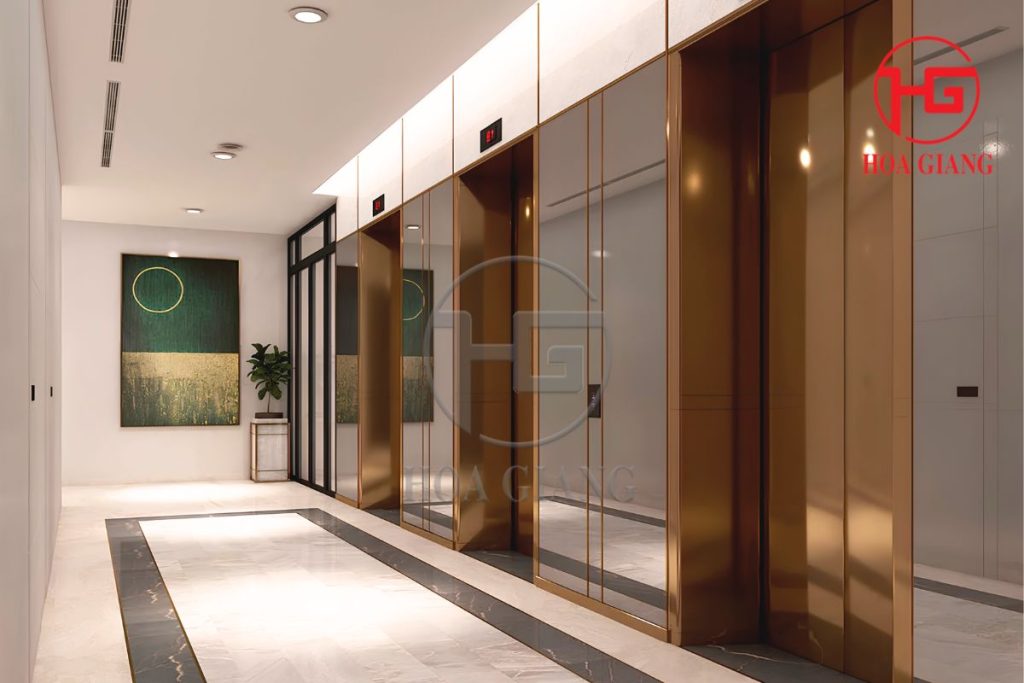
Decorative stainless steel elevators at ST Moritz – Project executed by Hoa Giang.
A system stainless steel elevator cladding Typically deployed at:
- Elevator cabin walls.
- Cabin door.
- Floor doors.
- Door frame.
- Control panel area.
- Trim details, handrails, moldings, and accents.
In high-end projects, stainless steel not only serves to protect surfaces but also becomes an important part of the interior design language. Therefore,Reliable stainless steel elevator cladding installationIt is necessary to ensure three factors simultaneously: suitable materials, workmanshipHe was precise and had a perfect aesthetic sense.
Why should stainless steel be used for elevator cladding?
Enhance the aesthetics of the space.
Elevators are typically located in high-traffic areas and are often the first thing people see when entering a building. Stainless steel surfaces help create a more modern, clean, and professional look.
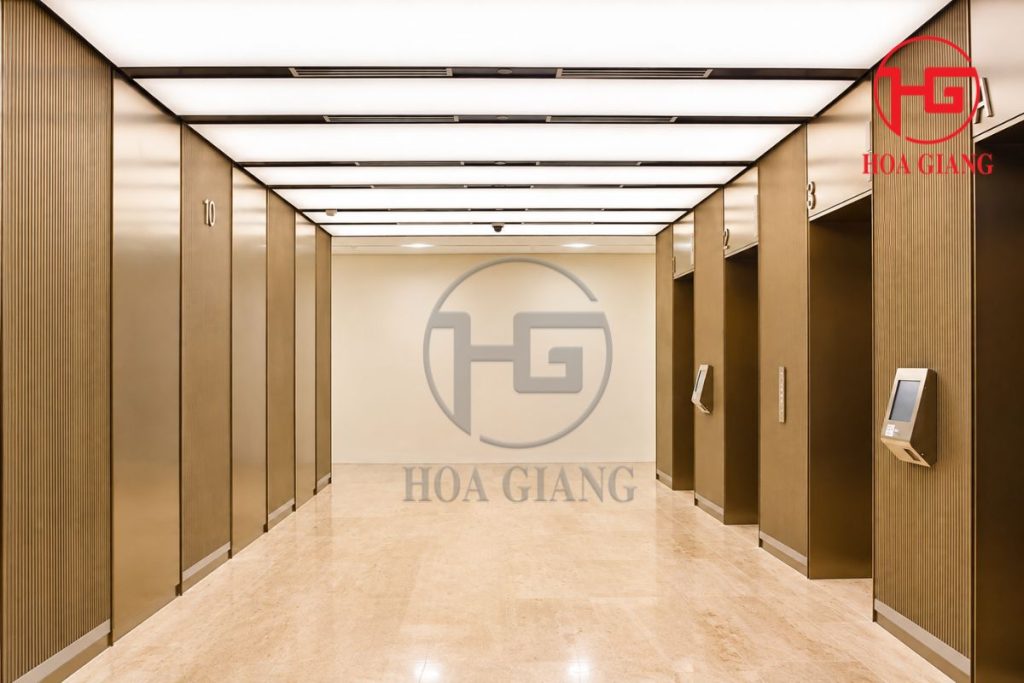
Decorative stainless steel elevator – A project implemented by Hoa Giang.
In particular, with many options such as mirror-finish stainless steel, hairline stainless steel, sandblasted stainless steel, or patterned stainless steel, the material can be customized to match the overall design style.
High durability, suitable for long-term use.
Elevators are areas frequently subjected to direct impact. Stainless steel has good durability, corrosion resistance, and is suitable for the operating environment. Choosing the right type of stainless steel and thickness according to project requirements helps increase stability during use.
Easy to clean and maintain
The stainless steel surface is convenient for daily cleaning. This is a notable advantage for elevator cabins in hotels, offices, apartments, shopping malls, and other buildings with high traffic.
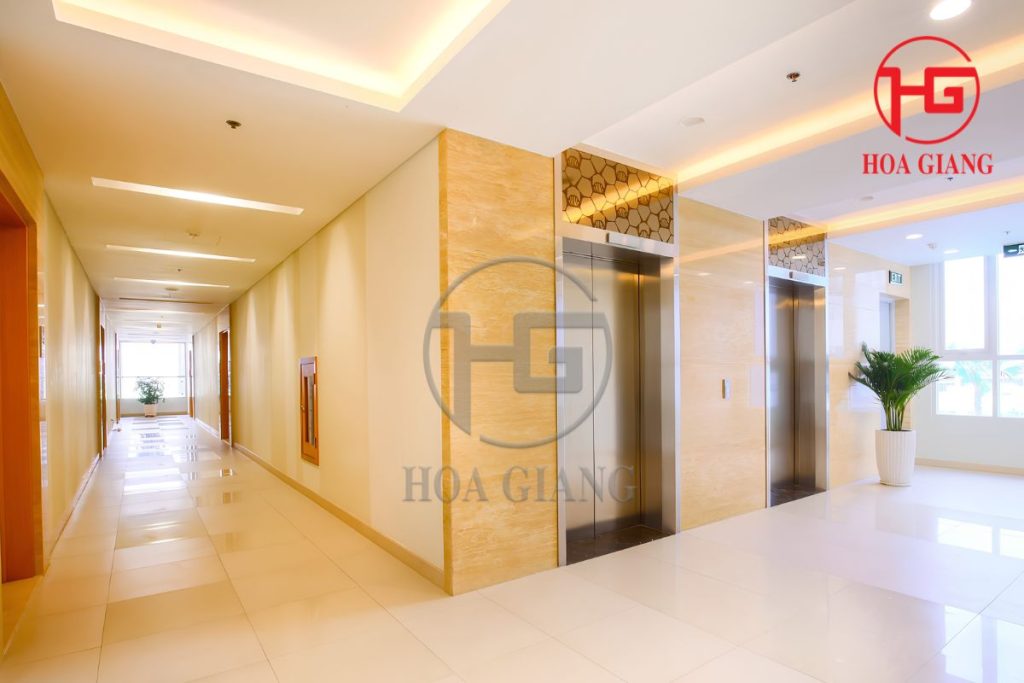
Stainless steel decorative elevators at Sala Urban Area – a project implemented by Hoa Giang.
Some types of stainless steel have specialized surface treatments that help reduce fingerprint smudges, maintaining a clean appearance during use.
A wide variety of colors and finishes.
One of the outstanding advantages of decorative stainless steel is its ability to create many different surface effects.
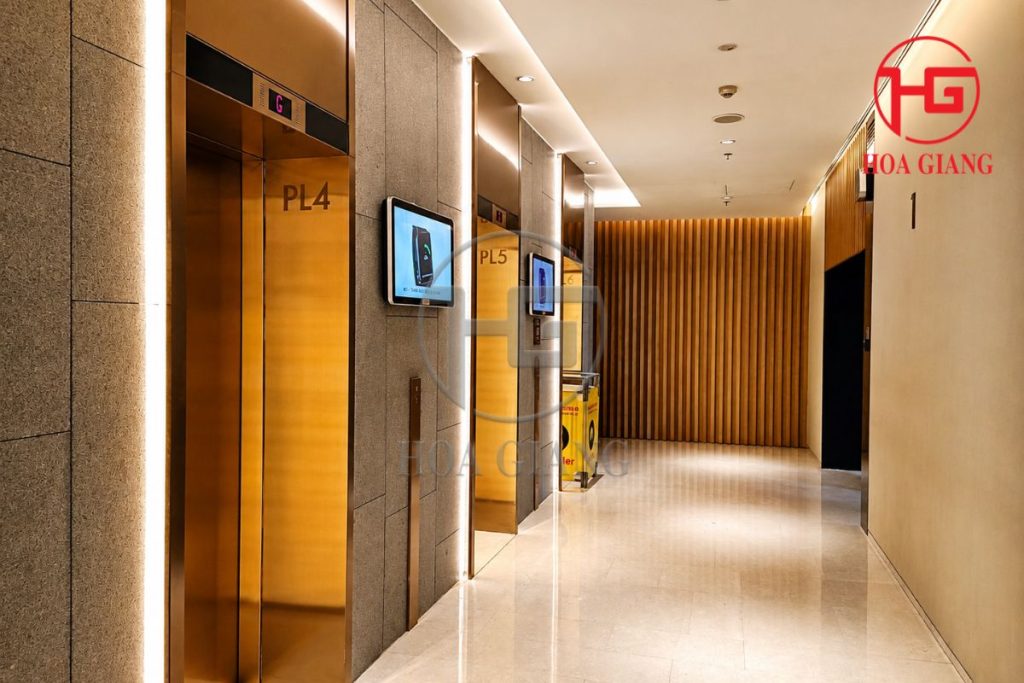
Decorative stainless steel elevators at The Gateway Thao Dien – a project constructed by Hoa Giang.
Depending on the design, the investor can choose:
- The mirror surface is shiny.
- Hairline textured surface.
- Matte sandblasted surface.
- Decorative patterned stainless steel.
- Anti-fingerprint stainless steel.
As a result, stainless steel can meet a wide range of aesthetic requirements without being limited to a single finish.
Suitable for many architectural styles
From apartments and offices to hotels, resorts, showrooms, and villas, stainless steel can be used in a variety of applications.
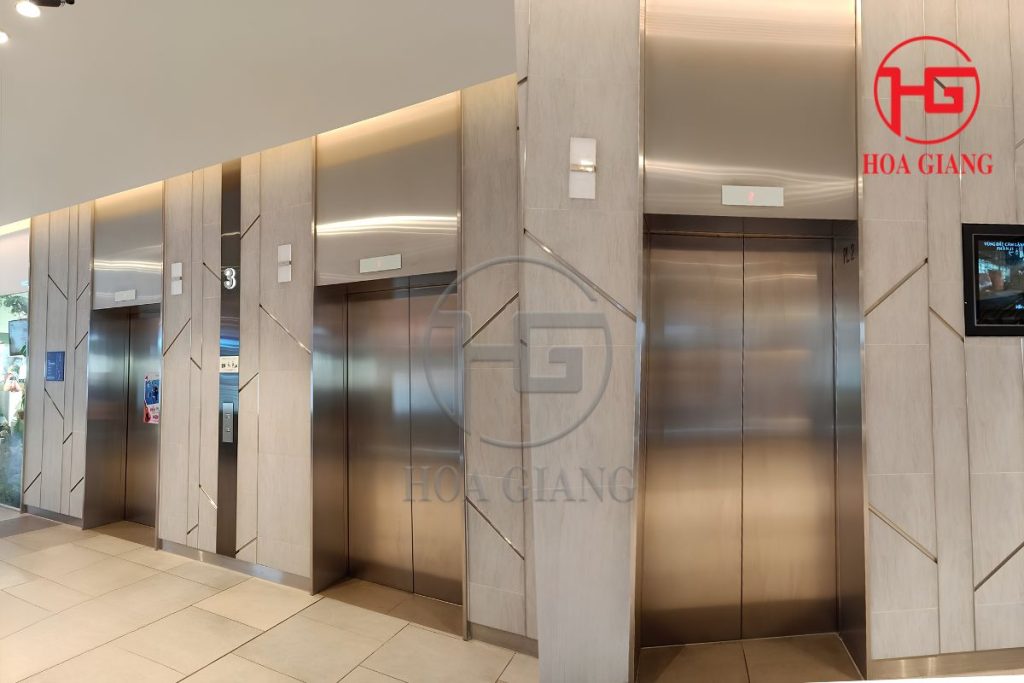
Decorative stainless steel elevators at Estella Heights – A project undertaken by Hoa Giang.
For minimalist designs, hairline or sandblasting creates a sophisticated feel. Meanwhile, mirrored or patterned stainless steel can create a striking focal point in spaces requiring a high level of decorative flair.
Common types of stainless steel elevator cladding
The choice of stainless steel surface directly affects the appearance of the elevator cabin and surrounding area. Below are some commonly used types.
Patterned stainless steel
Patterned stainless steel is treated with decorative designs on its surface, creating a more striking visual effect compared to plain stainless steel.
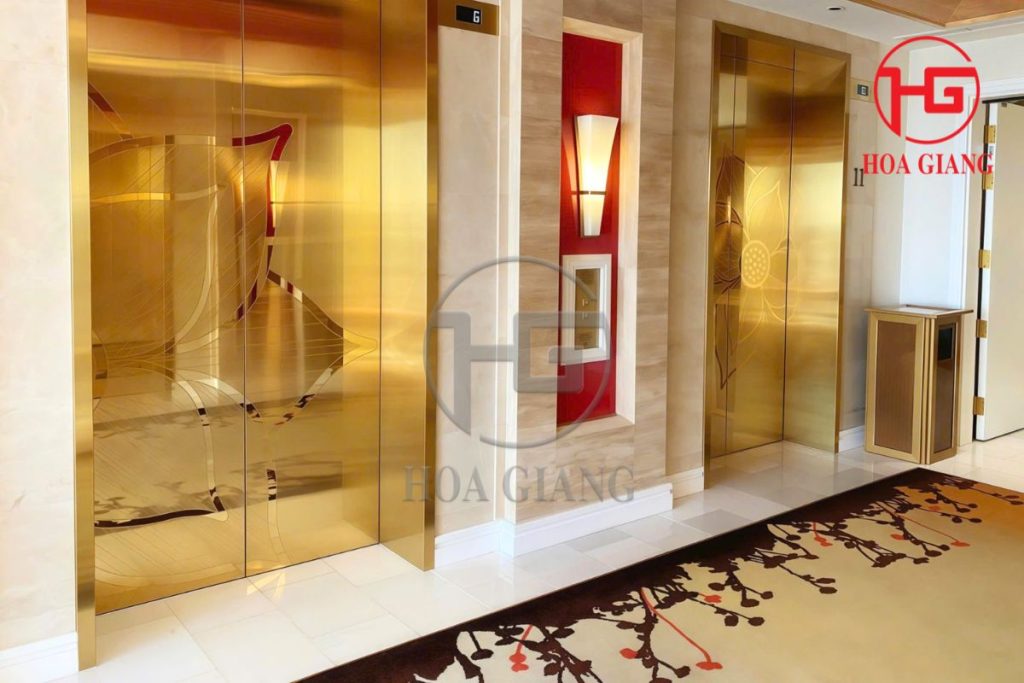
The patterned stainless steel elevator cladding at The Grand Ho Tram in 2012 remains vibrant to this day – a project constructed by Hoa Giang.
This type of stainless steel is suitable for projects that need to create a focal point for the elevator cabin or door area. The pattern can be chosen according to the design concept, helping the stainless steel surface become an integral part of the overall interior.
Patterned stainless steel is commonly used for:
- Cabin wall.
- Decorative panel for the stairwell door.
- Accent wall or column.
- The interior details need to create a special effect.
Mirror stainless steel
Mirror-finish stainless steel has a highly polished surface, creating a reflective effect that enhances light and images.
This is a suitable option for buildings with a luxurious, modern style. Reflective surfaces can also create a feeling of a larger and brighter space when used appropriately.
Mirror-finish stainless steel is often chosen for elevator cabins, elevator doors, and decorative elements requiring a glossy finish.
Hairline brushed stainless steel
Inox HairlineIt has a surface with fine, relatively evenly spaced brushed lines running in one direction. Compared to mirror-finish stainless steel, hairline stainless steel offers a lighter and more modern feel.
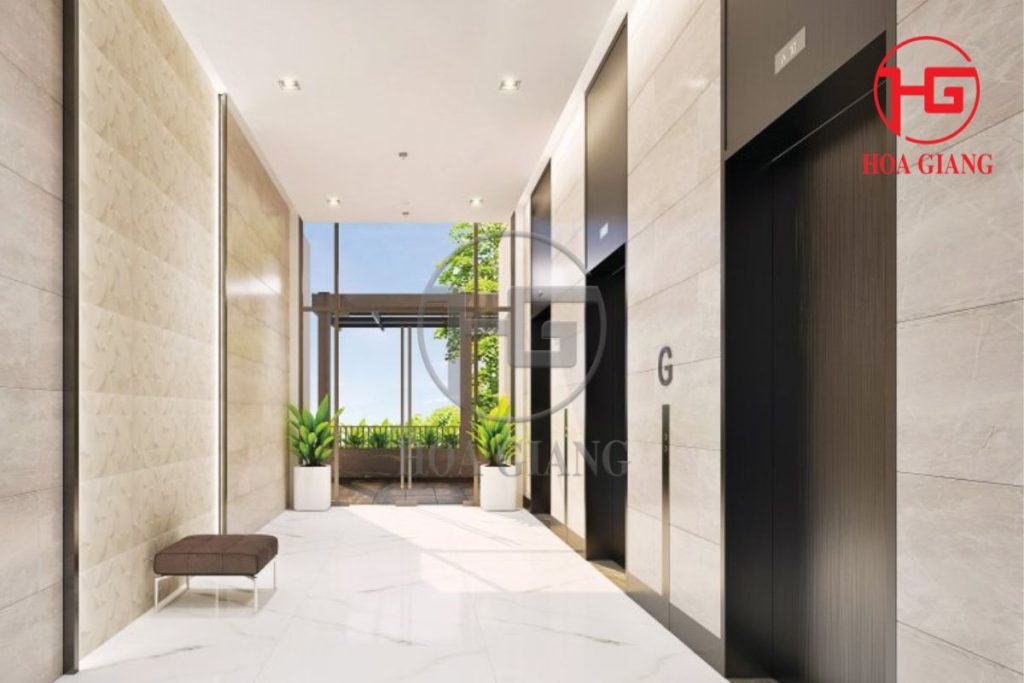
Stainless steel hairline decoration for elevators at Happy Residence Premier – a project constructed by Hoa Giang.
The advantage of a hairline surface is that it suits many interior design styles, especially:
- Modern office.
- Apartment.
- Hotel.
- Luxury housing.
- Commercial building.
The brushed surface also helps create a subtle visual effect and is easy to combine with glass, stone, or other interior materials.
Sandblasted stainless steel
Sandblasted stainless steel has a matte surface with a fine grain effect, limiting the strong reflectivity of mirror-finish stainless steel.
This surface offers a luxurious feel without being overly glossy, making it suitable for designs that emphasize sophistication and minimalism.
Sandblasted stainless steel can be used for cabin walls, elevator doors, or decorative elements that require a distinctive material.
Anti-fingerprint stainless steel
Anti-fingerprint stainless steel has a surface treatment designed to minimize the retention of fingerprints and smudges during use.
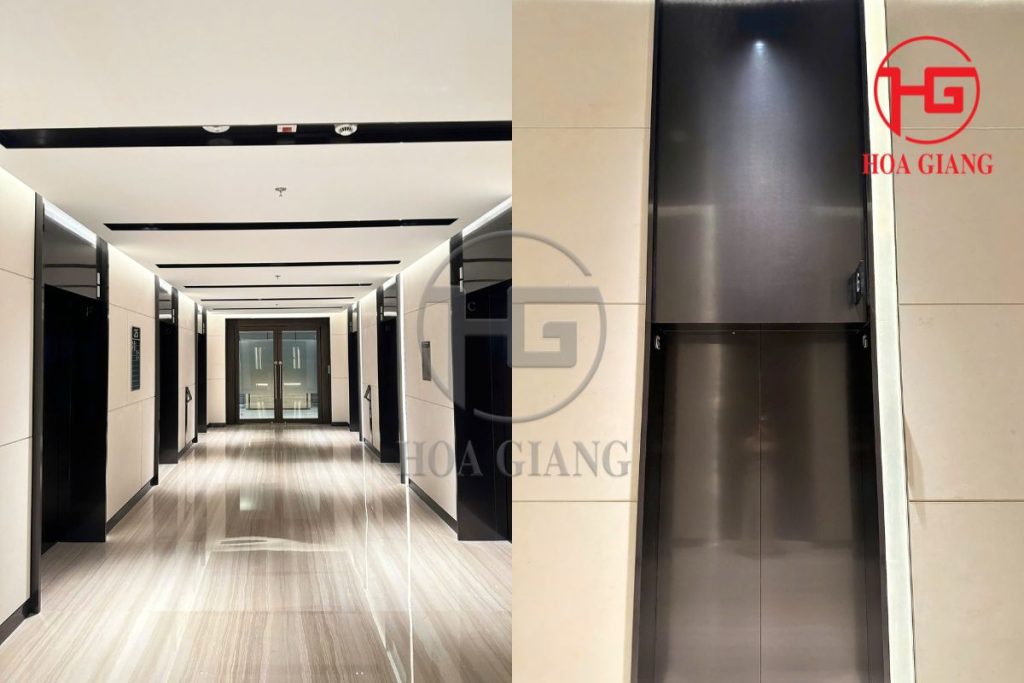
Decorative stainless steel elevators at The Metropole Thu Thiem – a project constructed by Hoa Giang.
This is a worthwhile option for areas with high elevator usage. The clean surface reduces the need for frequent cleaning and maintains the aesthetic appeal of the cabin.
Anti-fingerprint stainless steel can be used in:
- Apartment.
- Office building.
- Shopping mall.
- Hotel.
- Public works.
Stainless steel cladding for elevator installation
Depending on the design and existing conditions of the building, stainless steel can be used in various locations.
Door frame cladding for the floor
The door frame can be finished in stainless steel to enhance aesthetics and create a seamless look with the elevator door.
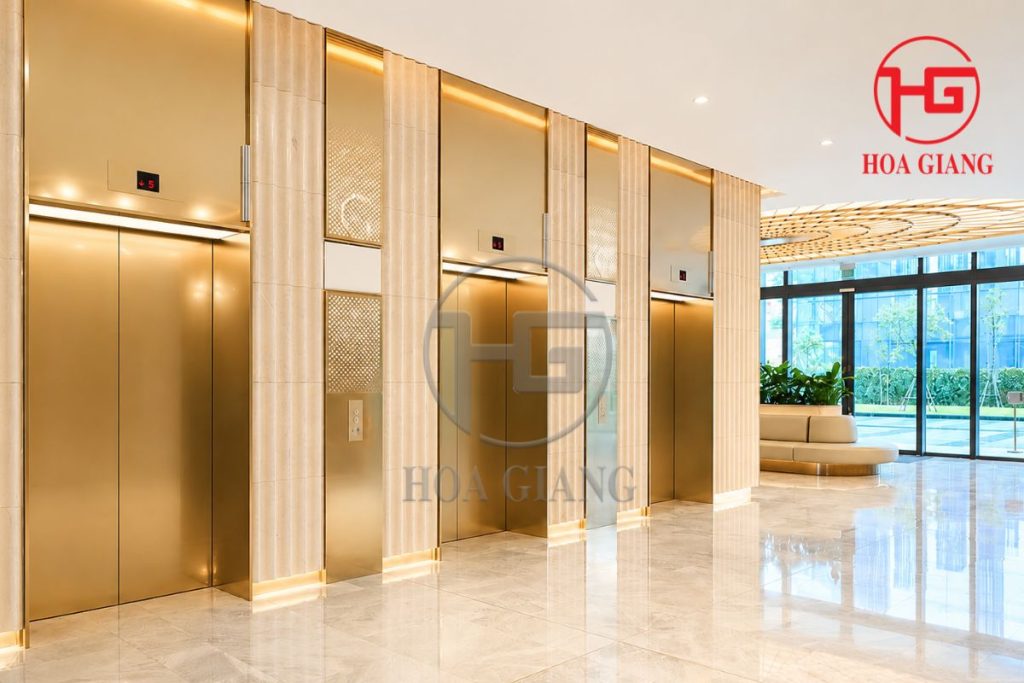
Decorative stainless steel elevators at Saigon Marina IFC – Project constructed by Hoa Giang.
Cabin wall cladding
This is one of the most popular options. The stainless steel panels are fabricated to the actual dimensions of the cabin, ensuring uniformity between the wall sections.
Elevator door panel
Stainless steel can be used to finish elevator cabin doors or landing doors, creating a seamless look between the elevator system and interior design.
Column cladding and decorative panels
For high-end designs, stainless steel can be used as an accent material on columns, trim, or decorative panels around the elevator area.
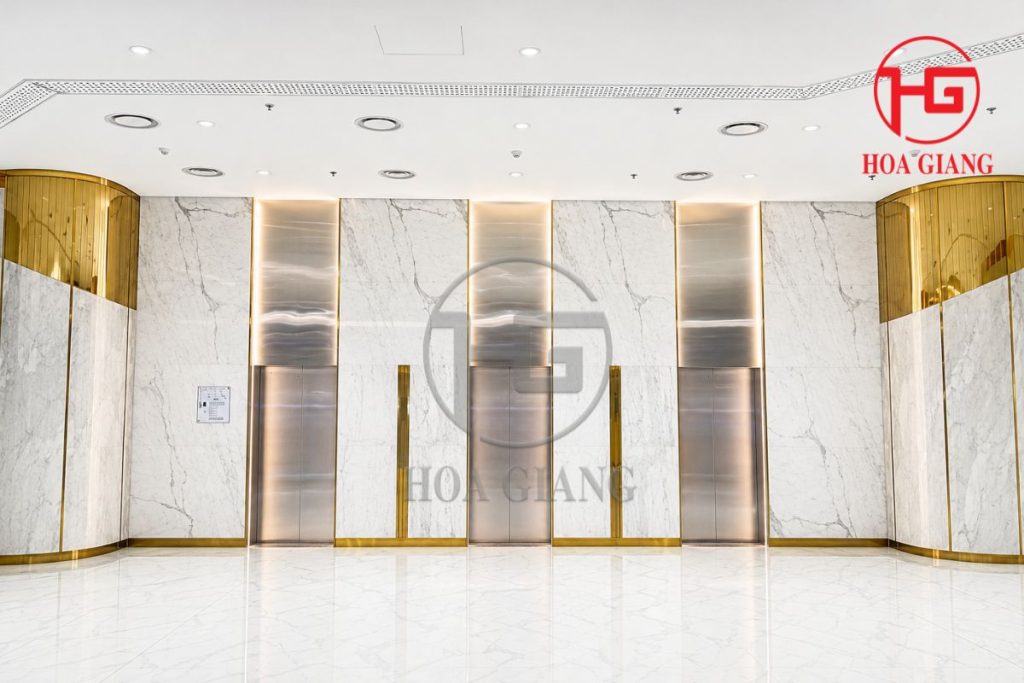
Decorative stainless steel elevators at Thiso Mall Sala – A project implemented by Hoa Giang.
Dashboard trim and decorative details
Details such as control panels, trims, bezels, or button areas can be fabricated from stainless steel to custom dimensions and drawings.
Criteria for selecting a reputable contractor for stainless steel elevator cladding.
Not all stainless steel suppliers have the capacity to handle elevator projects requiring high precision. When choosing a supplier, investors should consider the following criteria.
Capable of direct processing.
Units with their own factories or processing facilities will have more control over materials, dimensions, surface finish, and timelines.
The material has clearly defined specifications.
The type of stainless steel, thickness, surface finish, and technical requirements must be clearly defined before implementation.
Diverse surface finishes
A professional company should be able to offer a variety of options such as patterned stainless steel, mirror finish, hairline finish, sandblasting, and anti-fingerprint coating to meet design requirements.
Ability to manufacture according to drawings
Elevators have many components with varying sizes and installation locations. The ability to read blueprints, use CNC machines, laser cutters, and perform precision machining is crucial.
Experienced in real-world projects.
Images and completed projects serve as a basis for investors to assess the contractor’s processing capabilities and finishing quality.
What factors determine the cost of installing stainless steel cladding for elevators?
Expense Stainless steel cladding for elevators There is no fixed price for all projects. Quotations usually depend on several factors such as:
- Types of stainless steel.
- Stainless steel thickness.
- Type of surface finish.
- Area to be tiled.
- Number of cabins and landing doors.
- The complexity of the design.
- CNC machining, laser cutting, or pattern creation is required.
- Current conditions at the construction site.
- Quantity and installation requirements.
To provide an accurate quote, the contractor needs to base their pricing on the drawings, actual dimensions, and finishing requirements of each project.
Applications of stainless steel cladding for elevators in construction projects.
Offices and buildings
Stainless steel with hairline finish, sandblasting, or anti-fingerprint coating can create a professional, modern look for the elevator area.
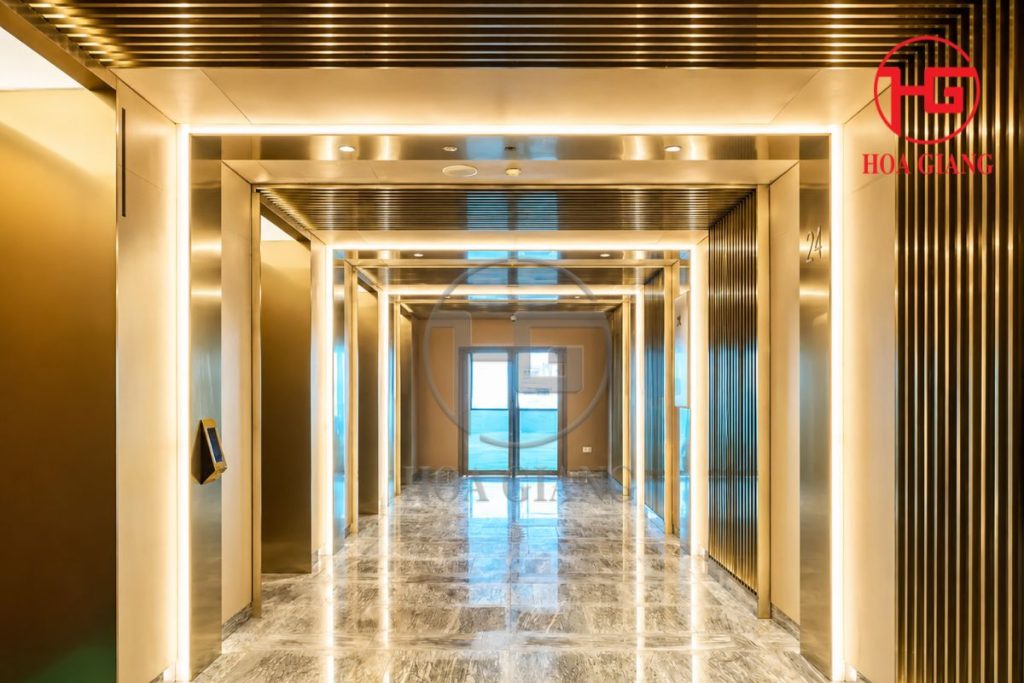
Decorative stainless steel elevators at Saigon Marina IFC – Project constructed by Hoa Giang.
Luxury hotels and resorts
Stainless steel gives the elevator area a luxurious appearance while also meeting the frequent usage requirements of hotel guests.
Shopping mall
With a large number of users, stainless steel products, which are easy to clean and highly durable, are a suitable choice.
Luxury apartment
Stainless steel enhances the cabin’s finish quality and creates a seamless look with the lobby and hallway design.
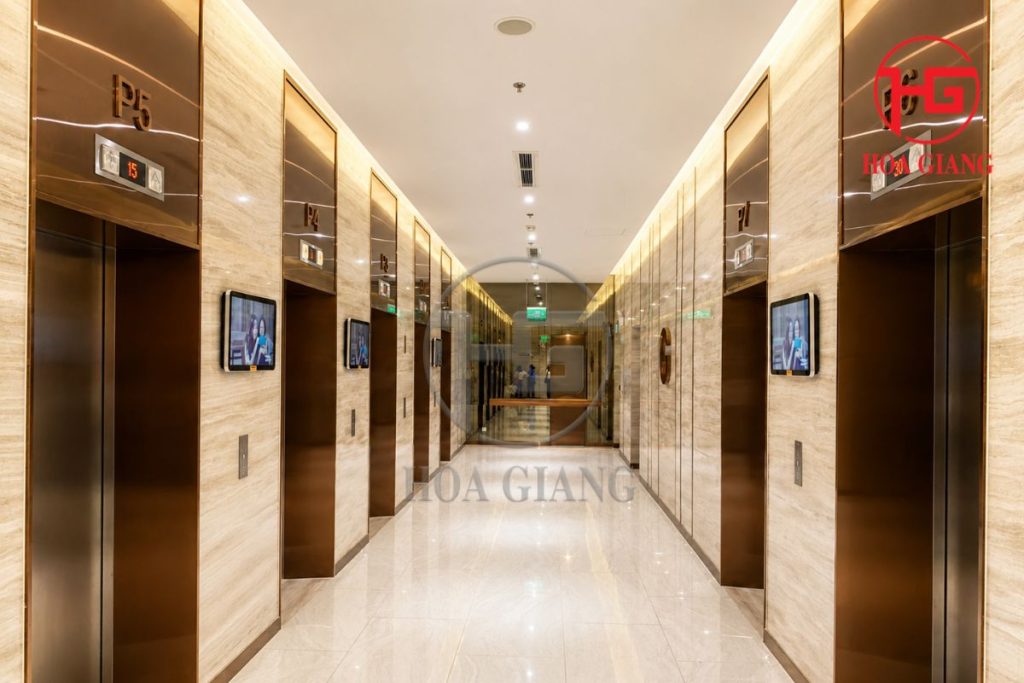
Stainless steel decorative elevators at Ha Do Centrosa – Project constructed by Hoa Giang.
Villas and houses
For high-end homes, stainless steel can be custom-designed to match interior styles, from minimalist to luxurious.
Showrooms and commercial buildings
Patterned or mirrored stainless steel surfaces can be used to create focal points and enhance the visual appeal of a space.
Installation of stainless steel cladding for elevators at Hoa Giang.
Hoa Giang is a supplier and processor decorative stainless steel with a variety of surface finishes, serving the needs of interior design and architectural projects.
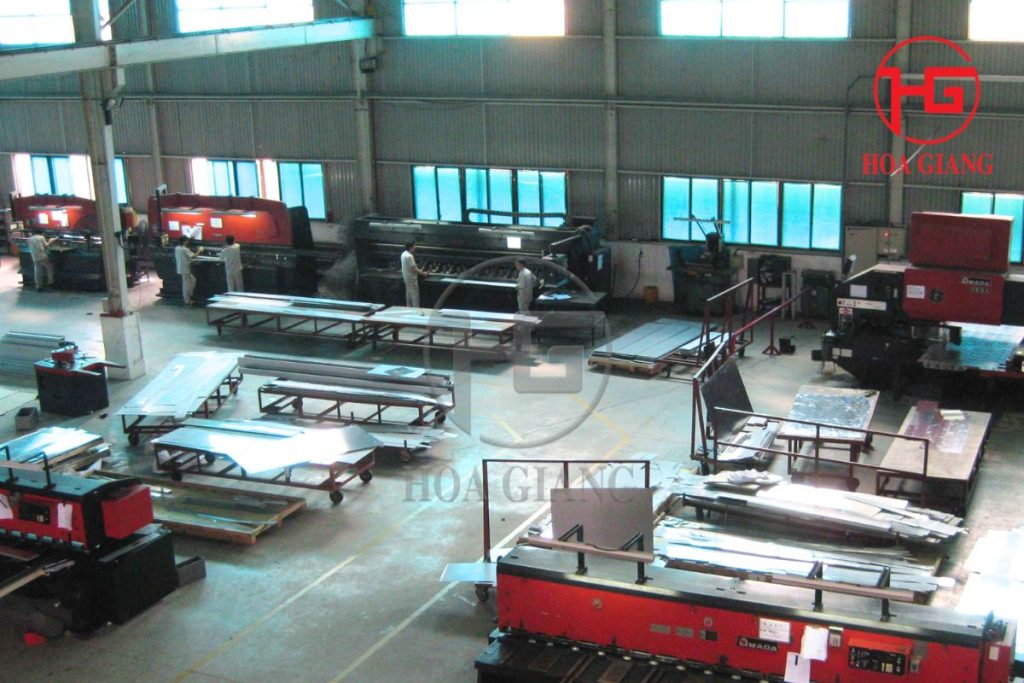
Hoa Giang Stainless Steel Factory
With its in-house manufacturing and processing capabilities, Hoa Giang can meet the size, surface finish, and design requirements of each project.
The following stainless steel types are suitable for elevator applications:
- Patterned stainless steel.
- Mirror-finish stainless steel.
- Hairline brushed stainless steel.
- Sandblasted stainless steel.
- Anti-fingerprint stainless steel.
Besides the material, precision machining capabilities are also crucial to ensure that the installed stainless steel sheets have uniformity, and that the joints and finishing details match the drawings.
For projects requiring custom designs, Hoa Giang can advise on material selection and processing methods based on the specific needs of the project.
FAQ – Frequently Asked Questions about Stainless Steel Elevator Cladding Installation
Which type of stainless steel should be chosen for elevator cladding?
Depending on the design style and usage conditions, mirror-finish stainless steel is suitable for luxurious spaces, hairline stainless steel leans towards modern styles with sandblasted finishes for a sophisticated look, while fingerprint-resistant stainless steel is suitable for high-traffic areas.
What is the difference between mirror-finish stainless steel and hairline brushed stainless steel?
Mirror-finish stainless steel has a polished surface and high reflectivity. Hairline stainless steel has fine brushed lines, creating a lighter and more modern surface effect.
Is fingerprint-resistant stainless steel suitable for elevator cabins?
Yes. This is a suitable option for elevator cabins because the surface is treated to minimize fingerprints and make cleaning easier.
Is it possible to fabricate stainless steel elevator cladding according to a custom design?
Yes. Stainless steel can be cut, bent, CNC machined, or fabricated to the dimensions and technical drawings of each project.
How is the cost of installing stainless steel cladding for elevators calculated?
The cost depends on the type of stainless steel, thickness, area, surface finish, complexity of the design, and fabrication and installation requirements.
How to choose a reputable contractor for stainless steel elevator cladding?
Priority should be given to contractors with direct processing capabilities, clearly defined materials, diverse surface finishes, practical experience, and the ability to meet the project’s technical drawings.
Conclude
Reliable stainless steel elevator cladding installation Not only does it help protect the surface, but it also contributes to perfecting the appearance and enhancing the aesthetic value of the building. With many options such as patterned stainless steel, mirror stainless steel, hairline finish, sandblasting, and anti-fingerprint coating, investors can choose a solution that suits each architectural style and usage need.
Elevate your elevator with premium stainless steel cladding solutions from Hoa Giang. Contact us today for consultation and a quote based on your design.
HOA GIANG STAINLESS STEEL
Facebook: Hoa Giang Stainless Steel Group
Hotline: 0918311491 – 0949805203


