


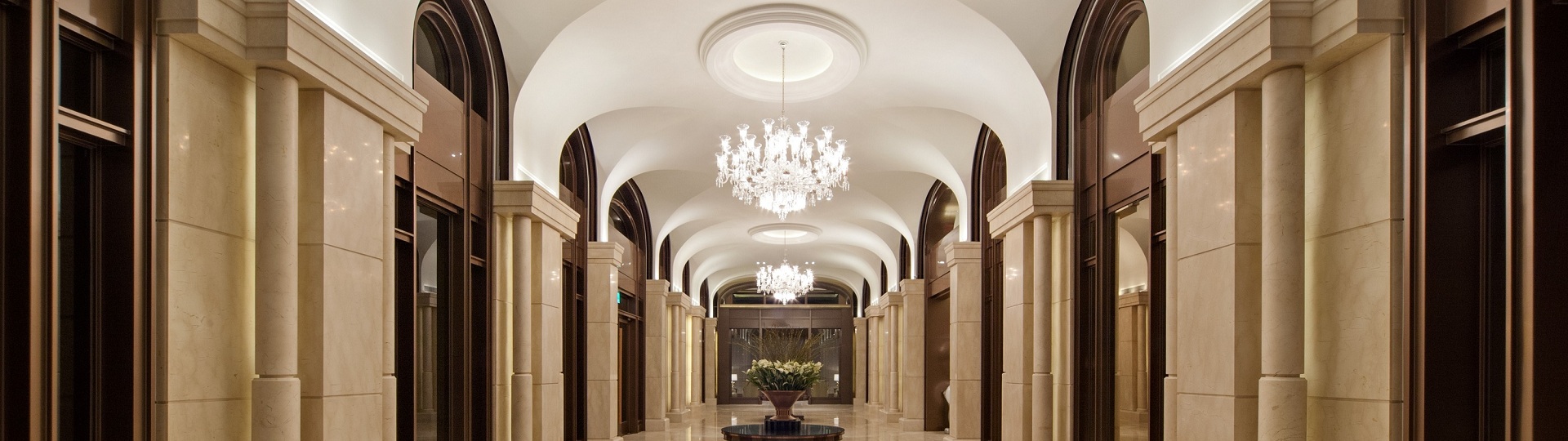
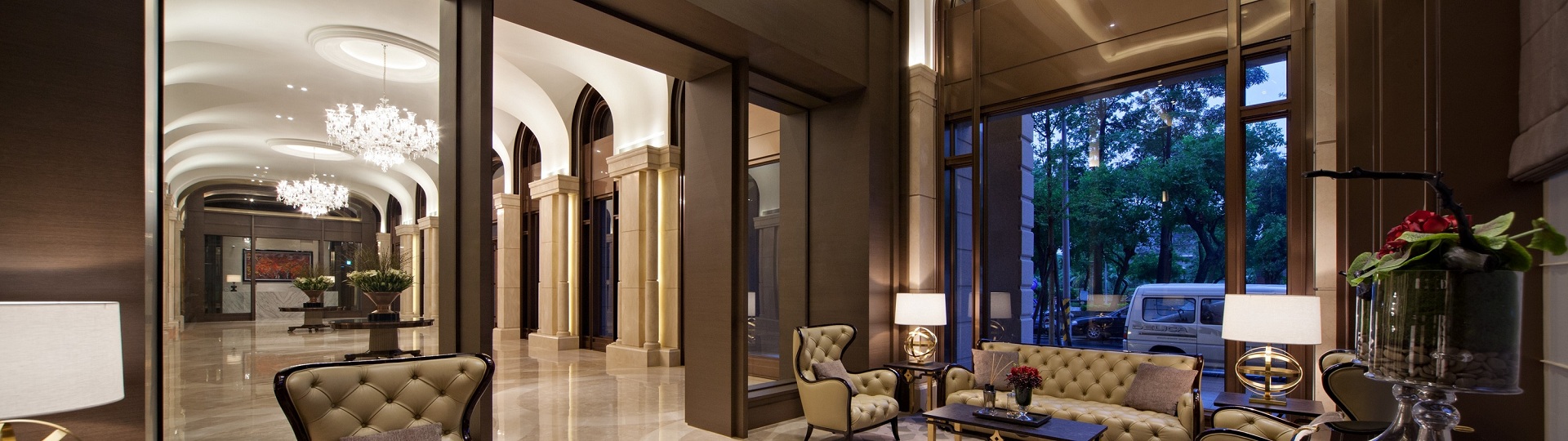
There are spaces that make an impression from the very first moment, even before one has had a chance to observe the entire architecture. The appeal sometimes doesn’t come from elaborate details, but from the meticulous attention to detail in every surface finish. Among these, the elevator is a key highlight, where stainless steel elevator cladding It not only enhances the aesthetic value but also reflects the meticulousness and class of the entire project.
Beyond simply protecting surfaces, these materials have become crucial elements in interior architecture. So, what are the current trends favored in modern construction projects? Let’s explore this with Hoa Giang in the article below.
Nội dung chính
- 1 1. Overview of stainless steel elevator cladding and its role in modern design
- 2 2. Material trends: 304 stainless steel and PVD-coated stainless steel are gaining popularity.
- 3 3. Trends in combining materials in stainless steel elevator cladding design.
- 4 4. Suggestions for choosing stainless steel elevator cladding based on the type of building.
- 5 5. Hoa Giang – A leading and reputable supplier and fabricator of stainless steel elevator cladding in Vietnam.
- 6 Conclude
1. Overview of stainless steel elevator cladding and its role in modern design
Stainless steel elevator cladding is a complete solution for protecting cabin surfaces, doors, and frames, while creating a luxurious look for the space. Not only is it outstanding in terms of durability, corrosion resistance, and ease of maintenance, but this material also offers design flexibility thanks to its diverse range of colors, patterns, and surface effects.
In modern architecture, elevators are no longer simply a means of transportation between floors but have become an integral part of the spatial experience. The stainless steel surface, with its diverse colors, patterns, and finishes, can be harmoniously combined with glass, stone, wood, or laminate, contributing to the design style and creating a unique identity for each building.
2. Material trends: 304 stainless steel and PVD-coated stainless steel are gaining popularity.
2.1. Stainless steel 304 – the standard for durability and safety
Stainless steel 304 is currently the preferred choice due to its rust and corrosion resistance and high durability. Besides its technical advantages, stainless steel 304 allows for a variety of surface finishes while maintaining stability and minimizing discoloration. This makes it easier for design firms to implement diverse concepts without worrying about future replacement options.
2.2. PVD-coated stainless steel – a solution to enhance aesthetics.
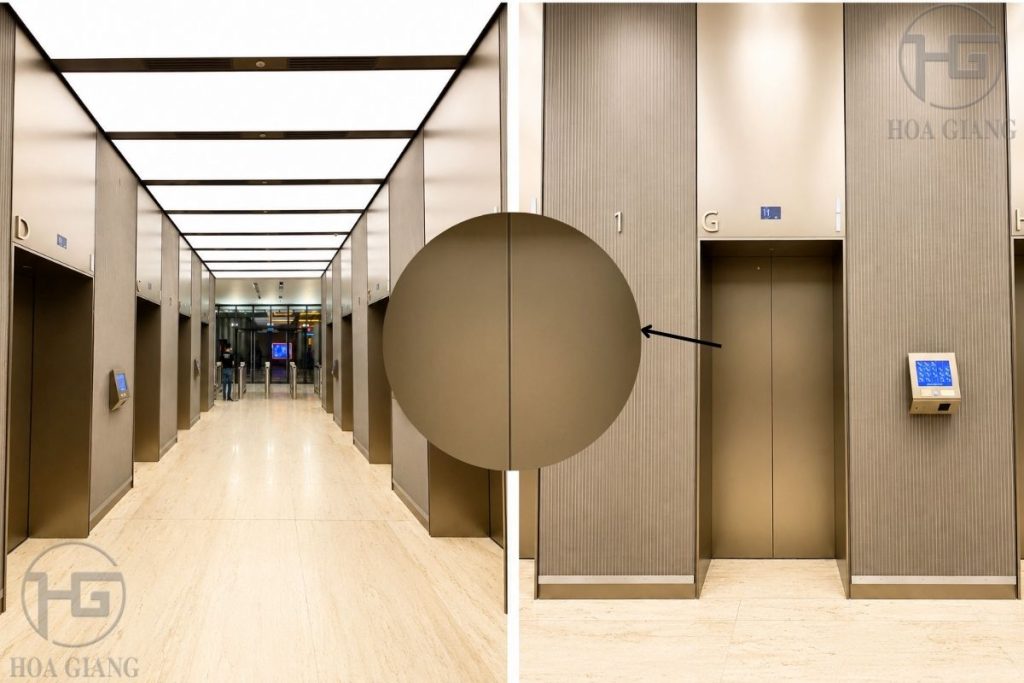
Luxurious bronze-colored stainless steel elevator cladding at Deutsches Haus – A project executed by Hoa Giang.
If 304 stainless steel is the “foundation,” then PVD-coated stainless steel is the “weapon” to create a luxurious and distinctive look for elevator cabins. Thanks to vacuum plating technology, PVD-coated stainless steel offers a rich color palette: mirror gold, rose gold, copper, titanium black, champagne… with excellent color retention and scratch resistance.
3. Trends in combining materials in stainless steel elevator cladding design.
3.1. Laminate Compatibility
Laminate offers a warm feel with a variety of wood and stone patterns, while colored stainless steel is used for framing and accent details. This combination creates a harmonious and luxurious space, particularly suitable for hotels, high-end apartments, and modern offices.
3.2. Glass combined with stainless steel
The combination of tempered glass and stainless steel expands the view and increases the feeling of spaciousness in the elevator cabin. Stainless steel is often used for the frame, trim, and handrails, while the glass creates an open-space effect. This solution is particularly suitable for villas, townhouses, hotels, and resorts.
3.3. Stainless steel combined with wood and stone
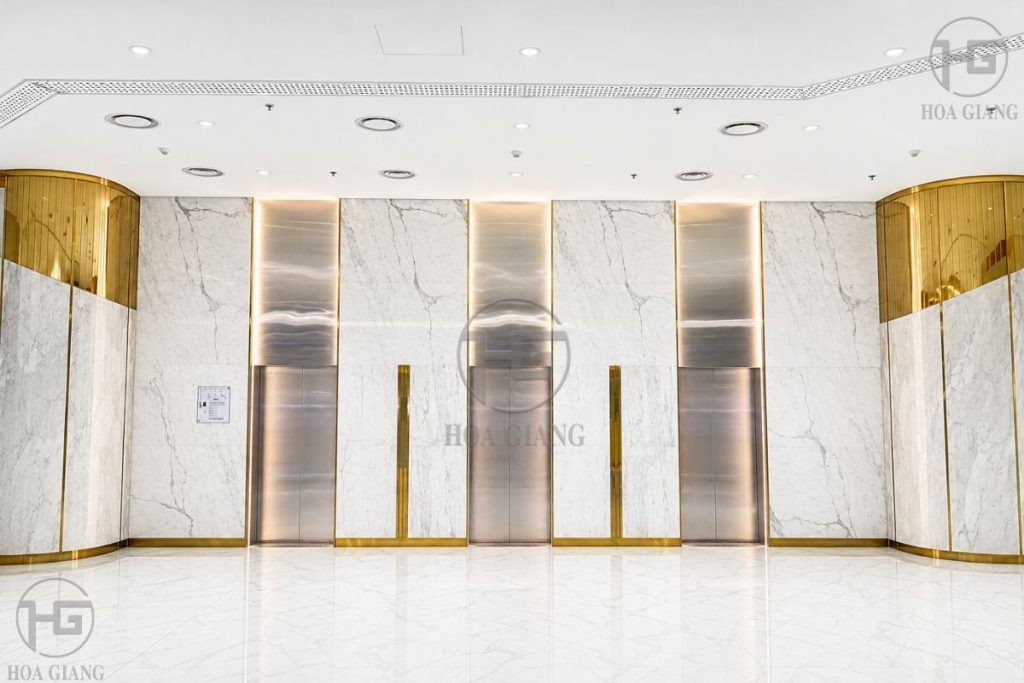
Stainless steel cladding for elevators combined with stone at Thaco Complex – A project implemented by Hoa Giang.
Wood brings warmth, stone provides a sense of solidity, and stainless steel acts as a connector and accent. The combination of these three materials helps the elevator cabin harmonize with the overall architecture, while enhancing the spatial experience in high-end buildings.
4. Suggestions for choosing stainless steel elevator cladding based on the type of building.
4.1. Family homes, townhouses with stainless steel elevator cladding
For family homes, priorities should be durability, ease of cleaning, and harmony with the overall interior design. Homeowners can choose from:
– 304 stainless steel with fine brushed or matte finish for side panels and doors.
– Mirror-finish stainless steel in white or light gold on the back panel to create a sense of spaciousness.
– Incorporate wood-grain laminate to create a warm feeling.
4.2. Apartment buildings, office buildings
For facilities with high traffic flow, the following should be prioritized:
– 304 stainless steel with a fine brushed, matte sandblasted, or fingerprint-resistant surface finish.
– Neutral colors (gray, champagne, silver) ensure they are timeless and easy to maintain.
– Incorporate some accents such as gold trim and corrugated stainless steel panels in the elevator lobby.
4.3. High-end hotels, resorts, and showrooms with stainless steel elevator cladding
For projects that demand a strong brand identity and exceptional experience, you can be bolder in your design approach:
– Combine PVD-coated stainless steel in gold, rose gold, and titanium black with stone, wood, and glass to create a unique concept.
– Application of patterned stainless steel, embossed, engraved logos or artistic designs on cabin walls.
– Focus on designing ceiling lighting, handrails, and control panels to be consistent with the overall style of the hotel or showroom.
The above suggestions are for reference only and can be flexibly adjusted depending on the characteristics of each project, design style, investment budget, and client requirements to achieve the best results.
5. Hoa Giang – A leading and reputable supplier and fabricator of stainless steel elevator cladding in Vietnam.
Nearly two decades of development have brought not only experience, but also an accumulation of technology, production capacity, and market reputation. Hoa Giang currently, it is one of the leading companies in Vietnam specializing in the processing and supply of decorative stainless steel.
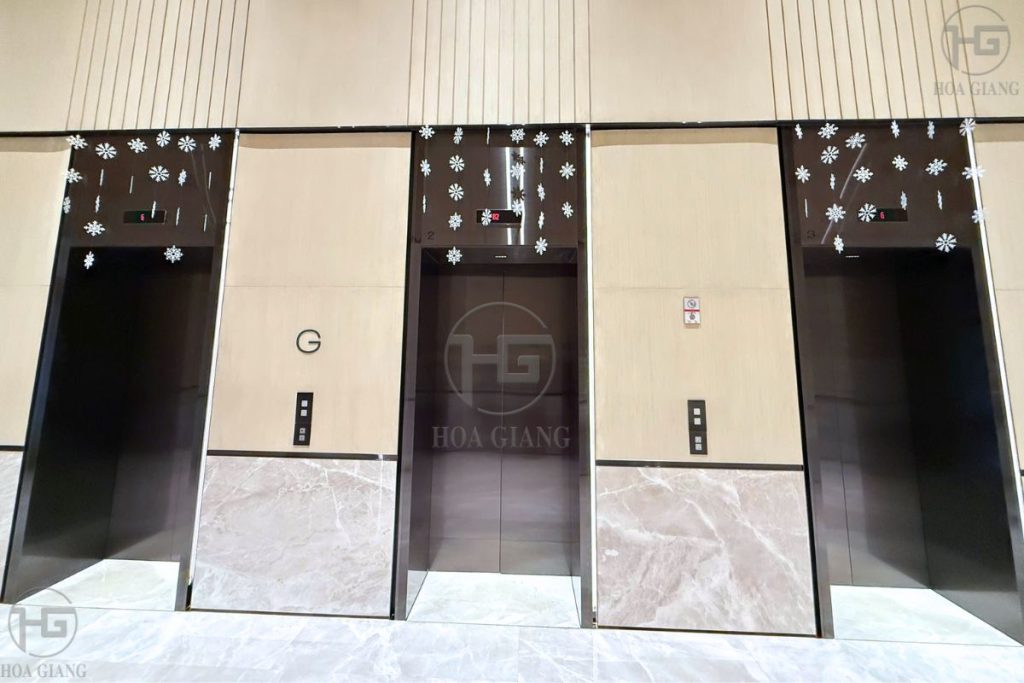
High-end stainless steel elevator cladding at Grand Marina Saigon – A project undertaken by Hoa Giang.
With its modern factory and experienced technical team, Hoa Giang offers a diverse range of stainless steel elevator cladding solutions, flexibly meeting all design, aesthetic, and quality requirements. From consultation and material selection to custom fabrication, we have partnered with numerous projects including hotels, shopping malls, office buildings, luxury apartments, and villas in Vietnam and many international markets.
Conclude
The current trend for stainless steel elevator cladding focuses not only on durability but also on aesthetic value and compatibility with architectural styles. Choosing the right material and a reputable fabrication company will contribute to creating a luxurious, sustainable space and enhancing the value of each project.
If you are looking for a high-quality, durable, and aesthetically pleasing stainless steel elevator cladding solution, Hoa Giang is ready to partner with you on every project.
HOA GIANG STAINLESS STEEL
Fanpage:Hoa Giang Stainless Steel Group
Hotline: Ms. Diem 0918311491 – Mr. Khang 0949805203


