


In today’s fashion industry, store design is no longer just about displaying products. A true high-end boutique is a “brand sanctuary,” where design excellence, aesthetic philosophy, and customer emotions merge from the very first step inside.
So what constitutes the art of decor in a high-end boutique? Why can a single material detail, a lighting scheme, or a surface finish determine the perceived value of an entire brand? What are the principles involved, and how are they applied? Let’s explore this matter in detail with Hoa Giang in the article below.
Nội dung chính
1. How is high-end store design changing?
Today’s consumers are not just looking for beautiful products. They want to enter a space that can inspire, evoke emotions, and provide a unique experience. This shift in shopping behavior has driven the trend in store design, moving from a “display” mindset to an “experience” mindset.
1.2 Space becomes part of the brand.
In the field of store design, everything from the facade, lighting system, and finishing materials to every interior detail must be consistent with the image the brand wants to convey.
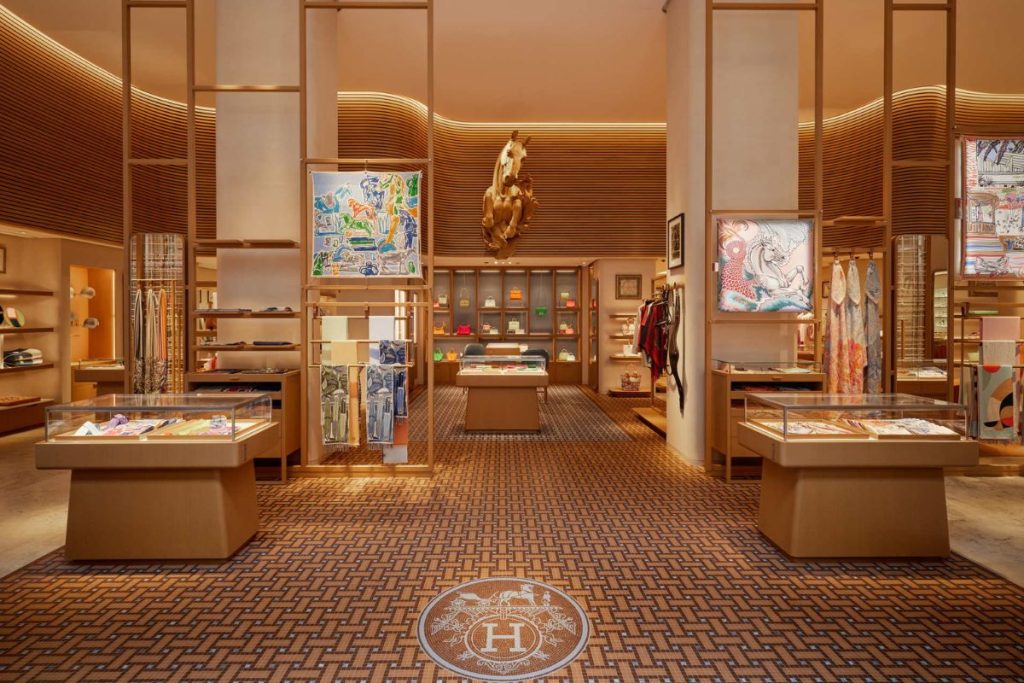
The space is strongly influenced by the brand.
A store pursuing a minimalist style will opt for a neutral color palette, streamlined materials, and soft lighting to create an elegant feel. Meanwhile, high-end jewelry or watch brands prioritize reflective surfaces, premium metals, and accent lighting to highlight the value of each product.
1.2 Visual experience determines customer length of stay.
Numerous studies on consumer behavior show that the first few seconds a customer enters a store have a significant impact on their decision to continue exploring or leave. During that brief period, the brain barely has time to assess product quality and primarily reacts to what the eyes see: lighting, color, spatial proportions, and texture.
That’s why luxury brands invest heavily in creating a seamless visual journey. Instead of filling spaces with excessive details, they prioritize minimalist architecture, well-ventilated areas, and light-reflecting materials to naturally guide the viewer’s gaze.
1.3 The Quiet Luxury trend is shaping a new design language.
One of the prominent trends in store design in recent years is Quiet Luxury – a style that emphasizes the value of materials, proportions, and finish.
This spirit is clearly demonstrated through the use of high-end materials with sophisticated surfaces such as natural stone, ultra-clear glass, or decorative stainless steel. Without the need for elaborate details, the subtle light-reflecting properties of artistic stainless steel are enough to create visual depth and a luxurious atmosphere.
2. Lighting and Stainless Steel – Two elements that define value in store design.
In retail spaces, the product isn’t always the first thing that catches the eye. What customers perceive first is the store’s atmosphere – where lighting, materials, and architecture create a perfect visual experience.
2.1 The “Directing” Light of the Shopping Experience
Lighting has the ability to change the perception of space without interfering with the architecture. A moderately sized shop can still feel spacious if the depth of light is cleverly utilized. Conversely, a large space with poorly placed lighting will appear disjointed and lack focal points.
That is why in the projects high-end store design Lighting systems are often constructed in multiple layers rather than using a single light source. This includes:General lighting, accent lighting, decorative lighting.
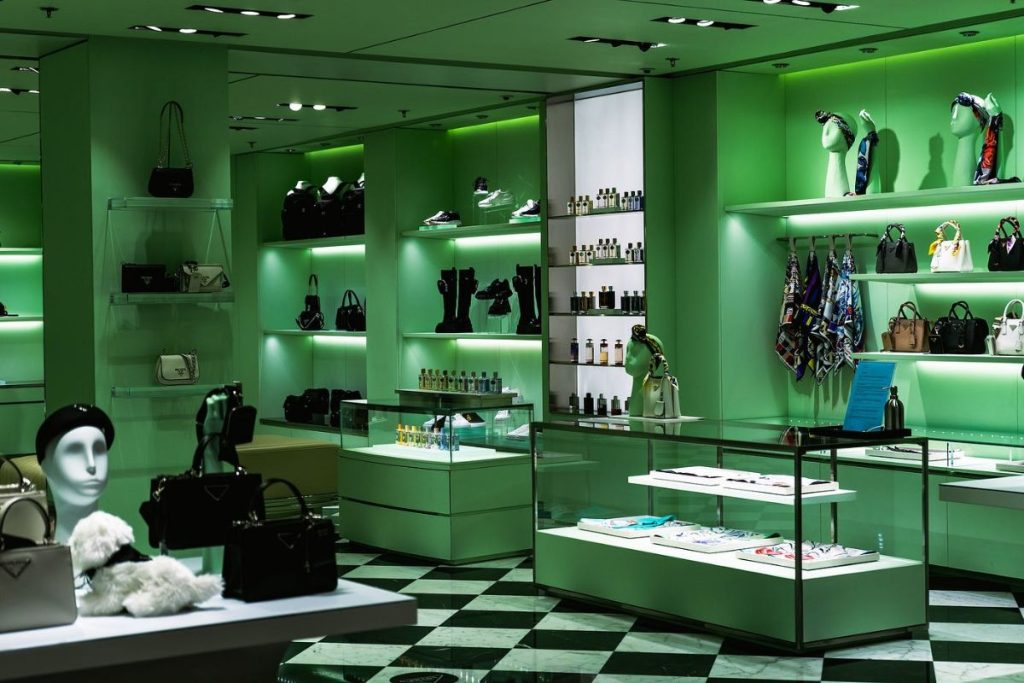
The light is distributed in layers, creating a balanced reflection.
The combination of three layers of light creates spatial depth while guiding the viewer’s gaze along the shopping path envisioned by the architect.
2.2 Stainless steel becomes a tool for controlling light.
If light is the element that creates emotion, then decorative stainless steel is the surface that amplifies that emotion.
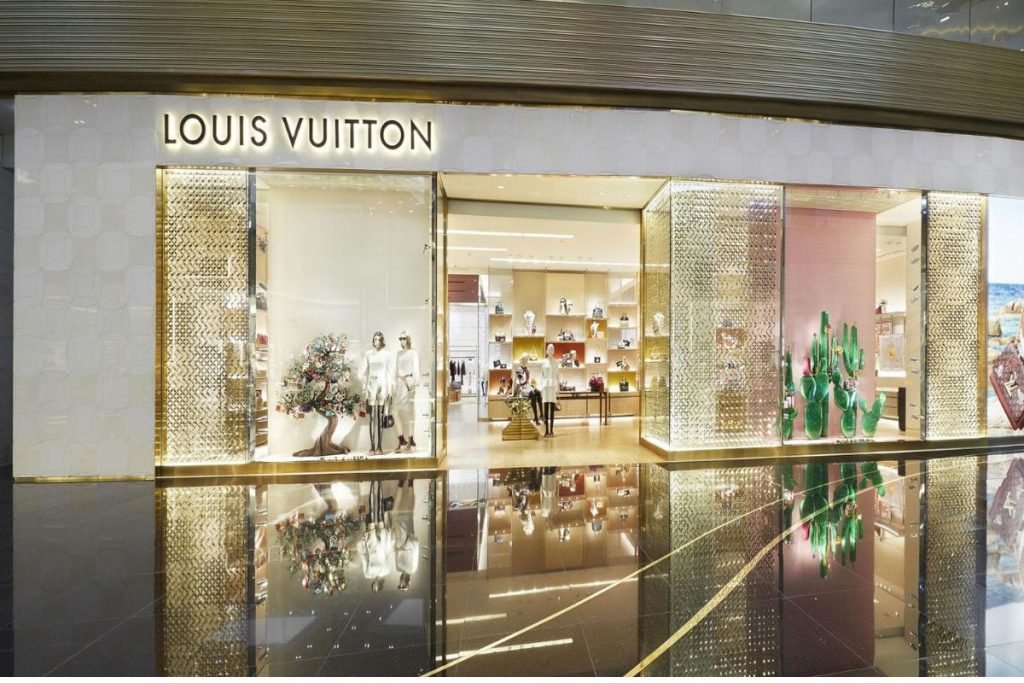
The harmonious combination of stainless steel and lighting enhances the brand’s luxurious aesthetic.
Stainless steel possesses diverse reflective properties depending on the surface finish. Instead of using direct light, architects often allow the light source to interact with the stainless steel surface before reflecting back into the space. This approach creates a softer effect, reducing glare while still maintaining the product’s prominence.
3. Each stainless steel surface has its own language.
The unique feature of decorative stainless steel lies in its ability to evoke different emotions simply by changing the surface finish.
3.1 Expanding space with mirrored stainless steel
SWith its high reflectivity, mirrored stainless steel helps light spread evenly and creates the illusion of a larger space. When applied to ceilings or large wall sections, this material blurs visual boundaries, providing a sense of depth often seen in high-end fashion, cosmetics, and jewelry stores.
3.2 Hairline Stainless Steel – The Beauty of Restraint
Unlike a polished mirror surface, hairline stainless steel offers a subtle reflective effect thanks to fine, evenly spaced scratches running in one direction.
Light, upon contact with the Hairline surface, is not strongly reflected but diffused softly, creating a sophisticated and luxurious feel. This is a preferred choice for many brands pursuing Minimalism or Quiet Luxury styles for reception desks, display cabinets, and interior details.
3.3 Creating movement in static spaces using corrugated stainless steel
One of the prominent trends in store design is the use of corrugated stainless steel for ceilings and accent wall sections.
The ripples on the surface cause the light to constantly change depending on the viewing angle of the moving person, creating the feeling that the space is always in motion even though the architecture is completely fixed.
>> Click to view 15 of the most beautiful and unique stainless steel wave designs
3.4 PVD-coated stainless steel becomes a brand identity.
While stainless steel was previously mainly available in traditional silver tones, PVD plating technology has opened up more creative possibilities in store design.
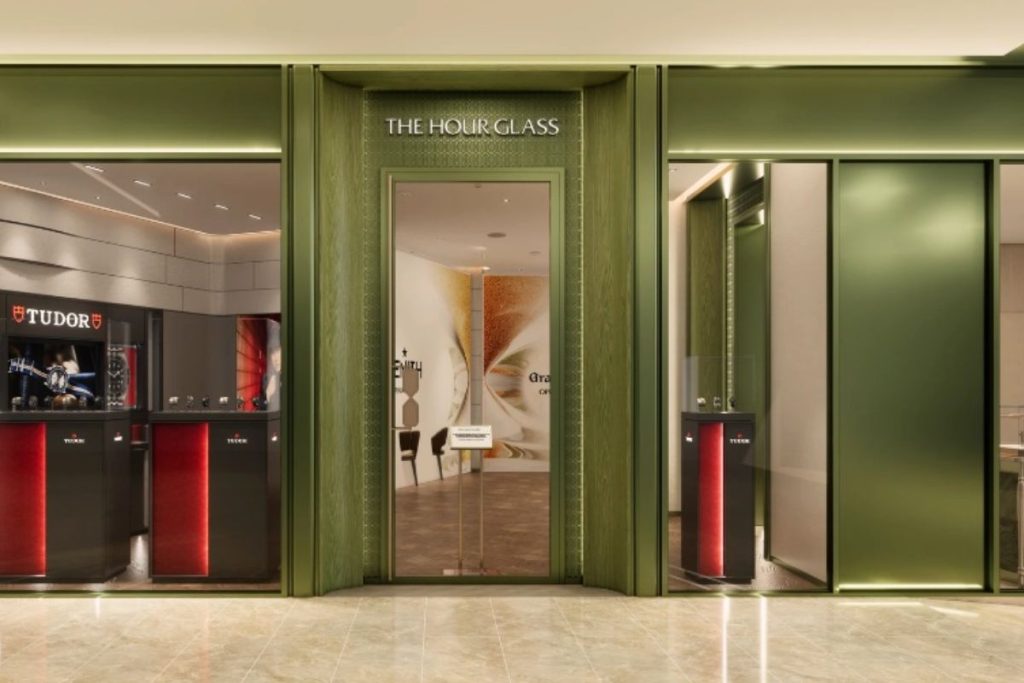
PVD-coated stainless steel at The Hour Glass store – Project executed by Hoa Giang.
Colors like Champagne Gold, Titanium Black, Bronze, Rose Gold, or unique shades of blue not only create a luxurious appearance but also help brands build their own unique identity language.
4. Application of artistic stainless steel in store design
The shopping journey is always studied as a continuous series of experiences. From the moment a customer sees the storefront, walks through the main door, moves between display areas, to completing the transaction, every touchpoint contributes to shaping the perception of the brand.
That’s also why artistic stainless steel doesn’t appear randomly. Each placement is chosen to address a specific goal in terms of aesthetics, functionality, and user experience.
4.1 The storefront – Where the brand makes its first impression
A well-designed storefront is both visually appealing and effectively conveys the brand message.
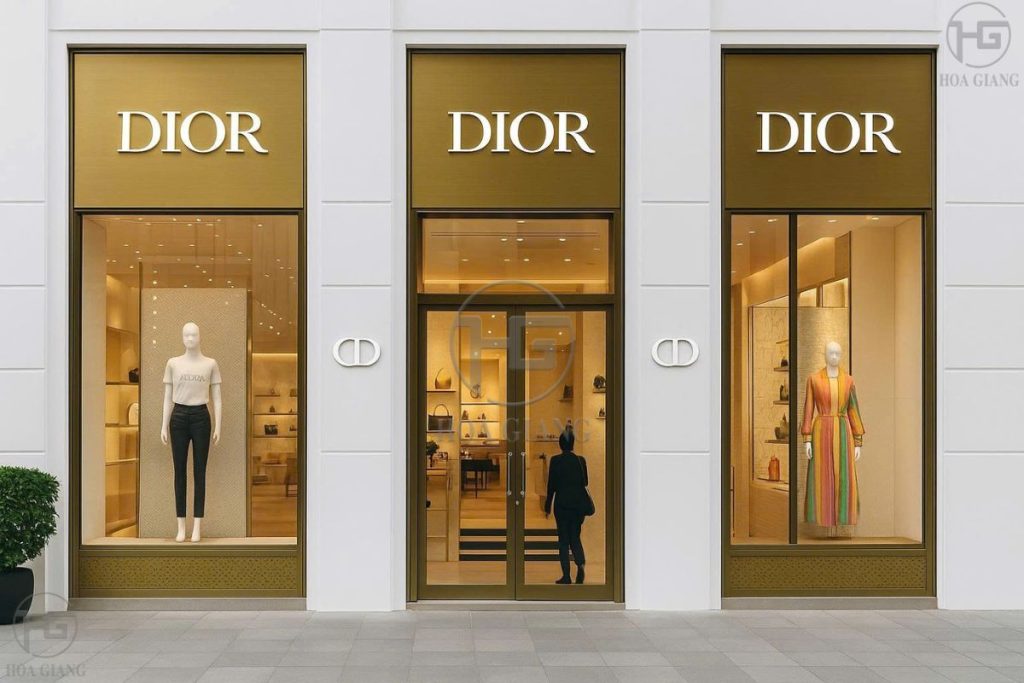
Stainless steel combined with transparent glass creates a luxurious look at the Dior store – a project executed by Hoa Giang.
It’s not uncommon to see many high-end stores choosing large sheets of PVD-coated stainless steel for their storefronts. When combined with glass doors and interior lighting, the facade becomes more vibrant and luxurious than ever before.
4.3 Showroom Space – Where the Product Becomes the Center of Attention
If the storefront is responsible for attracting customers, then the main display area is where they decide whether or not to linger.
Modern store design trends prioritize intentional open spaces, allowing products to “breathe.”
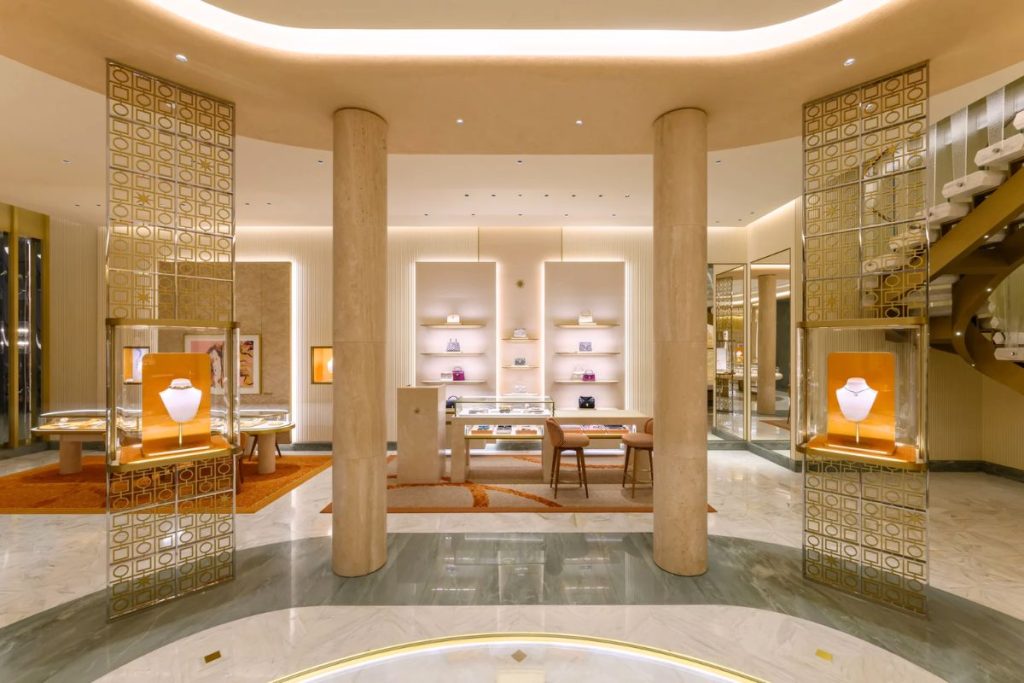
The exhibition space is designed with strategically placed empty areas.
CNC-cut panels, slim display racks, display stands, or product frames crafted from hairline stainless steel or PVD-coated stainless steel help reduce the feeling of heaviness while creating uniformity in the overall architecture.
4.3 Ceilings and walls – The “second architectural layer” of a space
The corrugated stainless steel panels used on the ceiling allow the light to continuously change depending on the viewing angle, creating a sense of movement without the need for any moving equipment.
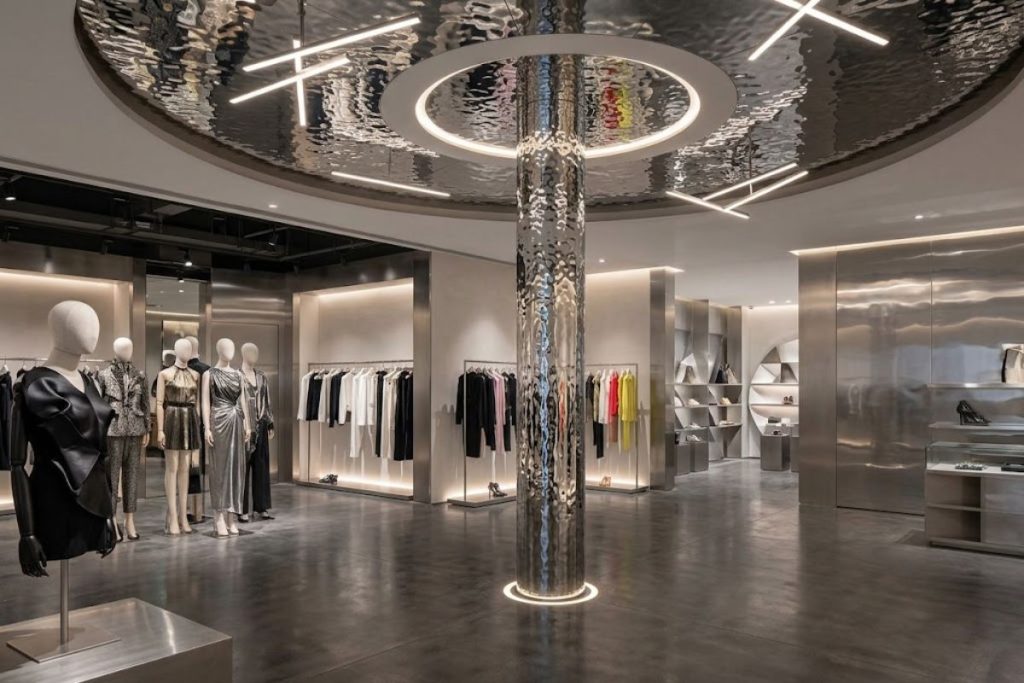
Corrugated stainless steel is a unique application in store design.
For large wall surfaces, mirrored stainless steel or hairline stainless steel is often combined with natural stone, glass, or wood veneer to create a balance between modernity and warmth.
As a result, architecture is no longer a collection of disparate materials but becomes a seamless whole, where every detail is connected in terms of color and proportion.
4.4 The Cashier Counter – The Final Stop of the Experience
A cashier counter finished with Champagne stainless steel or black titanium stainless steel combined with natural stone will create a feeling of solidity and luxury without being overly ostentatious.
The lighting is focused on the counter surface, highlighting the brand logo and creating a visual focal point for the entire space.
5. Defining store space with Hoa Giang
The art of store design is a perfect symphony of contemporary aesthetics, cutting-edge material processing technology, and the art of lighting coordination. Decorative stainless steel is no longer just an auxiliary detail but has become a key element that creates value and a unique identity for each brand.
With experience accompanying numerous high-class projects, Hoa Giang proudly stands as a pioneer in providing high-end stainless steel fabrication and installation solutions. We transform the boldest architectural ideas on the drawing board into masterpieces of real-life spaces.
Are you looking for unique stainless steel material solutions for your boutique project or high-end commercial space?
Contact Hoa Giang’s team of experts today for expert advice and to discover our latest collection of decorative stainless steel designs.
HOA GIANG STAINLESS STEEL
Fanpage:Hoa Giang Stainless Steel Group
Hotline: 0918311491 – 0949805203


