


In high-end interior design and architecture, brushed stainless steel has become a superior choice thanks to its luxurious appearance, high durability, and customizable surface. Not as dazzling as mirror-finish stainless steel, nor as monotonous as matte stainless steel, brushed stainless steel offers a distinct design language.
This article by Hoa Giang provides a comprehensive analysis of brushed stainless steel from a technical perspective, including classification and practical applications, giving you a solid basis for choosing the right material for each specific project.
Nội dung chính
- 1 What is brushed stainless steel?
- 2 Specifications of brushed stainless steel
- 3 Classification of brushed stainless steel
- 4 Applications of brushed stainless steel in architecture and interior design.
- 5 Comparing brushed stainless steel with other stainless steel surfaces.
- 6 Frequently Asked Questions about Brushed Stainless Steel
- 6.1 1. Does brushed stainless steel rust?
- 6.2 2. Which is better: brushed stainless steel or mirror-finish stainless steel?
- 6.3 3. What is brushed stainless steel surface No. 4?
- 6.4 4. How can you distinguish high-quality brushed stainless steel from low-quality products?
- 6.5 5. Is brushed stainless steel easy to clean and maintain?
- 7 Hoa Giang specializes in professional decorative stainless steel fabrication.
- 8 Conclude
What is brushed stainless steel?
Brushed stainless steel is a type of stainless steel whose surface is treated by grinding or sanding using linear motion strips, creating a system of parallel, uniform scratches across the entire surface of the stainless steel sheet. This process is usually performed using industrial sanding machines with abrasive strips of varying grit sizes, determining the fineness or roughness of the final scratch pattern.
Essentially, brushed stainless steel is no different from other types of stainless steel with different surface treatments; it’s still a steel alloy containing a minimum of 10.5% chromium, creating a passive chromium oxide layer that resists corrosion. The only difference lies in the surface treatment process after cold rolling, which determines the visual effect and, to some extent, the mechanical properties of the material’s outer layer.
Specifications of brushed stainless steel
Surface texture
The most distinctive feature of brushed stainless steel is the thin, parallel lines running in a fixed direction across the surface. Depending on the grit size used during processing, the brushed pattern can be smooth, almost like silk, or coarser and more distinct.
This textured structure helps the surface scatter light instead of reflecting it directly like mirror-finish stainless steel, thereby reducing glare and effectively concealing small scratches that may occur during use.
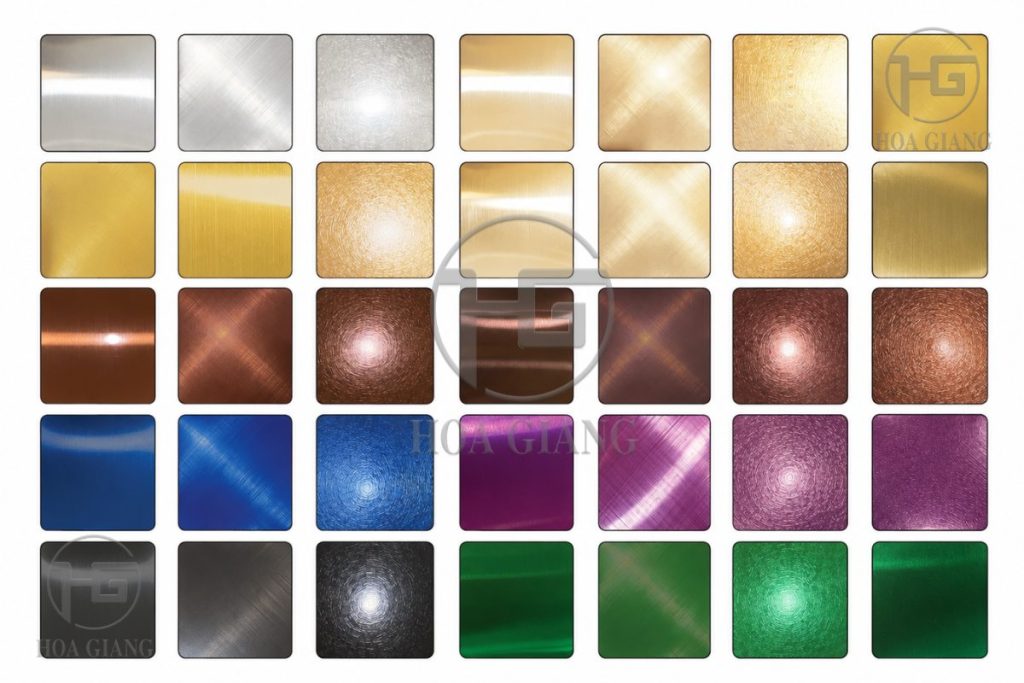
Hoa Giang offers brushed stainless steel in a variety of surfaces and colors.
Corrosion resistance and durability
Basically, the corrosion resistance of brushed stainless steel depends more on the grade of stainless steel (201, 304, 316, etc.) than on the type of surface treatment.
Aesthetics and user experience
The brushed stainless steel creates a warm, inviting feel. At the same time, the material’s surface is better at concealing fingerprints, dirt, and minor scratches, reducing the frequency of cleaning and maintenance—an important factor for high-traffic buildings such as hotels, shopping malls, or office lobbies.
Classification of brushed stainless steel
The classification of brushed stainless steel can be approached according to various criteria, each serving a specific selection purpose in practical construction.
Classification based on the fineness of the scratches.
They can be quickly divided into two basic types:
- Smooth brushed stainless steel: The fine, almost imperceptible scratch pattern, visible from a distance, creates a luxurious and sophisticated effect. It is often used for high-end interior details, tabletops, and living room wall cladding.
- Rough brushed stainless steel: The distinct, textured finish creates an industrial accent, suitable for industrial styles or projects that emphasize raw, rustic materials.
Classification by base steel grade
Brushed stainless steel is manufactured using various types of steel.
The most common type is 304 stainless steel – a type with a stable nickel content, good corrosion resistance, and suitable for both indoor and outdoor environments.
Next is 316 stainless steel, which contains added molybdenum and is often chosen for coastal constructions or environments with high levels of corrosive chemicals.
Finally, stainless steel 201 has a lower cost but also more limited rust resistance, making it suitable for interior decoration projects that are not directly exposed to high humidity or harsh environments.
Classification based on grain direction and processing technique.
Besides the traditional straight scratch, the market also offers variations such as diagonal scratches, twisted scratches, or tangled scratches that create a visual effect of movement, often used in accent designs or projects requiring high artistic merit.
Hoa Giang offers brushed stainless steel samples.
Applications of brushed stainless steel in architecture and interior design.
High-end interior decorative paneling
Brushed stainless steel is commonly used for wall cladding, column cladding, and reception counter cladding in high-end hotels and Grade A offices.
With its ability to conceal surface imperfections and its soft lighting effect, this material is suitable for spaces that prioritize elegance without being ostentatious.
Elevator and partition systems
In the elevator industry, brushed stainless steel is a popular choice for elevator cabins and doors due to its excellent friction resistance and scratch resistance under frequent and continuous use.
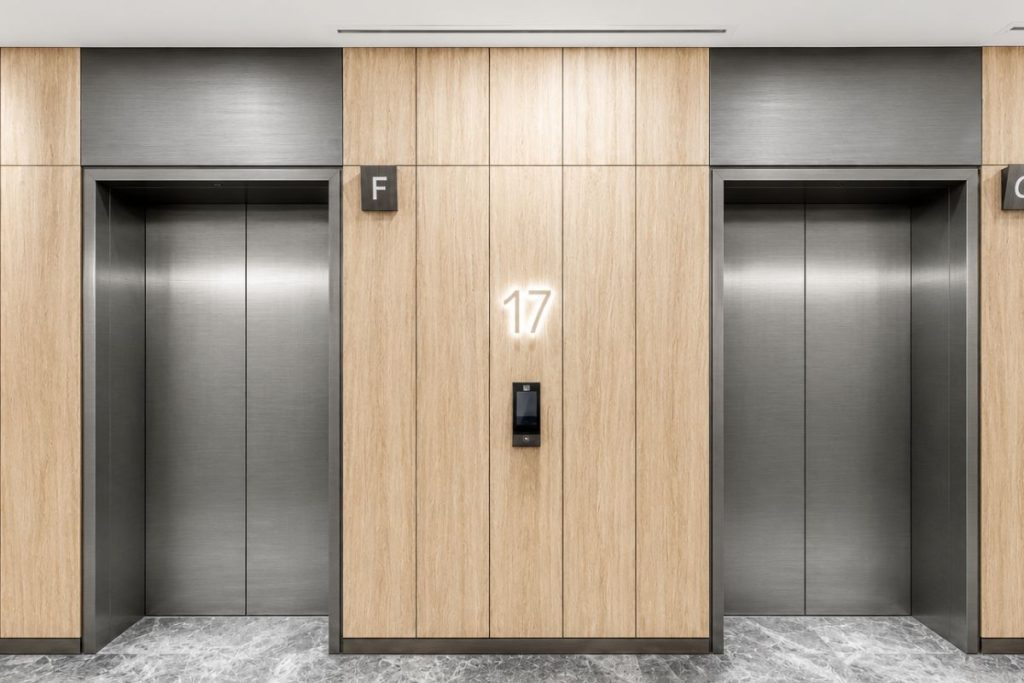
Applications of brushed stainless steel for elevator door cladding.
High-end furniture and household goods
Kitchen countertops, door handles, sinks, and high-end kitchen appliances often use brushed stainless steel because of its hygienic properties, ease of cleaning, and superior ability to hide fingerprints.
Exterior and public building applications
With high corrosion resistance, Brushed stainless steel is widely used for railings, outdoor stair handrails, building facades, and other applications requiring both durability and aesthetic appeal.
Comparing brushed stainless steel with other stainless steel surfaces.
Compared to mirror stainless steel, with its highly polished, brushed stainless steel surface, it offers better glare resistance and conceals imperfections, making it suitable for spaces that require warmth and intimacy.
Compared to matte stainless steel processed by cold rolling without sanding, brushed stainless steel has a significantly higher aesthetic appeal due to its uniform grain effect, while matte stainless steel is usually only suitable for industrial applications with less decorative requirements.
Compared to sandblasted stainless steel, Brushed stainless steel creates a smooth, non-directional rough surface with a distinct grain pattern, producing a unique visual movement that sandblasted stainless steel lacks, making it suitable for designs that aim to guide the viewer’s gaze.
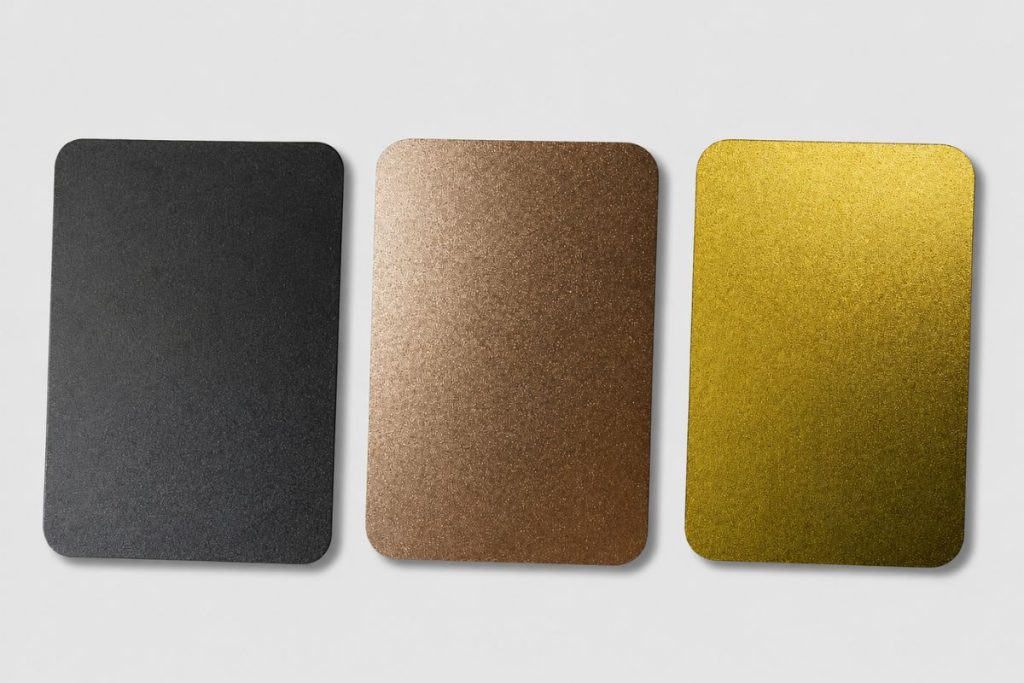
Illustration of sandblasted stainless steel
However, the above comparisons are for reference only. In reality, each material has its own advantages and disadvantages, and no single material is optimal in all cases. Therefore, the choice will depend on the project requirements, the overall style, and the actual usage needs.
Frequently Asked Questions about Brushed Stainless Steel
1. Does brushed stainless steel rust?
The surface finish itself is not the determining factor in rust resistance; it depends primarily on the base steel grade (201, 304, or 316). Therefore, choosing the correct base steel grade is far more important than the surface treatment when considering rust resistance.
2. Which is better: brushed stainless steel or mirror-finish stainless steel?
There is no absolute answer, as each type is suitable for a different purpose.
Brushed stainless steel has the advantage of concealing imperfections, reducing glare, and creating a warm feeling, making it suitable for living spaces and frequently used items such as handles, countertops, and elevator cabins.
Mirror-finish stainless steel is more suitable when a reflective effect is needed, creating a sense of spaciousness and modern luxury, but it is more prone to scratches and fingerprints during use.
3. What is brushed stainless steel surface No. 4?
No. 4 is the standard designation according to ASTM A480, indicating the most common brushed surface finish on the market today, falling between industrial matte (No. 3) and semi-mirror (No. 6). This type of brushed finish has a medium fineness, offering a good balance between aesthetics and the ability to conceal imperfections, and is widely used in both residential and high-end commercial interiors.
4. How can you distinguish high-quality brushed stainless steel from low-quality products?
To distinguish high-quality brushed stainless steel, multiple factors must be considered simultaneously, rather than relying solely on the surface appearance.
First of all, the scratch pattern on a good quality panel should be even and smooth, without any breaks or localized deviations.
Secondly, a preliminary check can be done using a magnet: 304 and 316 stainless steel are almost non-magnetic or very weakly magnetic, while counterfeit or adulterated stainless steels usually exhibit a more pronounced magnetic reaction.
Thirdly, the sheet thickness must be uniform across the entire surface, without any uneven thickness, which is a sign of a substandard rolling process.
Ultimately, the origin and quality certificate from the manufacturer are the most reliable sources for verifying the actual steel grade and alloy composition of the product.
5. Is brushed stainless steel easy to clean and maintain?
Brushed stainless steel is considered easy to clean thanks to its textured surface that effectively hides fingerprints, dirt, and minor scratches.
Routine maintenance only requires wiping with a soft cloth in the direction of the grain, combined with a specialized stainless steel cleaning solution. Avoid using highly abrasive materials or chlorine-containing chemicals that can damage the protective oxide layer on the surface.
Hoa Giang specializes in professional decorative stainless steel fabrication.
With nearly 20 years of experience in the field of stainless steel fabrication and installation, Hoa Giang has established itself as a trusted partner for many investors, architects, and contractors nationwide. Owning a large-scale production facility and modern technology lines, Hoa Giang ensures consistent quality control from raw material selection and surface treatment to final finishing, meeting the most stringent technical standards for brushed stainless steel and other high-end decorative stainless steel products.
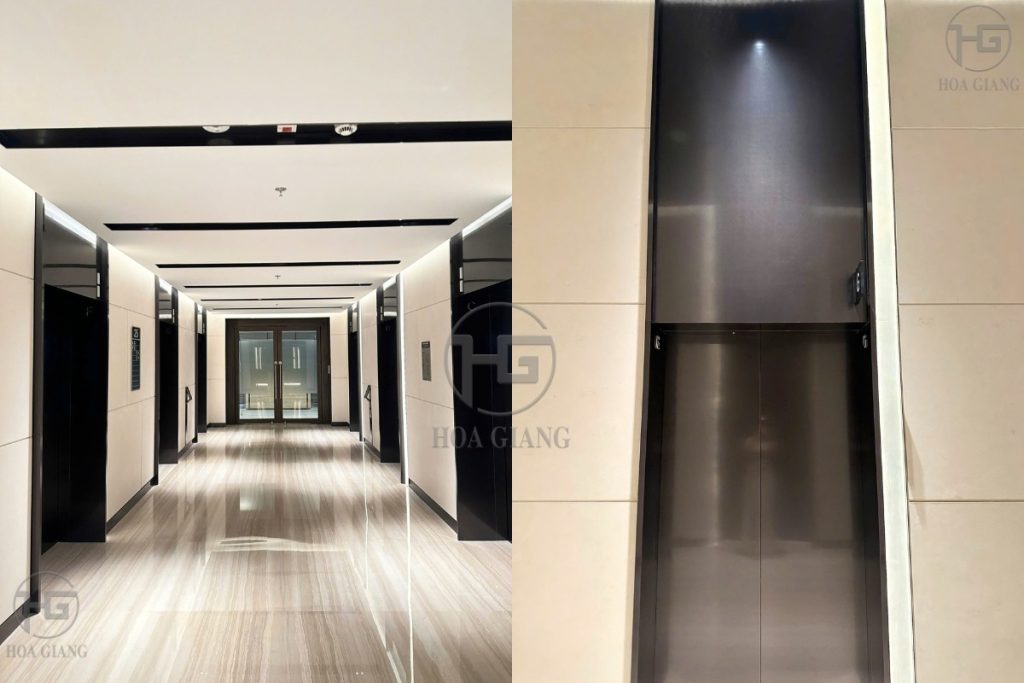
Brushed stainless steel elevator cladding at The Metropole Thu Thiem – A project undertaken by Hoa Giang.
If you are looking for high-quality and aesthetically pleasing brushed stainless steel or other decorative stainless steel products for your project, Hoa Giang is ready to assist you in finding the most suitable solution, from material selection to complete construction.
Conclude
Brushed stainless steel is not simply a surface finishing material choice, but also a solution that balances aesthetic requirements and operational durability, a key factor in modern architectural projects.
From its surface texture characteristics and corrosion resistance depending on the steel grade, to its diverse classifications and practical applications, brushed stainless steel possesses a rare versatility compared to other finishing materials on the market.
With years of experience and proven implementation capabilities demonstrated through numerous real-world projects, Hoa Giang is a reliable partner for projects requiring high-quality brushed stainless steel in particular and decorative stainless steel in general, contributing to the complete realization of each project’s design vision.
HOA GIANG STAINLESS STEEL
Fanpage:Hoa Giang Stainless Steel Group
Hotline: Ms. Diem 0918311491 – Mr. Khang 0949805203


