



Stainless steel 201, 304, and 316 all belong to the Austenitic stainless steel group, but their chemical composition and mechanical properties differ considerably. Many people, when buying stainless steel, only look at the price and overlook a more important factor: which type of stainless steel is actually suitable for their specific application environment.
This article by Hoa Giang will help you distinguish between the three most common types of stainless steel on the market based on their corrosion resistance, durability, practical applications, and investment costs, so you can make the right choice from the start.
Nội dung chính
- 1 What are stainless steel 201, 304, and 316?
- 2 Comparison table of stainless steel 201, 304, and 316
- 3 A detailed analysis of the differences between stainless steel 201, 304, and 316.
- 4 Should you choose stainless steel 201, 304, or 316?
- 5 How to distinguish between stainless steel 201, 304, and 316
- 6 Common misconceptions about stainless steel 201, 304, and 316.
- 7 Frequently Asked Questions
- 8 Hoa Giang – A leading stainless steel supplier in Vietnam with nearly 20 years of experience.
- 9 Conclude
What are stainless steel 201, 304, and 316?
What is stainless steel 201?
Stainless steel 201 is a type of stainless steel developed to partially replace stainless steel 304 at a lower cost. The biggest difference lies in its composition: stainless steel 201 has a significantly reduced amount of nickel (Ni) and is compensated by manganese (Mn) and nitrogen to maintain its austenitic structure.
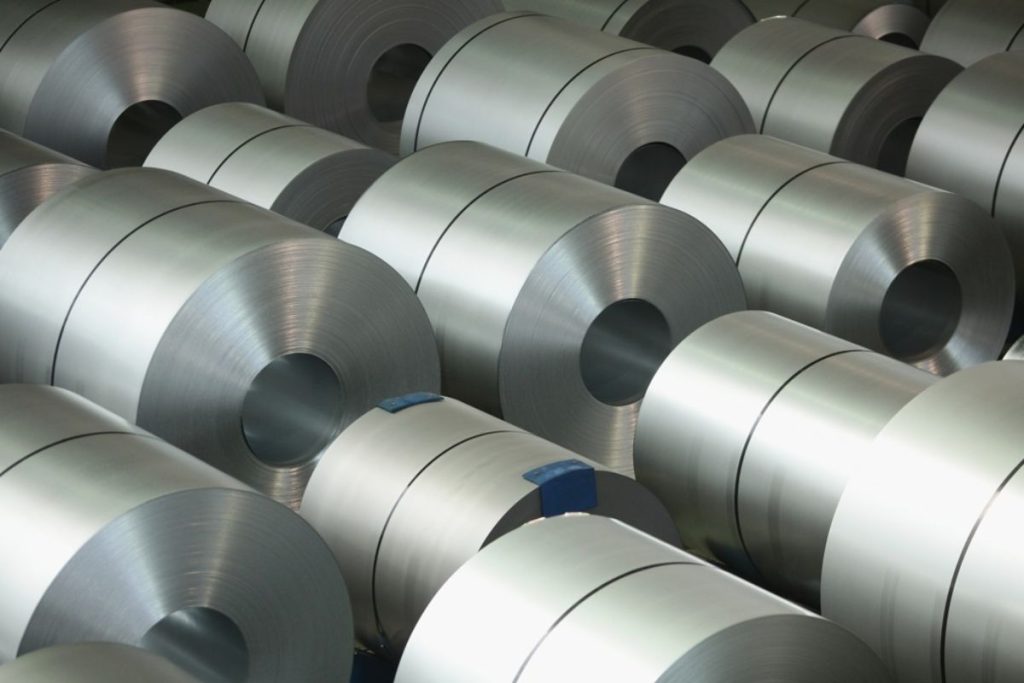
Steel grade 201
Key features:
- Low nickel content (approximately 0.5 – 4%) is replaced with manganese (5.5 – 7.5%).
- There is still slight magnetism in some areas during machining and cutting.
- Relatively high surface hardness
Advantage:
- The cost is significantly lower compared to stainless steel 304 and 316.
- Good surface hardness, suitable for parts with low corrosion resistance.
- Easy to find and widely available on the market.
Limit:
- Its corrosion resistance is significantly lower than that of 304 and 316.
- It is prone to rusting and discoloration when exposed to high humidity or outdoor environments for extended periods.
- Not suitable for coastal environments, chemicals, or acidic foods.
What is 304 stainless steel?
304 stainless steel is the most commonly used grade of stainless steel today, holding a large market share in the furniture, household goods, and light industry sectors. It is considered the “standard” type of stainless steel due to its balance between cost and quality.
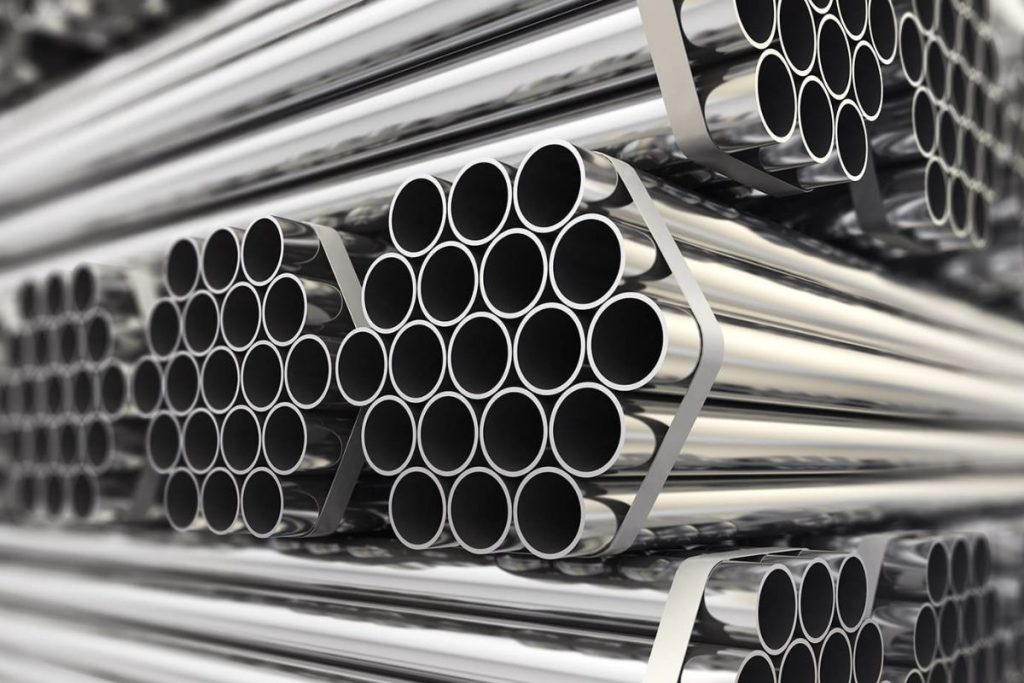
304 stainless steel pipe
Key features:
- High nickel content, approximately 8–10.5%
- Chromium content is approximately 18-20%.
- No molybdenum in the ingredients.
Advantage:
- Good corrosion resistance in normal environments.
- High durability and long lifespan if used in the right environment.
- Easy to machine, weld, polish, and shape.
- Ensures food safety, suitable for use as household and kitchenware.
Limit:
- Corrosion resistance is reduced in environments with salt (coastal areas) or strong chemicals.
- Higher price than stainless steel 201
What is 316 stainless steel?
316 stainless steel is a high-grade stainless steel that has added molybdenum (Mo) in its composition – the factor that makes it the biggest difference compared to 304 stainless steel.
Key features:
- Similar composition to 304 stainless steel but with the addition of 2-3% molybdenum.
- Nickel content is usually higher, ranging from 10 to 14%.
The role of molybdenum (Mo): Molybdenum significantly enhances resistance to pitting corrosion and crevice corrosion, especially in chloride-containing environments such as seawater, industrial chemicals, or strong cleaning solutions. This is why 316 stainless steel is often referred to as “salt-resistant stainless steel” or “medical grade stainless steel”.
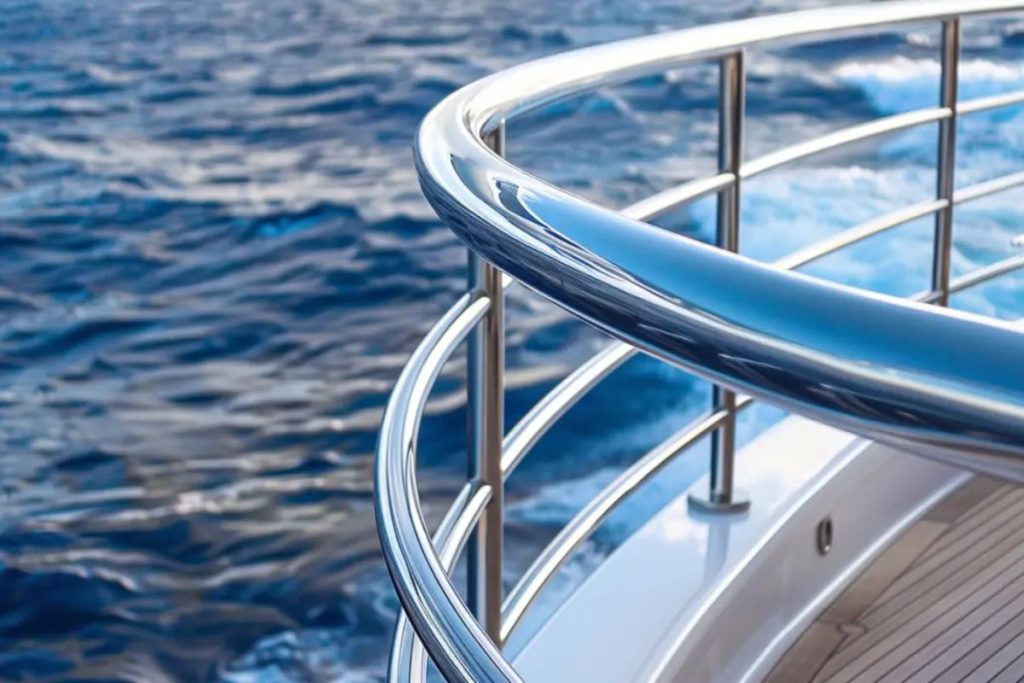
316 stainless steel is used in marine environments.
Advantage:
- Superior corrosion resistance, especially to salts and chemicals.
- High durability in harsh environments: coastal areas, laboratories, pharmaceuticals.
- Long lifespan, less prone to yellowing or pitting over time.
Limit:
- The highest price among the three types.
- Not necessary if used in a less corrosive environment.
Comparison table of stainless steel 201, 304, and 316
| Criteria | Stainless steel 201 | 304 stainless steel | 316 stainless steel |
| Nickel content | 0,5 – 4% | 8 – 10,5% | 10 – 14% |
| Chromium content | 16 – 18% | 18 – 20% | 16 – 18% |
| Molypden | Do not have | Do not have | Yes (2-3%) |
| Rustproof | Average – Low | Good | Very good |
| Corrosion resistance | Poor performance in humid, salty environments. | Good in normal environments | Outstanding performance in saline and chemical environments. |
| Hardness | High | Medium | Medium |
| Welding capability | Quite good | Very good | Very good |
| Machining | Easy | Easy | It’s a bit more difficult due to its high ductility. |
| Cost | Short | Medium | High |
| Life expectancy | Short to medium (dry environment) | Medium – long | Long, even in harsh environments |
| Suitable environment | Indoors, dry | Houses, buildings, restaurants, hotels… | Coastal areas, healthcare, chemicals, food |
A detailed analysis of the differences between stainless steel 201, 304, and 316.
Corrosion resistance
- Indoor environment: All three types work well; the differences in durability are not apparent in the first few years.
- Outdoor environment: Stainless steel 201 begins to show signs of yellowing and tarnishing after a period of exposure to rain and sun; stainless steel 304 retains its shine much better.
- Coastal environment: This is where the difference is most evident. Salt spray in the air causes 201 stainless steel, and even 304 stainless steel, to become pitted and corroded, while 316 stainless steel maintains a stable surface thanks to molybdenum.
- Chemical environment: When using acids, alkalis, or strong cleaning solutions, 316 stainless steel is the safest choice; 201 stainless steel should almost never be used.
Mechanical strength
In terms of strength and surface hardness, stainless steel 201 is generally slightly better due to its high manganese content, and is sometimes preferred for parts requiring high hardness but minimal corrosion exposure. However, in terms of ductility and impact resistance without cracking, stainless steel 304 and 316 are superior due to their more stable austenitic structure.
Heat resistance
All three types can withstand typical working temperatures in household and furniture applications. However, stainless steel 304 and 316 maintain structural stability better at high temperatures, are less prone to deformation or discoloration when exposed to heat for extended periods, and are more suitable for industrial applications or specialized kitchen equipment.
Machinability
- Laser cutting, bending: All three types are machinable, with stainless steel 304 considered the easiest to machine.
- Weld: Stainless steel 304 and 316 produce stronger welds and are less prone to cracking compared to stainless steel 201.
- Polish: Stainless steel 304 and 316 achieve a beautiful, uniform mirror-polished finish; stainless steel 201 sometimes exhibits slight discoloration after polishing due to its manganese content.
Aesthetics
In terms of surface finish and gloss, all three types can achieve a beautiful shine when newly processed. However, over time, 304 and 316 stainless steel retain their shine longer. With PVD plating capabilities (gold, black, rose gold plating, etc.), 304 and 316 stainless steel are the most popular choices because of their stable surface, even plating adhesion, and colorfastness.
Cost
The reason why 316 stainless steel is significantly more expensive than 304 and 201 is due to the higher cost of molybdenum and its higher nickel content. Therefore, unless the project or product is in a harsh environment (coastal, chemical, or medical), investing in 316 stainless steel is unnecessary and wasteful. In these cases, 304 stainless steel still ensures durability and aesthetics at a more reasonable cost.
Should you choose stainless steel 201, 304, or 316?
When should you use stainless steel 201?
Stainless steel 201 is suitable for applications that are not in direct contact with high humidity or corrosive environments, for example:
- Decorative frames and shelves that are rarely moved.
- The details prioritize cost over long-term durability.
- Dry environment
When should you use 304 stainless steel?

Applications of 304 stainless steel
This is the most balanced option for the majority of residential and commercial needs:
- Interior features of the house: stairs, railings, kitchen cabinets.
- Showroom, display store
- Hotels, restaurants
- Offices, commercial spaces
When should you use 316 stainless steel?
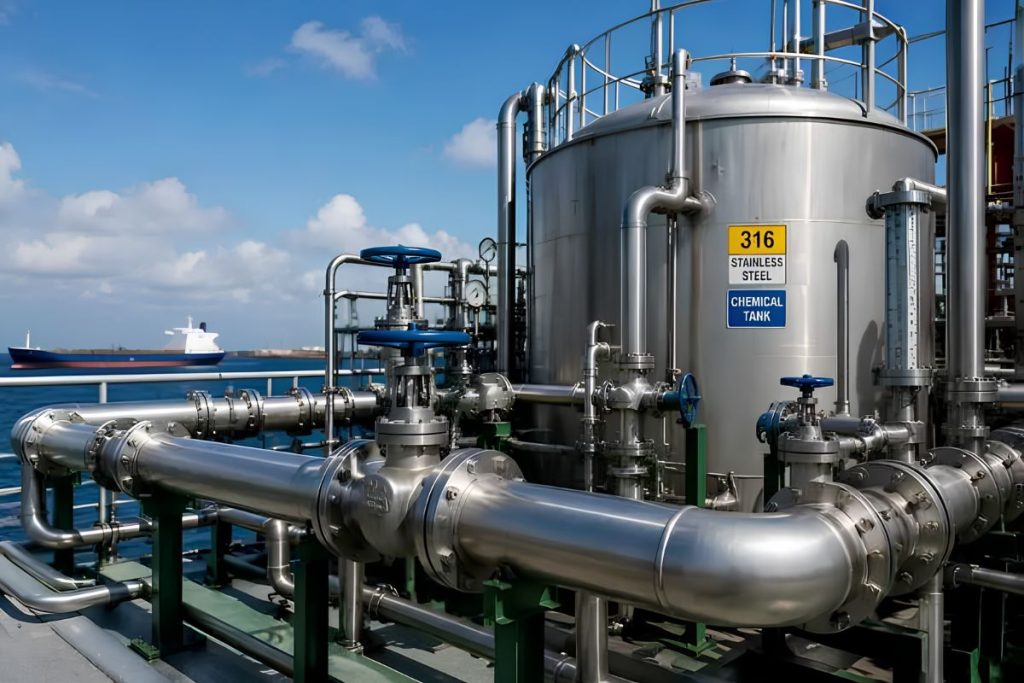
Applications of 316 stainless steel
Stainless steel 316 should be preferred for harsh environments or those requiring high standards:
- Coastal structures are directly affected by salt spray.
- Hospitals, medical facilities
- Cleanroom, laboratory
- Chemical plant
- Food and pharmaceutical processing equipment requires a high level of safety.
How to distinguish between stainless steel 201, 304, and 316
Magnetic test
This is the quickest method, but it’s for reference only. Stainless steel 201 is generally less magnetic in some areas, especially after processing, while stainless steel 304 and 316 are almost non-magnetic in their original state. However, this method isn’t entirely accurate because mechanical processing can also alter local magnetism.
Use stainless steel reagent
Specialized reagents can help differentiate between different grades of stainless steel through the color reaction on the surface. This is a common method in processing workshops, but it requires experienced personnel to interpret the results accurately.
Check material certificates
The most reliable way is to request that the supplier provide a quality certificate (Mill Test Certificate) with the shipment, clearly showing the chemical composition and manufacturing standards of the material.
Component analysis using PMI machine
This is the most accurate method, using a spectrophotometer to precisely determine the ratio of elements in an alloy. This method is commonly applied in industrial or medical projects, or when rigorous testing is required.
Common misconceptions about stainless steel 201, 304, and 316.
Does stainless steel 304 never rust?
This is a common misconception. Stainless steel 304 has good rust resistance in normal environments, but it can still suffer from pitting corrosion if exposed for extended periods to salty environments or strong chemicals without proper cleaning and maintenance.
Is 316 stainless steel always better than 304?
Technically, 316 stainless steel offers better corrosion resistance, but “better” doesn’t necessarily mean “more necessary.” If the application environment doesn’t require resistance to salt or chemicals, investing in 316 stainless steel is not cost-effective.
Is stainless steel 201 not suitable for use?
Stainless steel 201 still has its own uses, especially for interior decorative products in dry environments, where cost is a priority over long-term corrosion resistance. The issue isn’t that stainless steel 201 is “bad,” but rather that the wrong environment is being used.
Is it true that the more expensive the stainless steel, the more suitable it is?
A higher price doesn’t necessarily mean better suitability. The choice of stainless steel grade should be based on the actual usage environment and purpose, rather than simply on whichever is more expensive.
Frequently Asked Questions
Does stainless steel 201 rust?
Yes. Stainless steel 201 has significantly lower rust resistance compared to 304 and 316, especially when frequently exposed to high humidity or outdoor environments.
Is 304 stainless steel suitable for outdoor use?
Yes, but it should be used sparingly in areas with chemicals or near the sea. Under normal outdoor conditions, 304 stainless steel still ensures good durability and a long lifespan.
Is 316 stainless steel worth investing in?
Yes, if the construction or product is in a coastal, medical, or chemically exposed environment. For typical environments, 304 stainless steel is sufficient without incurring higher costs.
What type of house should I use if it’s near the sea?
Stainless steel 316 should be prioritized for outdoor items directly exposed to salt spray, such as railings, gates, and awnings. For indoor items with less direct contact, stainless steel 304 can be considered to save costs.
Can stainless steel 201 be PVD coated?
It can be plated, but the color fastness and uniformity are usually not as good as 304 stainless steel due to different surface properties and alloy composition.
Is it possible to identify stainless steel with the naked eye?
It is very difficult to distinguish them precisely with the naked eye because all three types can be polished to a similar bright shine. The most reliable way is still to check the material certificate or analyze it using a PMI machine.
Hoa Giang – A leading stainless steel supplier in Vietnam with nearly 20 years of experience.
The quality of materials depends not only on the steel grade but also on the origin, inspection process, and processing capabilities of the supplier.
With nearly 20 years of experience in the field of decorative stainless steel and industrial stainless steel, Hoa Giang is a partner of thousands of domestic and international clients, contractors, design firms, and investors. We offer a diverse range of stainless steel products in various thicknesses, specifications, and surface finishes, including hairline brushed stainless steel, 8k mirror stainless steel, and many high-end PVD-coated colors.
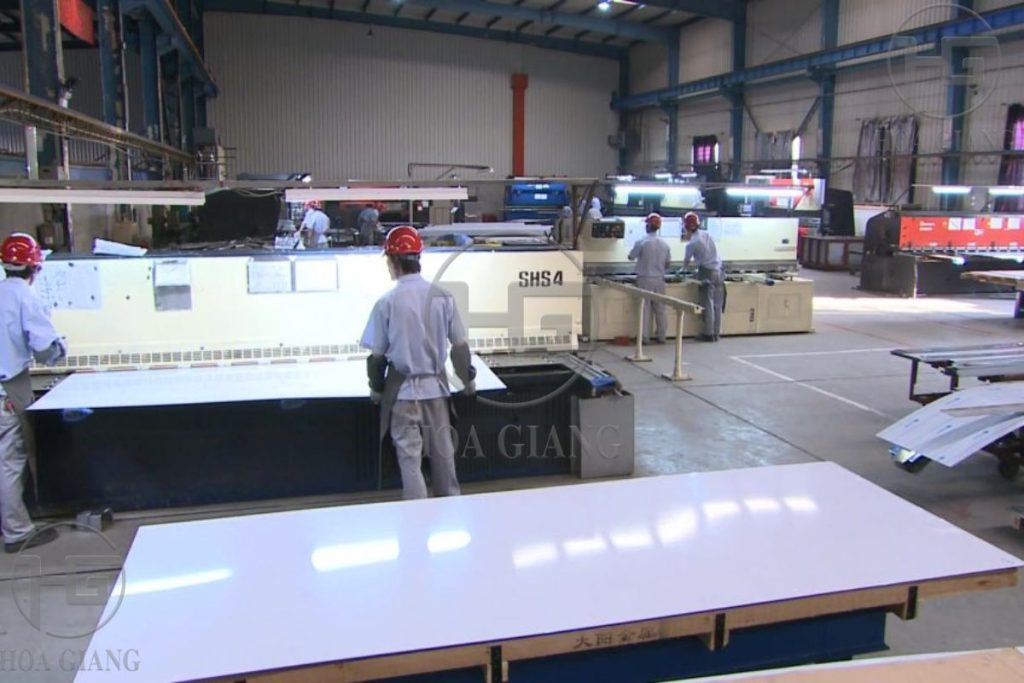
Hoa Giang owns a large-scale factory with superior production capacity.
In addition to supplying materials, Hoa Giang also owns a modern manufacturing plant that meets requirements such as laser cutting, bending, welding, polishing, and machining according to drawings, helping customers optimize time and costs while ensuring product quality.
Conclude
Each type of stainless steel, 201, 304, and 316, has its own advantages suitable for different uses. There is no single “best” type of stainless steel — only a certain type best suited to the usage environment and budget of each specific project and product.
If you are looking for a reputable stainless steel supplier, contact Hoa Giang today for detailed advice and pricing.
HOA GIANG STAINLESS STEEL
Fanpage: Hoa Giang Stainless Steel Group
Hotline: 0918311491 – 0949805203


