


A beautiful facade can make a great first impression, but maintaining that beauty over the years depends on the quality of the materials used. Stainless steel facade Aluminum facade cladding and glass are both commonly used, but differences in durability, surface finish, formability, and aesthetic value make each suitable for different types of buildings. So, which option is better? Let’s explore this in detail with Hoa Giang below.
Nội dung chính
- 1 What is a stainless steel facade?
- 2 What is an aluminum facade?
- 3 How do stainless steel and aluminum curtain wall systems differ?
- 4 When should stainless steel facade panels be prioritized?
- 5 What types of finishes are available for stainless steel facades?
- 6 FAQ – Frequently Asked Questions about Stainless Steel and Aluminum Facades
- 6.1 Is a stainless steel curtain wall better than an aluminum curtain wall?
- 6.2 Will stainless steel facade panels rust?
- 6.3 Is 304 stainless steel suitable for facade cladding?
- 6.4 What colors are available for stainless steel facade panels?
- 6.5 Are stainless steel curtain walls more expensive than aluminum curtain walls?
- 6.6 Should I use 304 or 316 stainless steel for the facade?
- 7 Hoa Giang – Custom-made stainless steel facade solutions
- 8 Conclude
What is a stainless steel facade?
Stainless steel facades are a solution that uses stainless steel sheets as a covering or decorative material for the exterior of buildings. Thanks to its durability, excellent corrosion resistance, and aesthetically pleasing metal surface, stainless steel is increasingly used in commercial buildings, hotels, resorts, villas, showrooms, and high-end architectural spaces.
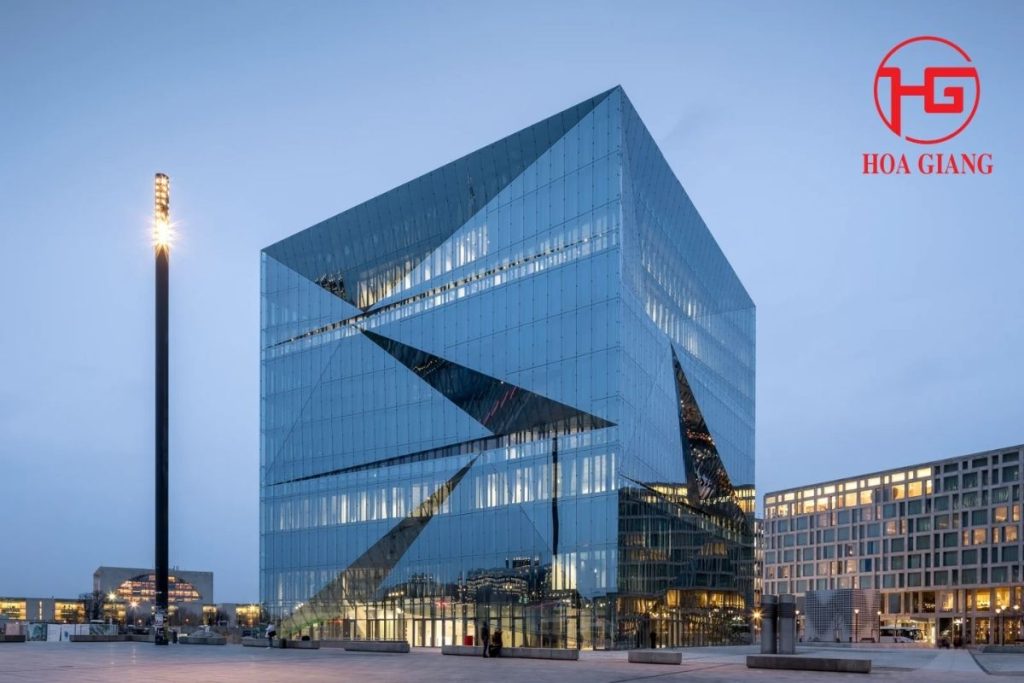
Stainless steel facade combined with glass
Depending on the design requirements, stainless steel used for facades can be fabricated with various finishes such as mirror finish, hairline brushed finish, wave pattern, patterned stainless steel, sandblasted stainless steel, or color-coated stainless steel using PVD technology.
What is an aluminum facade?
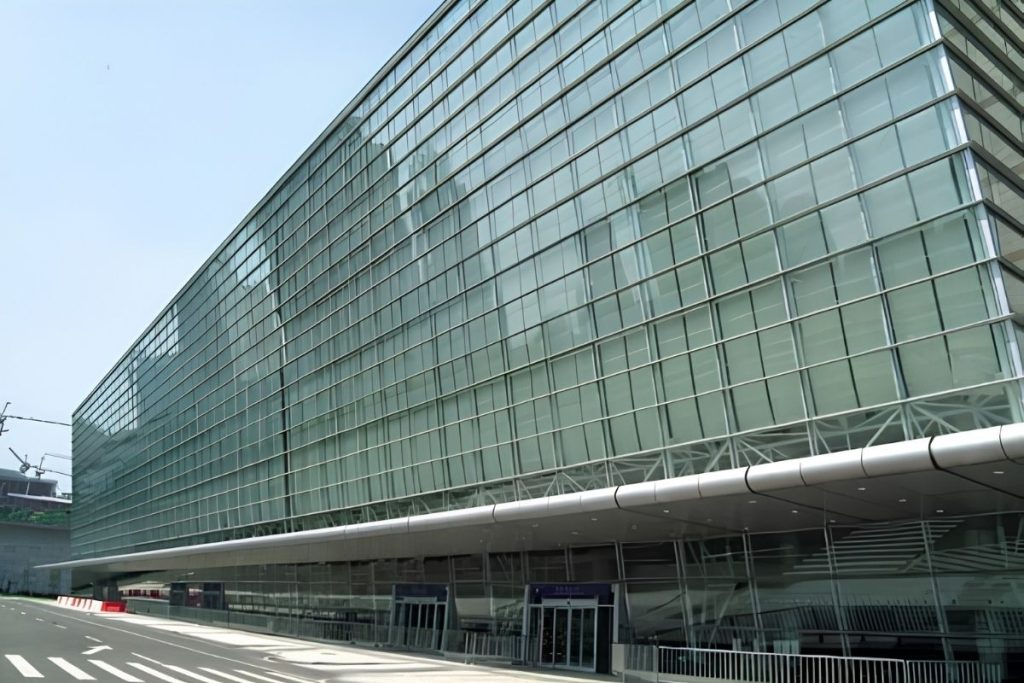
Aluminum facade combined with glass
Aluminum facade systems utilize aluminum panels or systems to clad and finish the exterior of buildings. Thanks to their lightweight nature, ease of fabrication, shaping, and installation, aluminum facades can be flexibly applied to various types of buildings with different design and structural requirements.
How do stainless steel and aluminum curtain wall systems differ?
Aluminum has the advantage of being lightweight and having versatile machinability, while stainless steel stands out for its durability, surface quality, and ability to create a premium material effect.
To make the right choice, each factor needs to be considered, rather than relying solely on the initial material cost.
| Criteria | Stainless steel facade | Aluminum facade |
| Durability, lifespan | • Very high hardness and mechanical strength.
• Excellent load-bearing capacity and long-term stability. • Suitable for projects requiring high longevity and durability. |
• Lower mechanical properties compared to stainless steel.
• Performance depends on the aluminum system, structural design, and quality of the paint/finish. |
| Weight | • It has a higher density than aluminum.
In return, it possesses superior hardness and load-bearing capacity. |
• Significantly lightweight.
• Helps reduce the load on the building structure, making it easier to transport and install. |
| Aesthetics | • Creates a strong visual impact, highlighting the natural beauty of the metal.
• A wide variety of premium surfaces: – Mirror: A strong, reflective surface. – Hairline: Fine, delicate streaks. – Sandblasting: Matte, luxurious. – PVD: High-quality color plating (Gold, Bronze, Champagne, Black…). |
• Wide variety of colors thanks to powder coating or anodizing technology.
• Suitable for many styles, but less so than stainless steel when exploiting the original metal surface. |
| Design | • High-precision laser cutting, CNC machining, bending, and folding services.
• Suitable for facades with intricate patterns, geometric designs, and brand identity elements. |
• Excellent design and flexibility for various facade systems.
However, it has more limitations compared to stainless steel when it comes to exploiting light effects. |
| Corrosion resistance | • Corrosion resistance thanks to a natural passive film.
• Stainless steel 304: Suitable for residential and commercial construction. • Stainless steel 316: Superior corrosion resistance, ideal for marine/chemical environments. |
• Corrosion resistance is achieved through a natural oxide layer combined with surface treatment, coating, or anodizing.
• It depends heavily on the quality of the paint/protective coating. |
| Investment costs | • Higher material and finishing costs. In return, it offers a luxurious aesthetic, longer lifespan, and optimized maintenance costs.
• Suitable for the mid-range and high-end segments. |
• More economical material costs
• Suitable for projects prioritizing budget optimization. |
When should stainless steel facade panels be prioritized?
Not every building needs to use stainless steel. However, in the following cases, stainless steel facades are the preferred choice, offering distinct advantages:
The project requires a high level of aesthetics.
Hotels, resorts, villas, showrooms, model homes, shopping malls, or high-end buildings often require facades that can make a strong impression. Stainless steel surfaces, with their wide range of finish options, help meet this requirement.
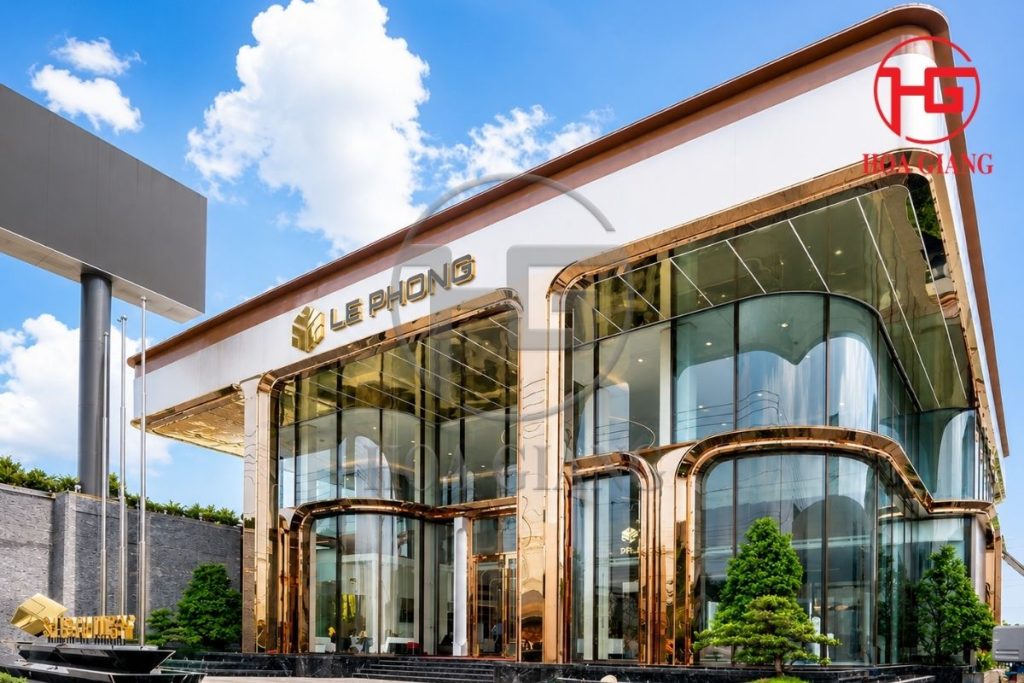
Mirrored stainless steel facade at Sales Gallery The Emerald Boulevard – Project constructed by Hoa Giang.
The structure requires high durability.
In projects requiring the maintenance of surface quality over a long period, stainless steel is a worthwhile material to consider due to its corrosion resistance and good mechanical strength.
The building uses a modern design.
Modern, minimalist, or luxury architectural styles often utilize metal materials to create contrast between light, form, and surface.
The project needs to create a brand identity.
Colors, patterns, logos, or distinctive details can be fabricated onto stainless steel to create a unique and recognizable facade.
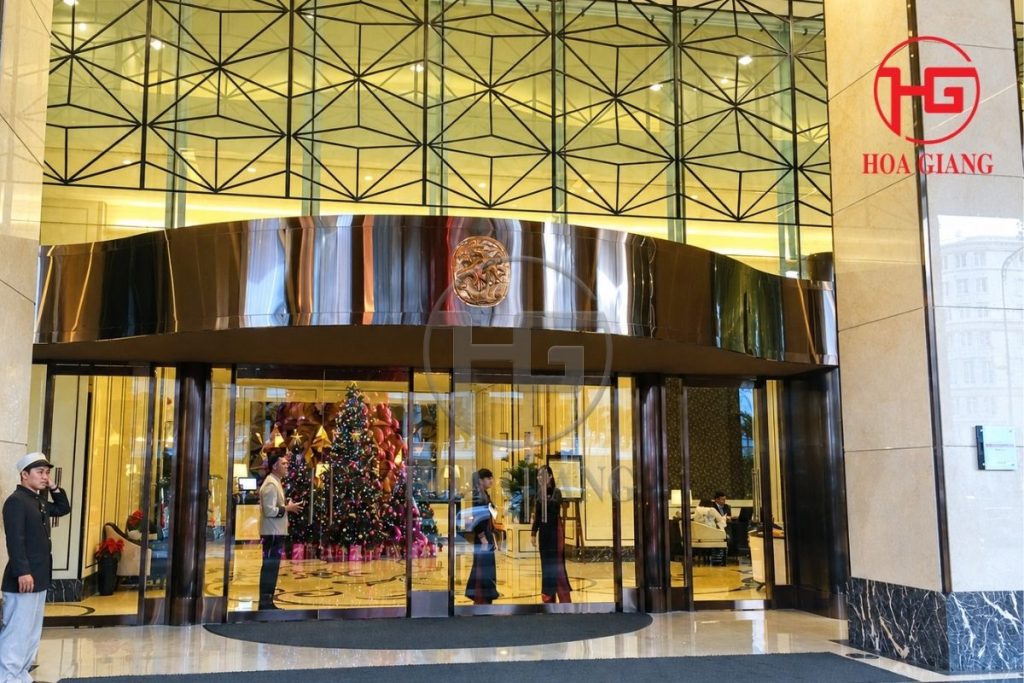
Gold-plated stainless steel facade at Caravelle Saigon Hotel – Project constructed by Hoa Giang.
What types of finishes are available for stainless steel facades?
One of the outstanding advantages of stainless steel facades is their ability to customize the surface in diverse ways, meeting various architectural styles and aesthetic requirements.
Mirror-finish stainless steel creates a light-reflecting effect, giving the building’s facade a luxurious and striking appearance.
Hairline brushed stainless steel features fine, uniform brushed lines, creating a modern, sophisticated feel and suitable for many contemporary architectural designs.
Sandblasted stainless steel has a characteristic matte finish, which reduces light reflection and provides a subtle, elegant look.
Stainless steel with a wave-like surface creates a unique rippling effect, making the facade more dynamic and giving it depth when combined with light.
Patterned stainless steel can be fabricated with various designs, suitable for facade designs that need to create a focal point or express a unique identity.
PVD-coated stainless steel allows for the creation of a wide range of colors such as gold, champagne, copper, black, and special shades, while maintaining the characteristic beauty of the metal surface.
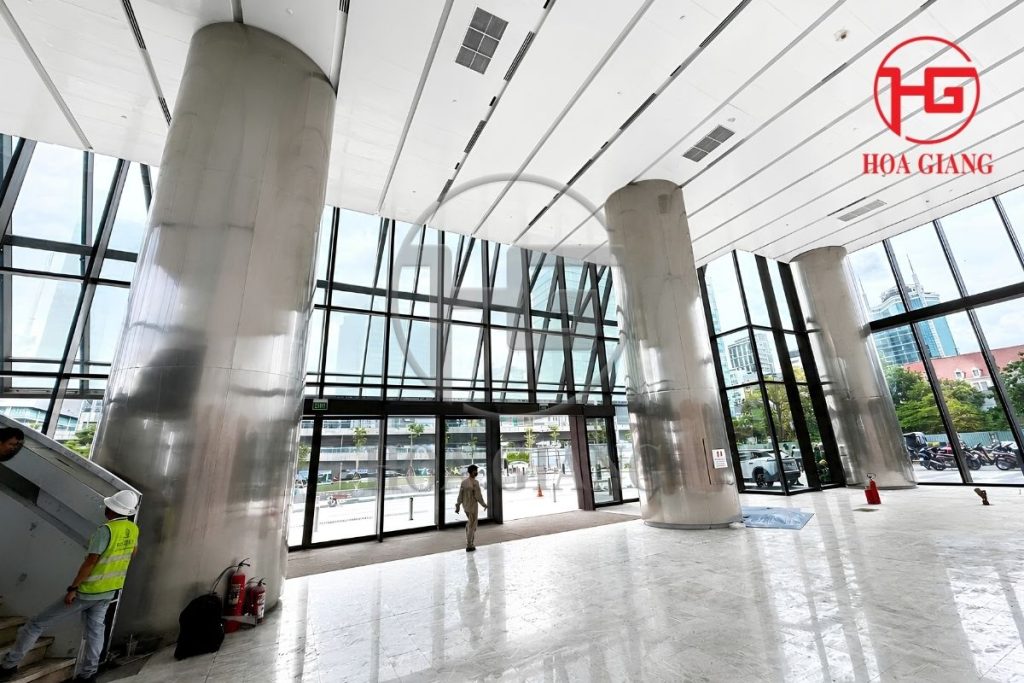
Black stainless steel facade at Saigon Marina IFC – Project constructed by Hoa Giang.
The combination of panel shape, color, pattern, and surface finish methods makes stainless steel facades versatile in design, ranging from minimalist and modern styles to luxurious and artistic ones.
FAQ – Frequently Asked Questions about Stainless Steel and Aluminum Facades
Is a stainless steel curtain wall better than an aluminum curtain wall?
Each material has its own advantages. Stainless steel facades stand out for their durability, rigidity, corrosion resistance, and aesthetic appeal. Aluminum, on the other hand, offers advantages in terms of lightweight construction and cost-effectiveness. For projects requiring high durability and aesthetic value, stainless steel facades are a worthwhile option.
Will stainless steel facade panels rust?
Stainless steel has good corrosion resistance, but this does not mean it is completely rust-proof under all conditions. Rust resistance depends on the grade of stainless steel, the environment in which it is used, the quality of processing, and the maintenance and cleaning process.
Is 304 stainless steel suitable for facade cladding?
Have. 304 stainless steel is one of the most common types of stainless steel, offering good corrosion resistance, high durability, and suitability for many commercial, residential, and high-end architectural projects. However, if the project is located in a highly corrosive environment, especially in coastal areas, stainless steel 316 may be considered to better meet the requirements.
What colors are available for stainless steel facade panels?
Stainless steel facades can be finished in a variety of colors and effects. With PVD technology, in addition to color, the surface can also be combined with finishing methods such as mirror finish, brushed, sandblasted, wave, or patterned.
Are stainless steel curtain walls more expensive than aluminum curtain walls?
Typically, the initial investment cost of stainless steel facade is more expensive than aluminum due to the cost of materials, processing, and surface finishing. However, the actual cost also depends on the grade of stainless steel, thickness, size, finishing method, design, and construction requirements. For projects prioritizing durability and aesthetics, stainless steel can provide long-term value commensurate with the investment.
Should I use 304 or 316 stainless steel for the facade?
The choice depends on the environment and requirements of the project 304 stainless steel Suitable for most civil and commercial constructions under normal conditions.316 stainless steel It offers better corrosion resistance, making it particularly suitable for coastal environments, high humidity, or areas with corrosive agents. Therefore, the choice should not be based solely on price but should also consider the actual usage conditions.
Hoa Giang – Custom-made stainless steel facade solutions
With nearly 20 years of experience in the stainless steel industry, Hoa Giang provides stainless steel solutions for a wide range of projects, from commercial to high-end architectural.
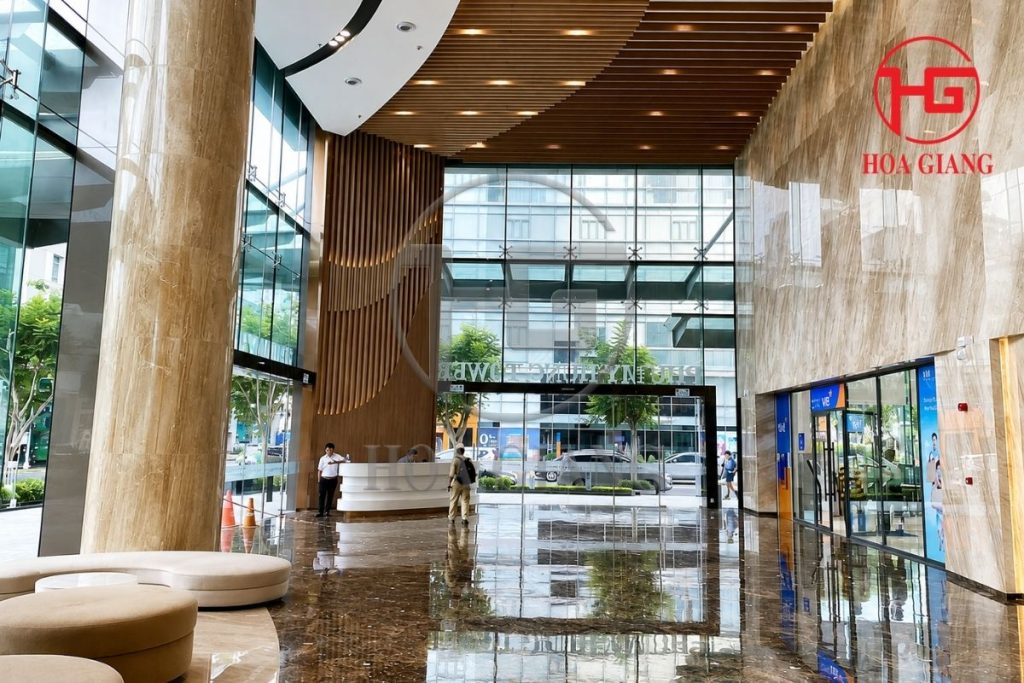
Stainless steel facade at Phu My Hung Tower – Project constructed by Hoa Giang.
With its capabilities in custom stainless steel fabrication and finishing, Hoa Giang can meet various stainless steel facade design requirements, from sheet fabrication according to drawings to colored stainless steel and PVD stainless steel solutions with diverse surface effects.
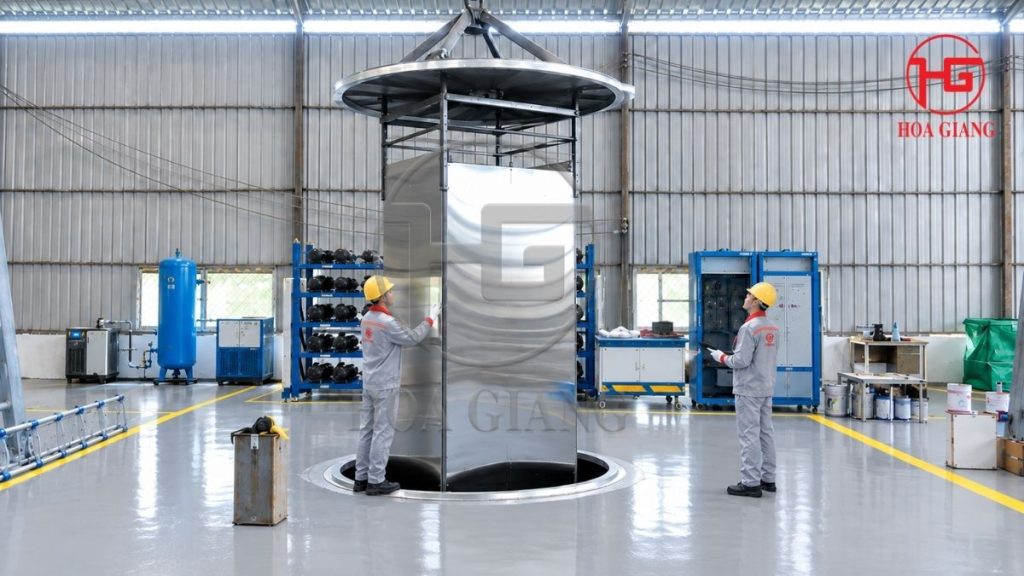
Hoa Giang stainless steel factory is equipped with modern machinery.
Modern machinery and high-precision processing capabilities enable the implementation of facade designs with complex shapes and details.
With a focus on providing solutions rather than just supplying materials, Hoa Giang accompanies each project from the selection of materials, colors, and surfaces to the processing according to their specific requirements.
Conclude
Both stainless steel and aluminum facades have their own advantages, but the choice should be based on the specific requirements of each project. Especially for hotels, resorts, villas, showrooms, and high-end buildings, choosing the right type of stainless steel, color, surface finish, and fabrication method can make a significant difference to the overall architecture.
Contact Hoa Giang for advice on stainless steel facade solutions that suit the design, technical requirements, and aesthetic direction of your project.
HOA GIANG STAINLESS STEEL
Facebook: Hoa Giang Stainless Steel Group
Hotline: 0918311491 – 0949805203


