


Nội dung chính
- 1 What is Bead-blasted stainless steel?
- 2 Advantages of Bead-blasted stainless steel in architecture
- 3 Applications of Bead-blasted stainless steel in architecture
- 4 How does Bead-blasted stainless steel differ from other common stainless steel surfaces?
- 5 Should you choose Bead-blasted or hairline stainless steel?
- 6 Sandblasting process for stainless steel
- 7 Bead-blasted stainless steel – a material choice for modern architecture.
- 8 Hoa Giang – Custom sandblasting of stainless steel
What is Bead-blasted stainless steel?
Bead-blasted stainless steel is stainless steel whose surface is treated by spraying particles of suitable size and properties onto the surface under specific pressure. This process creates a characteristic rough finish, reducing light reflection compared to a polished stainless steel surface.
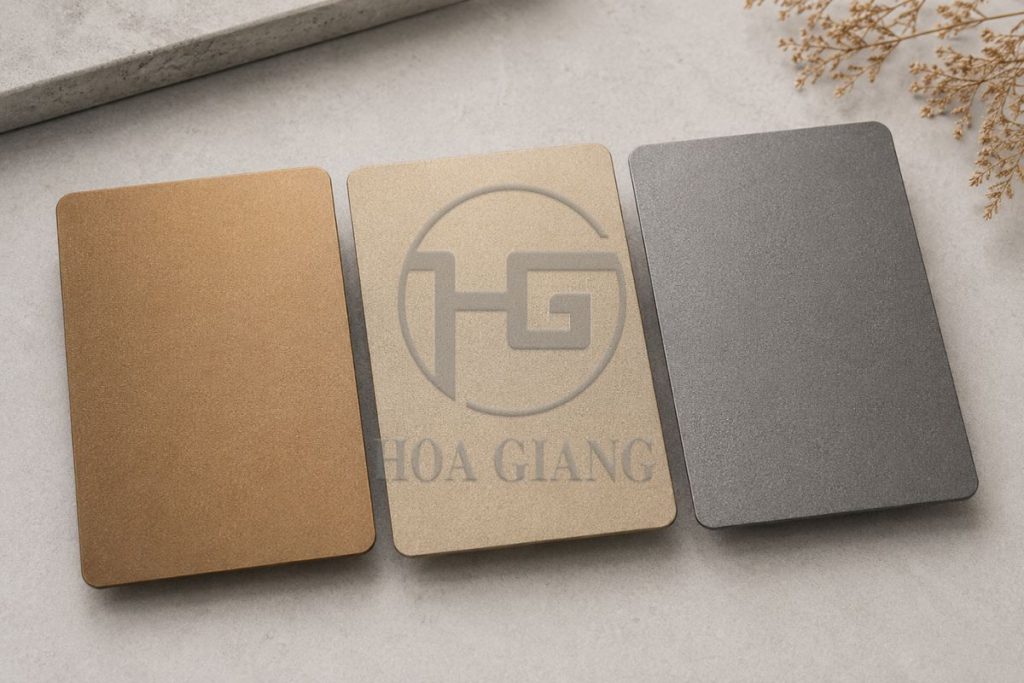
Bead-blasted stainless steel
After processing, the surface of stainless steel usually has a matte and uniform appearance, creating a subtle visual effect instead of the strong reflectivity of mirror stainless steel. This is also why Bead-blasted surfaces are often chosen for projects that require a modern look but are not overly shiny or ostentatious.
Sandblasting is one of many surface treatment methods for stainless steel, alongside Hairline, Mirror, Vibration, and other finishing techniques.
Surface characteristics of Bead-blasted stainless steel
Bead-blasted stainless steel surfaces have several distinct identifying characteristics:
- The matte surface, not mirror-like, is completely different from the shiny, mirror-finish stainless steel.
- The characteristic roughness is uniform across the entire surface of the panel, creating a smooth feel to the touch, although it is not as polished as a polished surface.
- The ability to create visual effects and depth in materials makes metal surfaces appear “softer,” closer to the living space instead of cold and sharp like mirror-finish stainless steel.
- It can be combined with other finishing methods such as PVD coating for color, incorporating hairline effects in sections, or incorporating mirror details to create contrasting accents within the same product.
Advantages of Bead-blasted stainless steel in architecture
Creates a sophisticated, modern surface effect.
Compared to polished mirror-finish stainless steel, Bead-blasted stainless steel significantly reduces reflectivity, helping to prevent glare in the space. The matte surface provides a sophisticated yet restrained look, perfectly suited to projects pursuing minimalist and modern architectural styles.
Minimizes the appearance of fingerprints and light reflections.
With Bead-blasted stainless steel, the slight roughness on the surface makes these small marks much less noticeable. This is why Bead-blasted stainless steel is particularly suitable for high-traffic and high-contact areas such as door handles, elevator walls, and reception counter tops.
Durability and corrosion resistance
The durability of Bead-blasted stainless steel largely depends on the grade of stainless steel chosen. Stainless steel 304 is well-suited for indoor applications where there is minimal exposure to chemicals or humid, salty environments. Meanwhile, stainless steel 316 is more suitable for highly corrosive locations such as coastal areas, industrial kitchens, or exterior elements directly exposed to the weather.
Flexibility in design
Bead-blasted stainless steel can be cut, bent, and shaped according to design drawings without losing its surface properties. This material is also easily combined with PVD coating technology to create colors (gold, copper, black, blue, etc.), significantly expanding its aesthetic expression possibilities.
Suitable for various architectural styles.
Thanks to its neutral, matte appearance and ease of material coordination, Bead-blasted stainless steel blends well with many different architectural styles:
- Modern — clean lines, smooth, flat surfaces.
- Minimalism — limiting unnecessary details and emphasizing the use of natural materials.
- Luxury — elegant but not ostentatious.
- Industrial — a combination of raw, rustic textures and metalwork.
- Contemporary — versatile, easy to combine colors and materials.
Applications of Bead-blasted stainless steel in architecture
Bead-blasted stainless steel in interior design
In interior design, Bead-blasted stainless steel is often used for cladding and decorative details that require a metallic effect but do not want an overly glossy surface.
Some common applications include:
- Wall cladding.
- Decorative wall panel.
- Column cladding.
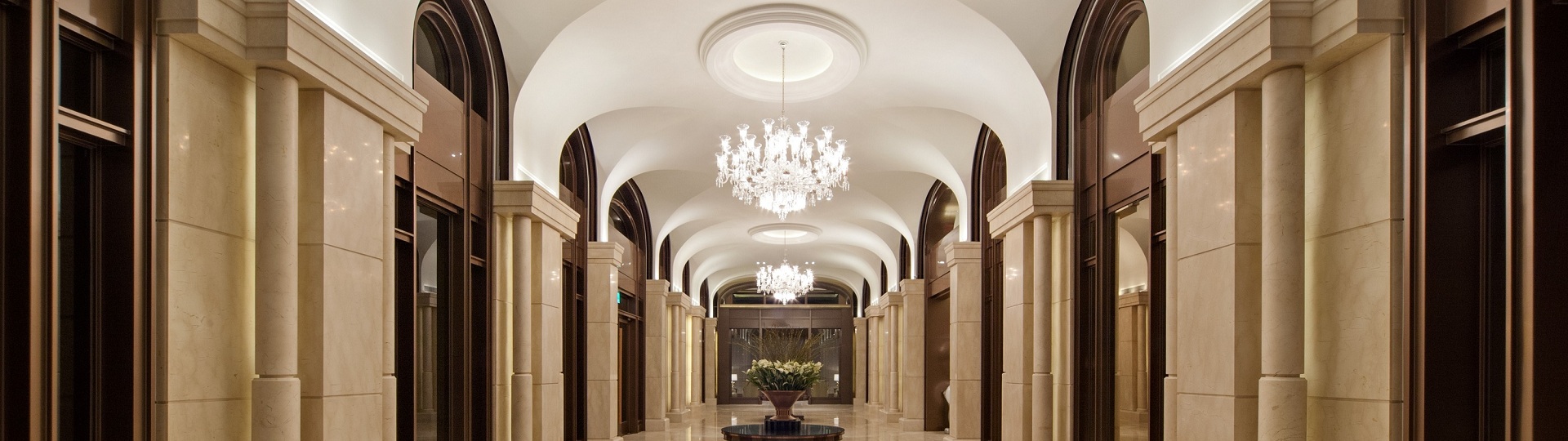
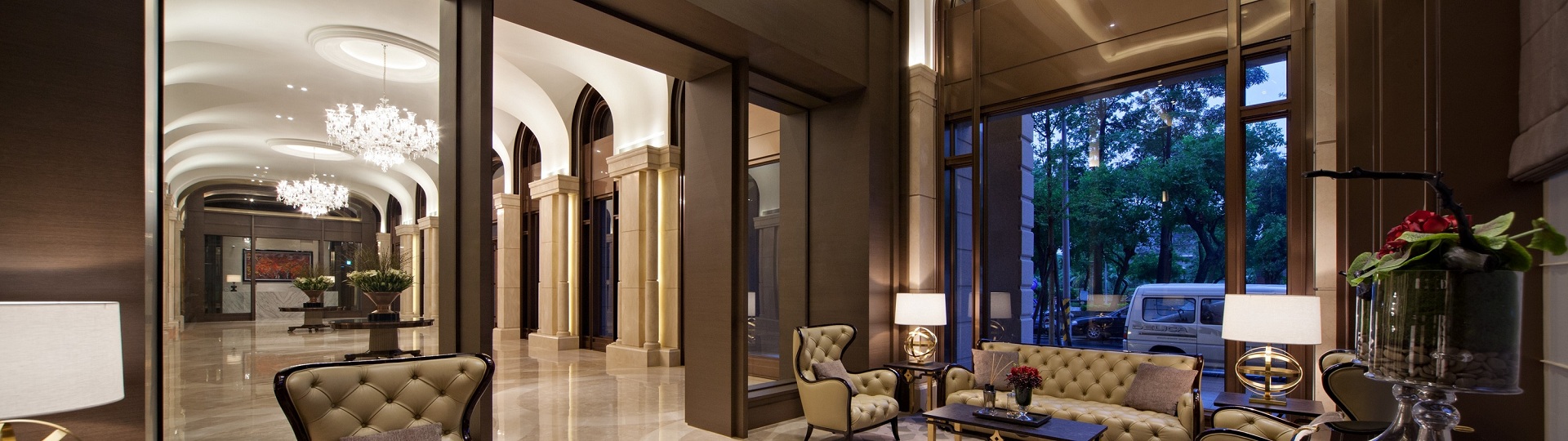
- Details of the lobby decoration.
- An accent piece in an interior space.
The matte surface of stainless steel makes it easy to combine with stone, wood, glass, and other finishing materials, thereby creating a more harmonious overall look.
Bead-blastedstainless steel for elevators
Elevators are one of the items suitable for Bead-blasted stainless steel due to the high requirements for durability, ease of cleaning, and aesthetics.
The material can be used for:
- Cabin wall.
- Panel cabin.
- Elevator door.
- Interior cabin decorative details.
Compared to a polished surface, Bead-blasted stainless steel creates a more visually pleasing effect when combined with the cabin lighting system. The matte surface also helps to reduce the strong glare when users are inside the elevator.
Bead-blasted stainless steel for facades and exteriors.
With decorative cladding panels and building facades, Bead-blasted stainless steel creates a modern visual effect without causing glare in sunlight.
Bead-blasted stainless steel for partitions
In commercial projects, Bead-blasted stainless steel is widely used as partitions and dividers in offices, hotels, shopping malls, restaurants, and showrooms. The matte surface helps to subtly divide spaces while maintaining visual cohesion.
Bead-blasted stainless steel in counter and lobby area design.
The reception area and lobby are often the first impressions a building makes. Therefore, the materials used here need to meet both aesthetic and long-term usability requirements.
Bead-blasted stainless steel can be applied to:
- Reception desk.
- Service counter.
- The panel behind the counter.
- Logo and identifying details.
- Decorative details in the lobby area.
When combined with stone, glass, wood, or decorative lighting, matte stainless steel surfaces can create an overall luxurious look while maintaining the necessary restraint.
How does Bead-blasted stainless steel differ from other common stainless steel surfaces?
Each finishing method creates a different surface effect and is suitable for specific design requirements.
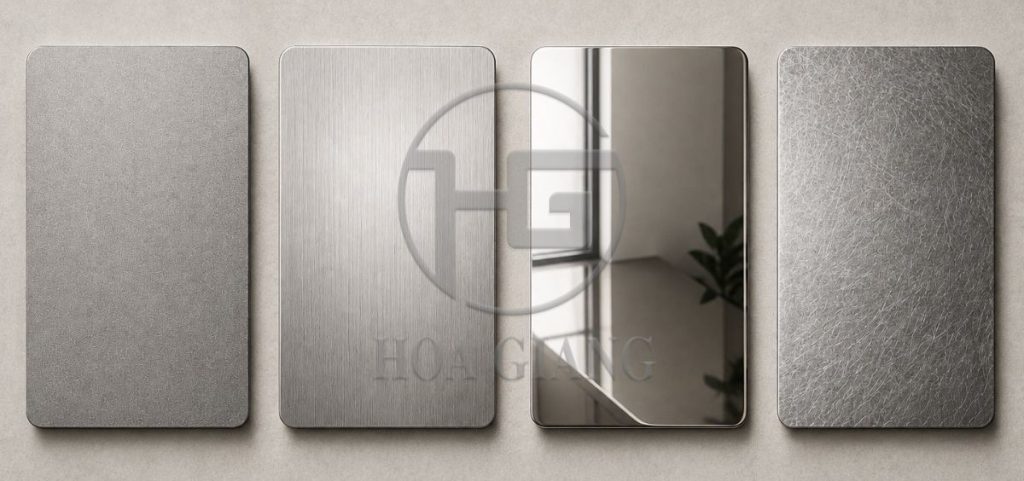
Bead-blasted stainless steel and other sandblasting materials.
| Stainless steel surface | Characteristic | Effect | Advantage | Application |
| Sandblasting | A uniformly rough, slightly textured surface due to sand/gloss particles hitting the surface. | Elegant, modern, and not flashy. | Anti-fingerprint, covers minor scratches. | Luxury elevators, decorative walls, interior design, architectural fixtures. |
| Hairline scratches | Thin, long, continuous scratches running in one direction. | Elegant, with a subtle depth. | Excellent at concealing imperfections, versatile application. | Elevator doors, wall cladding, household appliances, facades… |
| Mirror | High gloss, perfectly smooth surface. | Elegant, spacious, and light-reflecting. | For a luxurious, high-end visual effect. | High-end interior decoration, elevator cabin mirrors, signage trim. |
| Scratches | The scratches are random and do not follow any pattern. | Unique, artistic, creating a soft blurring effect. | The scratches are “concealed” well thanks to the existing messy scratch pattern. | Architectural highlights, hotel lobbies, countertops, decorative pieces. |
The core difference of Bead-blasted stainless steel:
- Light scattering ability: Thanks to its textured surface, Bead-blasted stainless steel softens the light that shines on it instead of reflecting it, giving the space a gentle, luxurious feel.
- Surface durability: The matte surface minimizes the visibility of dirt, fingerprints, and scratches during daily use compared to smooth, glossy surfaces.
Should you choose Bead-blasted or hairline stainless steel?
In terms of visual effect, Bead-blasted stainless steel provides a uniform matte surface across the entire area, while hairline creates parallel linear scratches that give a sense of movement and direction.
If the project aims for minimalism, smoothness, and neutrality, sandblasting is often a more suitable choice. Conversely, if you want to emphasize visual appeal, hairline stainless steel can create a more elegant effect and guide the viewer’s gaze better.
In general, Bead-blasted stainless steel is preferred for spaces that require a soft feel and minimal visual sharpness; and hairline stainless steel is preferred when you want to create emphasis on lines and movement in the design.
Sandblasting process for stainless steel
Choose the stainless steel grade and thickness.
The first step is to determine the appropriate stainless steel grade: 304 for general interior applications, or 316 for environments requiring higher corrosion resistance. The thickness of the stainless steel sheet is also determined based on its intended use.
Forming and shaping
After selecting the material, the stainless steel sheet is processed and shaped according to the design drawings through laser cutting, bending, and mechanical forming processes, ensuring precise dimensions and shape before moving on to the surface treatment stage.
Surface treatment by sandblasting
This stage determines the final appearance of the product, involving surface cleaning to remove grease and dirt, followed by abrasive blasting under controlled pressure to create the desired effect.
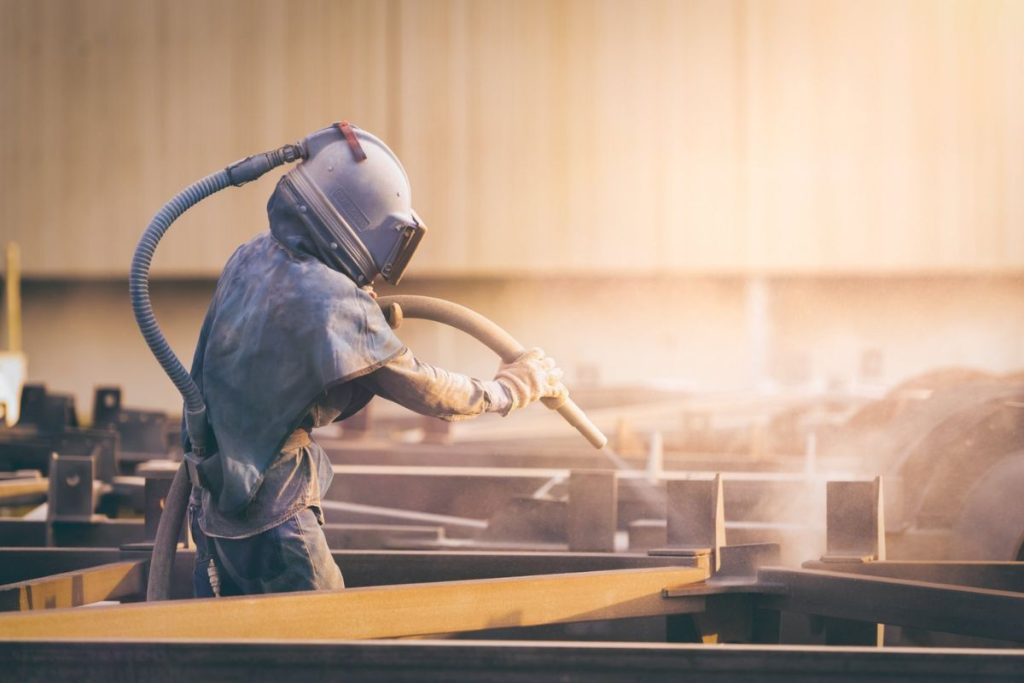
Surface sandblasting process
Check and refine
Before shipment, the product undergoes surface inspection to detect defects such as uneven color, unwanted scratches, and dimensional checks to ensure it matches the design drawings. After inspection, the product is carefully packaged and protected before transportation and installation at the construction site.
Bead-blasted stainless steel – a material choice for modern architecture.
Bead-blasted stainless steel stands out for its ability to balance aesthetics and functionality: the subtle matte surface reduces reflections, minimizes fingerprints, and provides a luxurious yet understated feel, while the material’s durability is ensured by its high-quality stainless steel base.
The flexible processing capabilities, from cutting, bending, and shaping to combining with other finishing technologies such as PVD, also make Bead-blasted stainless steel easily adaptable to many applications, from interiors, elevators, and facades to commercial partitions.
Therefore, Bead-blasted stainless steel is increasingly being chosen by architects and contractors for many modern architectural projects, from residential to high-end commercial buildings.
>> Click to view the latest useful articles in the News section.
Hoa Giang – Custom sandblasting of stainless steel
With nearly 20 years of experience in the decorative stainless steel industry, Hoa Giang are a partner in many villa, hotel, shopping mall, and showroom projects luxury real estate and high-end projects nationwide.
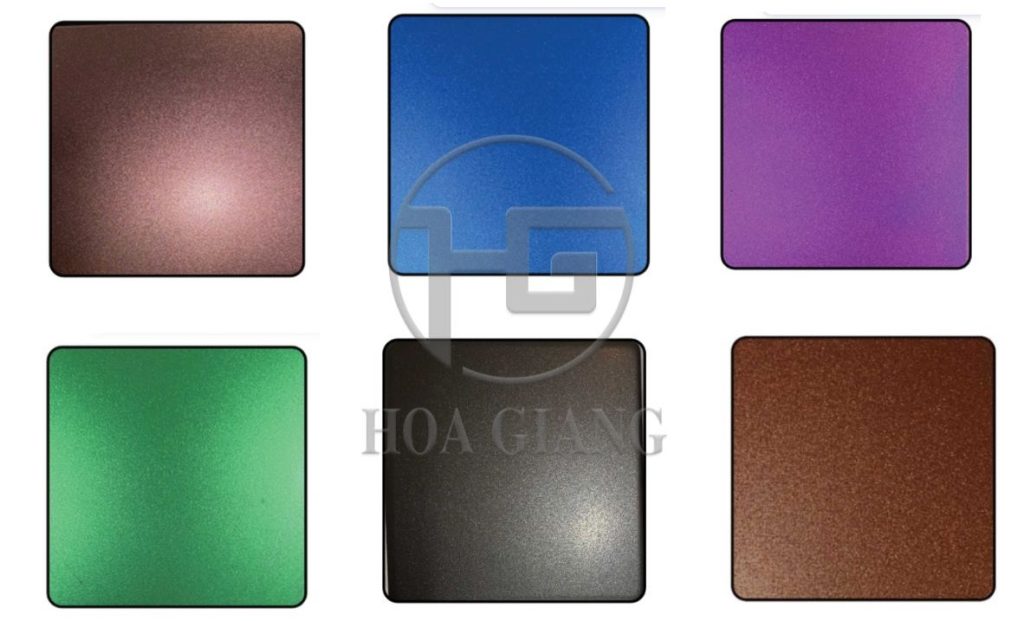
Bead-blasted stainless steel collection at Hoa Giang
With its modern manufacturing facilities and experienced technical team, Hoa Giang provides solutions. Custom sandblasting of stainless steel, meeting diverse requirements in terms of size, shape, and surface finish.
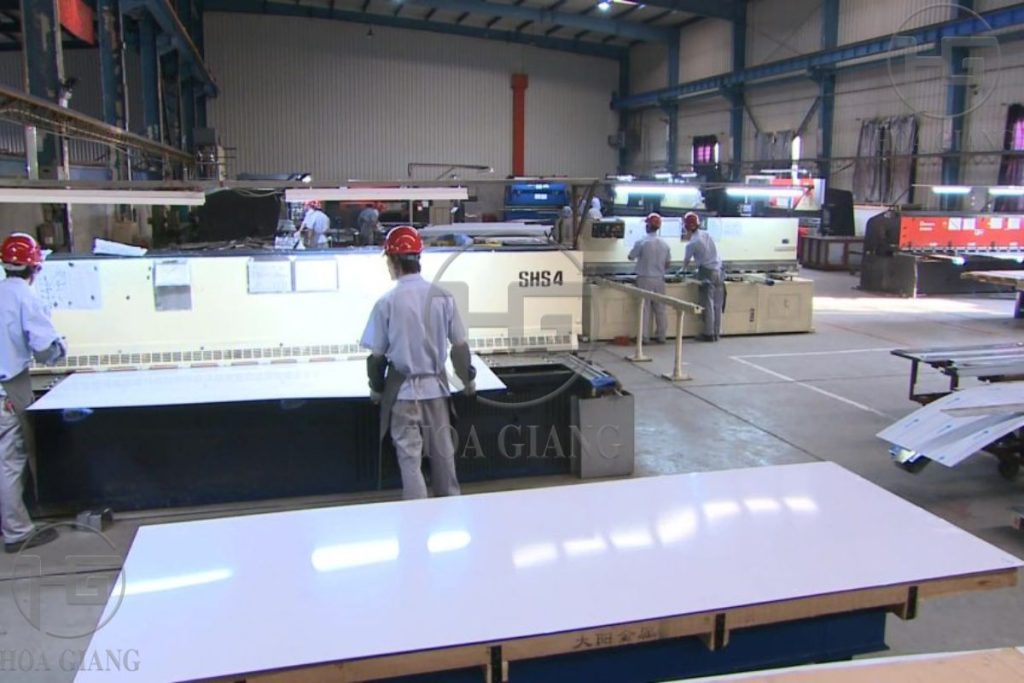
Hoa Giang Stainless Steel Factory
From machining according to drawings to sandblasting surface treatment, the product is controlled in a synchronized manner to ensure accuracy, consistency, and finish quality for each item..
Contact Hoa Giang for consultation and implementation. Custom stainless steel fabrication solutions for the reception area and high-end interior furnishings.
HOA GIANG STAINLESS STEEL
Fanpage:Hoa Giang Stainless Steel Group
Hotline: 0918311491 – 0949805203


