




Stainless steel is renowned for its corrosion resistance and high durability, and is widely used in architecture, interior design, and many industrial fields. However, will stainless steel rust? This is a question many people are concerned about when choosing stainless steel for construction projects. Let’s explore with Hoa Giang Causes of stainless steel rusting the corrosion resistance of each type of stainless steel and the appropriate material selection and usage solutions for each construction project.
Nội dung chính
- 1 Does stainless steel rust?
- 2 Why is stainless steel rust-resistant?
- 3 What causes stainless steel to rust?
- 3.1 Choosing the wrong grade of stainless steel for the environment.
- 3.2 Stainless steel is exposed to highly corrosive environments.
- 3.3 The stainless steel surface becomes contaminated with iron during the processing.
- 3.4 Welds and machining areas need to be treated using proper techniques.
- 3.5 Cleaning stainless steel with unsuitable chemicals.
- 4 Which types of stainless steel offer good rust resistance?
- 5 Does stainless steel 304 rust?
- 6 Is stainless steel 201 prone to rust?
- 7 What environments is 316 stainless steel suitable for?
- 8 Can stainless steel that has rusted be repaired?
- 9 How can we prevent stainless steel from rusting?
- 10 FAQ Frequently Asked Questions about Stainless Steel Rusting
- 11 Hoa Giang – A leading provider of high-end decorative stainless steel fabrication in Vietnam.
- 12 Conclude
Does stainless steel rust?
Does stainless steel rust? The answer is possible, but stainless steel is designed to be much more corrosion-resistant than many types of ordinary steel. The appearance of rust spots on a stainless steel product does not necessarily mean the material is of poor quality or that the stainless steel lacks corrosion resistance.
Stainless steel’s rust resistance comes from its composition Chromium (Cr) In materials, when exposed to oxygen, chromium forms a very thin passive film on the surface, which helps limit corrosion and protect the underlying metal.
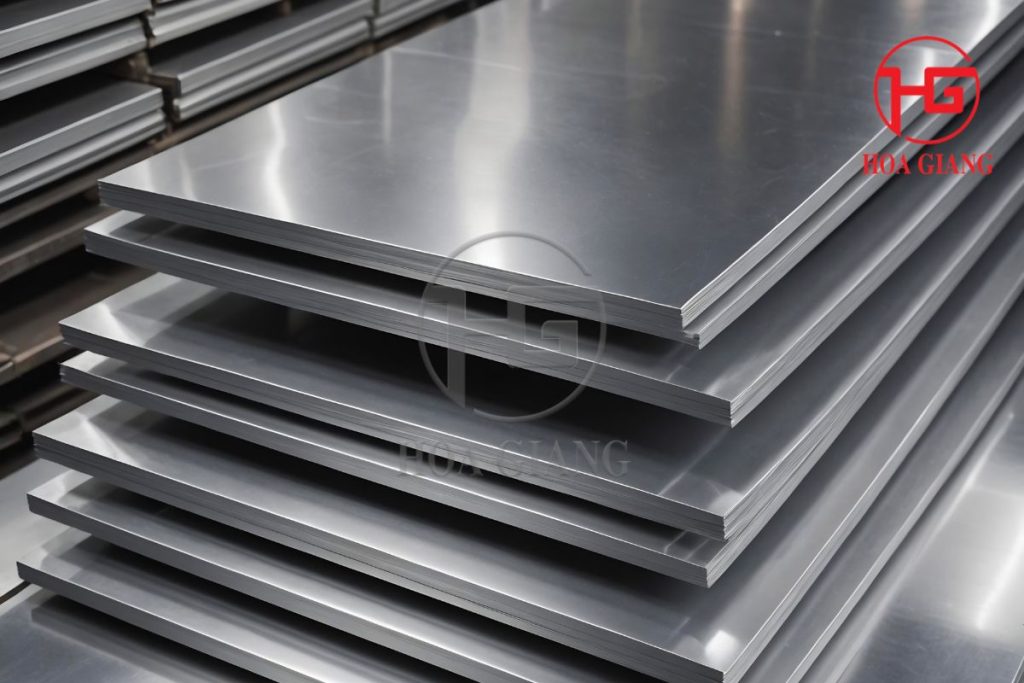
The ability to resist rust depends on the grade of stainless steel chosen.
However, the effectiveness of protection also depends on many factors such as:
- Stainless steel grades were selected.
- Environmental conditions of use.
- Stainless steel surface.
- Cutting, welding, grinding, and machining processes.
- Cleaning and maintenance methods.
- The level of exposure to salt, chemicals, or corrosive substances.
Therefore, instead of simply asking “will stainless steel rust?”, it’s necessary to determine the type of stainless steel, where it will be used, and how it’s processed in order to choose the appropriate solution.
Why is stainless steel rust-resistant?
Stainless steel’s corrosion resistance primarily comes from: Chromium.
When chromium in stainless steel comes into contact with oxygen, a passive film forms on the material’s surface, protecting it from environmental damage. This film is very thin but can regenerate itself when the surface is exposed to oxygen under suitable conditions.
This is why stainless steel is widely used in many fields such as:
- Interior design and architecture.
- Elevator.
- Building facades and interior decoration.
- Restaurants, hotels.
- Industrial equipment.
- Outdoor structures.
- The area has high demands for durability and aesthetics.
However, corrosion resistance varies among different grades of stainless steel. Therefore, choosing materials suitable for the intended environment is crucial to maintaining the durability and aesthetic appeal of the structure.
What causes stainless steel to rust?
Choosing the wrong grade of stainless steel for the environment.
Each grade of stainless steel has a different chemical composition and corrosion resistance.
For example, stainless steel 201 is suitable for many interior and general environmental applications. Meanwhile, stainless steel 304 has better corrosion resistance and is commonly used in architecture, interior design, and industry.
For coastal environments or those requiring higher corrosion resistance, 316 stainless steel may be a suitable choice.
Determine the intended use right from the design stage to select the correct grade of stainless steel, instead of relying solely on price.
Stainless steel is exposed to highly corrosive environments.
The environment in which it is used directly affects the durability of stainless steel.
Factors that can increase the risk of corrosion include:
- Salt spray and seawater.
- High humidity persists.
- Chloride salt.
- Some types of chemicals.
- A unique industrial environment.
- The detergent is highly corrosive.
For coastal projects, swimming pool areas, or environments with chemicals, it is necessary to assess the actual conditions to select the appropriate stainless steel grade and surface treatment solution.
The stainless steel surface becomes contaminated with iron during the processing.
This is a common but easily misunderstood cause.
During cutting, grinding, or machining processes, iron dust and metal particles from the tools can adhere to the stainless steel surface. These particles can oxidize and create reddish-brown spots.
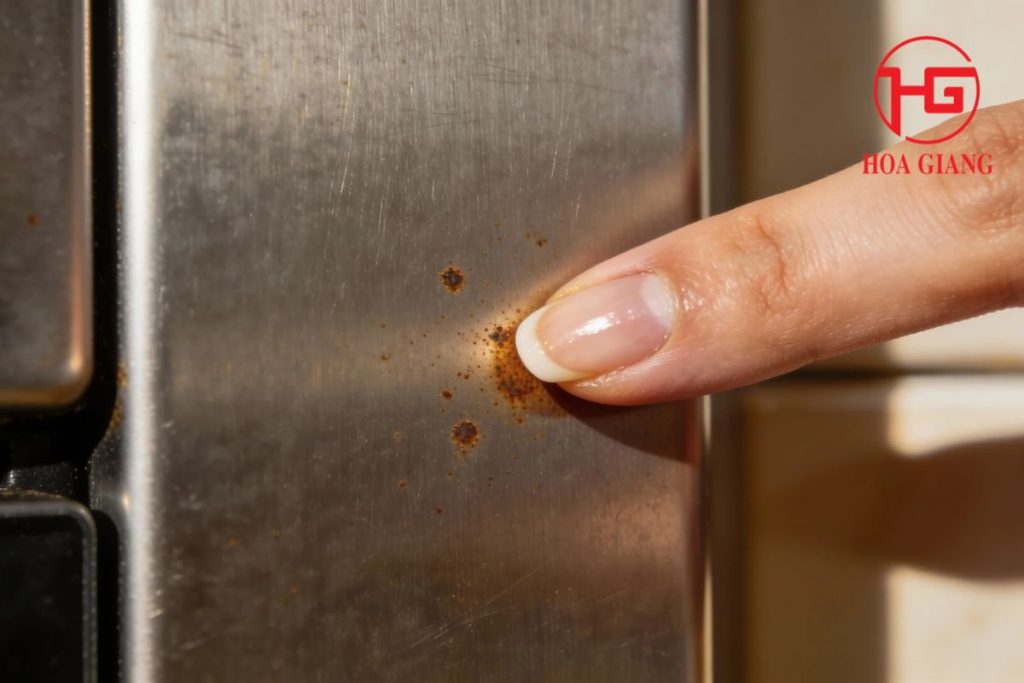
The stainless steel surface becomes contaminated with iron, causing rust stains.
In this case,the appearance of rust on the surface does not necessarily mean that the stainless steel sheet itself is severely corroded..
Control the work area, use appropriate tools for stainless steel, and perform proper cleaning and surface treatment procedures after processing.
Welds and machining areas need to be treated using proper techniques.
Areas such as welds, corners, or recently cut sections may require proper treatment and cleaning techniques to ensure surface quality.
If the machining process affects the surface or leaves behind impurities, the corrosion resistance in that area may be uneven.
Cleaning stainless steel with unsuitable chemicals.
Stainless steel has good corrosion resistance, but not all cleaning chemicals are suitable for it.
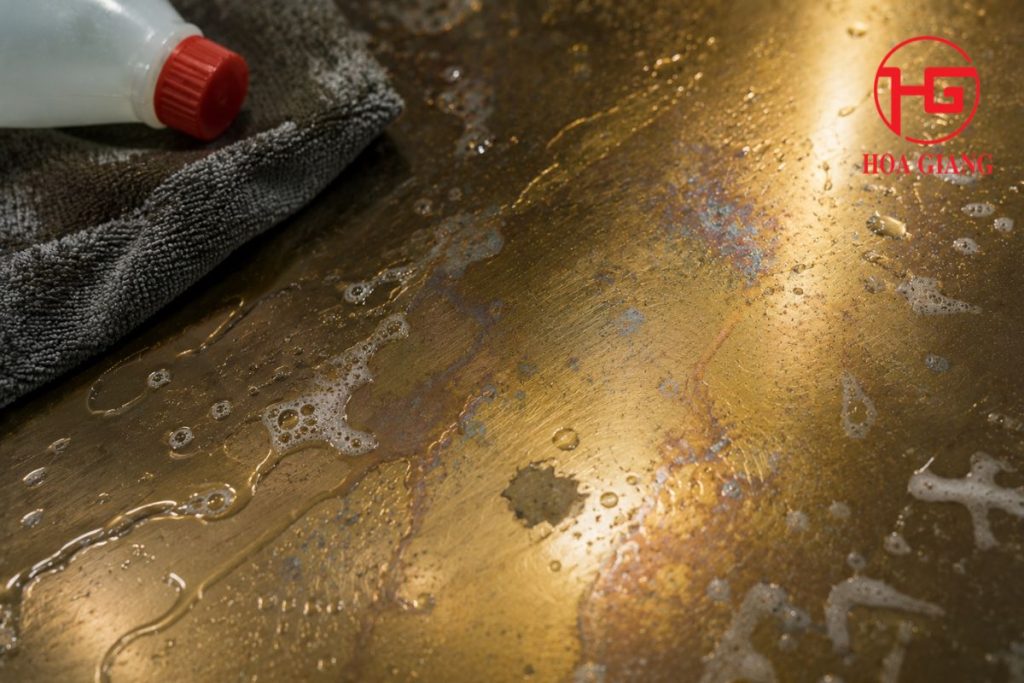
Using inappropriate chemicals
Using harsh detergents or leaving chemicals on the surface for too long can damage the protective coating of stainless steel.
Which types of stainless steel offer good rust resistance?
Corrosion resistance depends on the material composition and usage conditions. Some common grades of stainless steel include:
| Stainless steel label | Corrosion resistance | Reference application |
| Stainless steel 201 | Rather | Interior design, decoration, and the general environment. |
| 304 stainless steel | Good | Architecture, interior design, equipment, construction |
| 316 stainless steel | Very good | Coastal environment and harsh conditions |
This is just a general guideline. The actual material selection should be based on…environment, design, aesthetic requirements, building lifespan, and operating conditions..
Does stainless steel 304 rust?
Stainless steel 304 has good corrosion resistance, but rust can still appear under certain usage conditions.
Stainless steel 304 is widely used due to its balance of corrosion resistance, durability, machinability, and cost. It is a popular choice for architecture and interior design.
Is stainless steel 201 prone to rust?
Stainless steel 201 has corrosion resistance suitable for general environments, especially in interior and decorative applications.
However, the corrosion resistance of 201 stainless steel is generally lower than that of 304 stainless steel under many conditions. Therefore, when structures are frequently exposed to moisture, salt, or corrosive environments, the grade of stainless steel should be carefully considered before production.
What environments is 316 stainless steel suitable for?
Stainless steel 316 contains molybdenum (Mo), which increases its corrosion resistance in certain chlorinated environments compared to stainless steel 304.
Therefore, 316 stainless steel is often considered for:
- Coastal construction.
- The area has a salty atmosphere.
- The environment contains chlorine.
- Some industrial applications.
- This area has high demands for corrosion resistance.
Can stainless steel that has rusted be repaired?
In many cases, minor signs of rust or oxidation on stainless steel surfaces can be treated if the cause is correctly identified.
With surface rust or iron contamination
Possible steps: Clean the surface. Remove metal particles or impurities. Apply a suitable surface treatment method. Clean and protect the surface after treatment.
With deep corrosion
If the material has been severely affected, the extent of corrosion should be assessed before deciding on restoration or replacement options.
For large projects, the Identify the cause before addressing it. This is very important. If you only clean the rust without addressing the root cause, the problem may recur.
How can we prevent stainless steel from rusting?
To maintain the corrosion resistance and aesthetic appeal of stainless steel over a long period, the following solutions can be applied:
1. Choose the correct grade of stainless steel.
This is the most important step. Materials should not be chosen based solely on price; environmental considerations and project requirements must also be taken into account.
2. Control the machining process.
Minimize iron contamination and impurities during cutting, grinding, welding, and finishing processes.
3. Proper hygiene
Proper cleaning of stainless steel surfaces
Using the right cleaning solution and performing regular cleaning helps maintain a clean and beautiful surface.
4. Regular maintenance
For projects with high aesthetic requirements, regular inspection and cleaning help detect early signs of surface abnormalities.
FAQ Frequently Asked Questions about Stainless Steel Rusting
Does stainless steel rust?
Yes, it’s possible. Stainless steel has high corrosion resistance, but rust can still appear under certain conditions due to environmental factors, the choice of stainless steel grade, processing methods, or maintenance.
What should I do if my stainless steel is rusting?
Identify the cause, then clean and treat the surface using appropriate methods. If the rust is due to environmental factors or an unsuitable stainless steel grade, the materials and solutions used need to be adjusted to prevent recurrence.
Does stainless steel 304 rust?
This is possible, especially in environments containing chlorides, chemicals, or when the surface is contaminated with iron. However, 304 stainless steel has good corrosion resistance and is suitable for many architectural and interior design applications.
Why do new stainless steel items develop rust spots after only a short period of use?
This could be due to iron dust or impurities adhering to the surface during processing, the operating environment, or improper cleaning methods. The cause needs to be identified before any action can be taken.
Can stainless steel that has rusted still be used?
Depending on the extent and cause, if it’s just surface rust or iron contamination, it can be treated and restored. If the corrosion is deep, a professional assessment is needed to choose the appropriate solution.
Hoa Giang – A leading provider of high-end decorative stainless steel fabrication in Vietnam.
With nearly 20 years of experience, Hoa Giang has partnered with thousands of projects both domestically and internationally, ranging from high-end real estate and hotels to commercial buildings and luxury interiors. This foundation allows Hoa Giang to provide decorative stainless steel solutions that meet high standards of quality and finish.
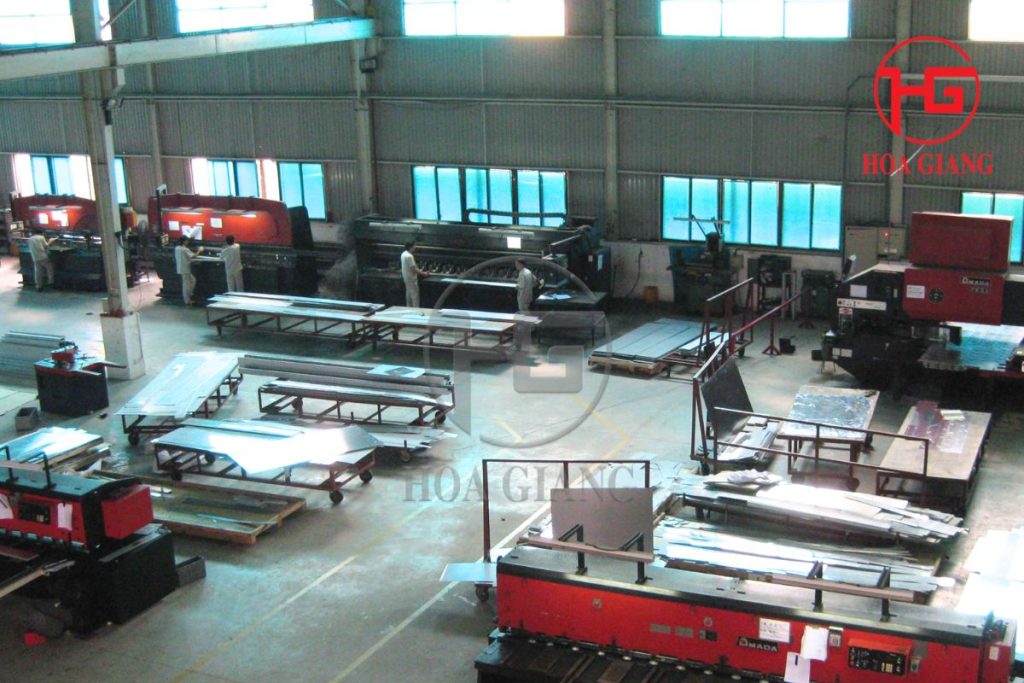
Hoa Giang Stainless Steel Factory
Own large-scale factory with integrated machinery and processing capabilities Hoa Giang has the capacity to handle projects ranging from medium to large scale, ensuring timely completion and product consistency.
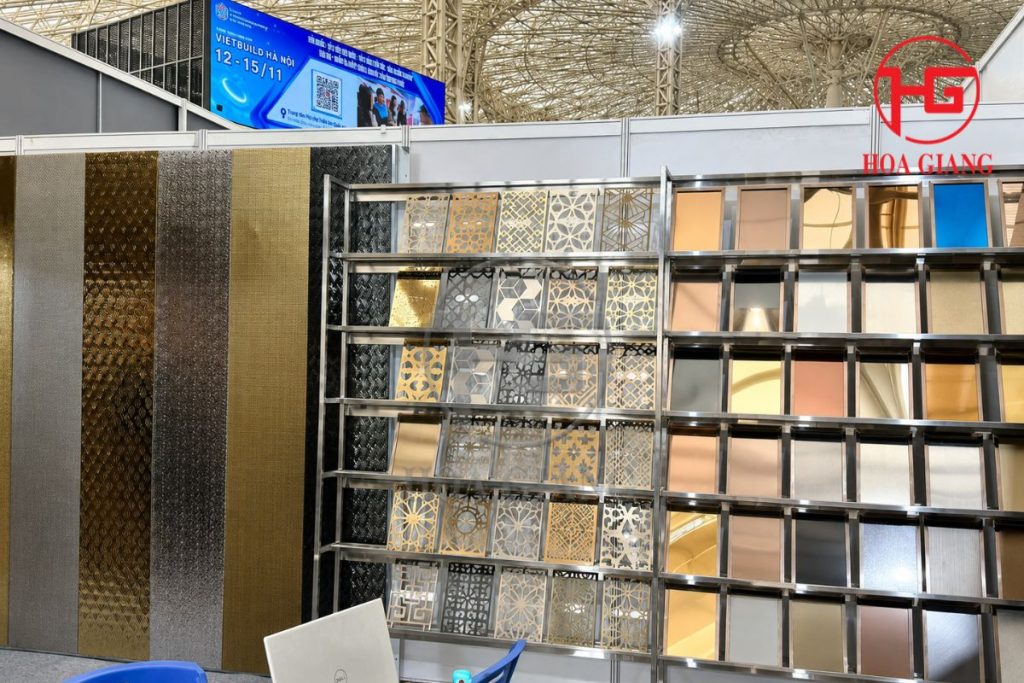
Hoa Giang decorative stainless steel samples displayed at the Vietbuild Hanoi Exhibition.
The range of materials is diverse, from Stainless steel for interior decoration to stainless steel for exterior applications., with a wide range of color and surface options such as Mirror finish, hairline finish, sandblasting, PVD coating, patterned stainless steel, wave-patterned stainless steel…Through this, Hoa Giang offers flexible material solutions suitable for various design styles and technical requirements.
Conclude
Stainless steel rusts lightning quality is not solely reflected in one aspect; it needs to be considered based on many factors such as the grade of stainless steel, the usage environment, the processing method, and maintenance. Choosing the right material from the outset and applying appropriate processing solutions will help stainless steel effectively resist corrosion, maintain its durability, and preserve its aesthetics for a long time.
Contact Hoa Giang for advice on the right stainless steel solution for your project.
HOA GIANG STAINLESS STEEL
Facebook: Hoa Giang Stainless Steel Group
Hotline: 0918311491 – 0949805203


